
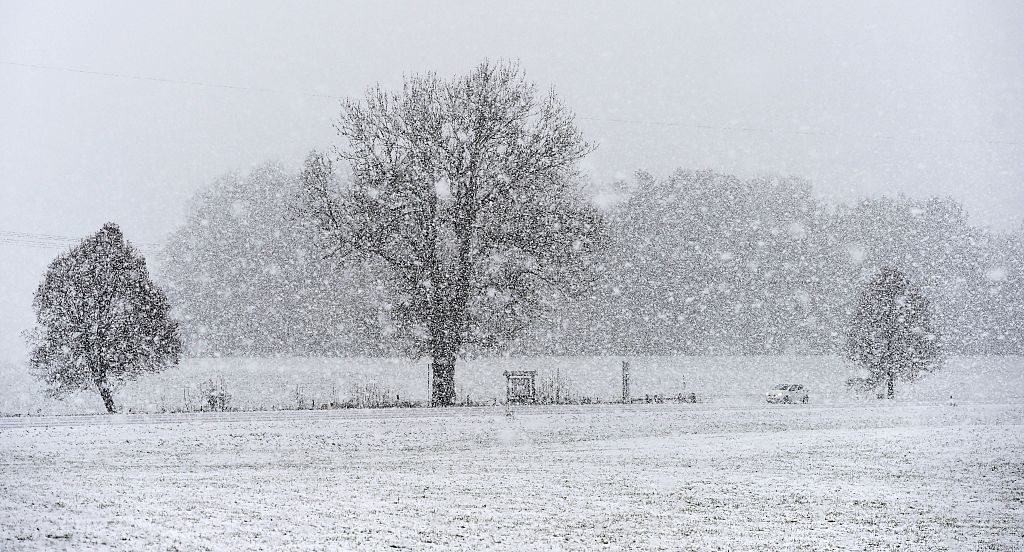
The Old Farmer’s Almanac has revealed its Winter 2026–2027 forecast. The forecast warns that a strengthening Super El Niño may transform weather patterns across the United States. Ocean temperatures in the tropical Pacific are climbing. This change, known to impact the jet stream, could lead to major winter storms. Millions of Americans might encounter wetter conditions, heavy snow, icy combinations, or sharp cold spells as climate signals shift with the new season.
What Does the Old Farmer’s Almanac Predict for the 2026–2027 Winter Season?
The Almanac’s winter projection describes a season of stark contrasts. Different regions will experience varied conditions. Forecasters predict an active southern storm track. This track will bring wetter-than-normal weather from Southern California, across Texas, the Gulf Coast, and into the Southeast. Repeated storms may occur, leading to muddy fields and potential collisions of cold air with moisture, resulting in sleet, freezing rain, or heavy, wet snow.
In the northern regions, conditions appear more changeable. The West, northern Plains, Upper Midwest, and Great Lakes will likely see near-normal temperatures. However, forecasters warn that “near normal” does not mean calm. Fast-moving clippers, unexpected cold spells, and quick thaws are anticipated.
Inland areas of the Northeast might endure rounds of heavy, wet snow. Coastal areas could witness more rain or mixed precipitation as storm tracks shift. Small temperature changes can alter forecasts from slushy snow to significant winter storms.
Influence of Super El Niño on Winter
The clearest signal affecting the upcoming winter is El Niño, which is strengthening rapidly. When the tropical Pacific warms, it disrupts the jet stream. This impact guides storms across North America. A stronger El Niño often pushes the jet stream southward, energizing storms and directing moisture toward the southern U.S.
A Super El Niño, with notably warm Pacific waters, can intensify these effects. Wetter conditions become more common across the southern tier, while northern states may see more variable patterns. Quick cold events, sudden snow flurries, and alternating phases of thaw and freeze are likely.
Crystal Egger, a seasoned meteorologist, told Newsweek that a stronger El Niño “typically strengthens the subtropical jet, leading to more storms entering the southern U.S.” This shift may cause more heavy rain and flooding opportunities, especially in California, the Southwest, and the South. Florida, in particular, experiences increased severe weather, including tornadoes, during El Niño winters.
The Role of the Polar Vortex
The polar vortex, a large pool of icy Arctic air usually near the North Pole, remains unpredictable. When the polar vortex’s circulation weakens or alters, frigid air can move south, causing extreme cold outbreaks in parts of the U.S.
Forecasters monitor the Quasi-Biennial Oscillation (QBO), a pattern of high-altitude winds near the equator. Changes in these winds might influence the polar vortex later in the season. If the vortex becomes unstable, regions expecting near-normal temperatures could suffer sudden drops into bitter cold.
Past El Niño winters show how unpredictable these interactions are. Egger emphasized how significant problems often arise from a mix of factors, not a single storm. No two El Niño events are identical.
Accuracy of the Old Farmer’s Almanac Predictions
The Old Farmer’s Almanac states it has an average accuracy rate of about 80% for long-range weather predictions. Last winter, the publication reported an overall accuracy of 86.1%, with an 88.9% success rate for temperature trends and an 83.3% accuracy for precipitation forecasts. Their prediction of Southeast snow was spot on when a rare January storm delivered up to nine inches of snow from Mobile to Pensacola, with New Orleans seeing eight inches.
The Almanac uses a proprietary method, merging its long history dating back to 1792 with modern meteorological tools. Forecasters assess solar activity, historical patterns, and long-term climate signals to craft seasonal outlooks. Although independent reviews sometimes find lower accuracy than the Almanac’s self-reported numbers, the publication remains one of the longest-running long-range forecasting sources in North America.