
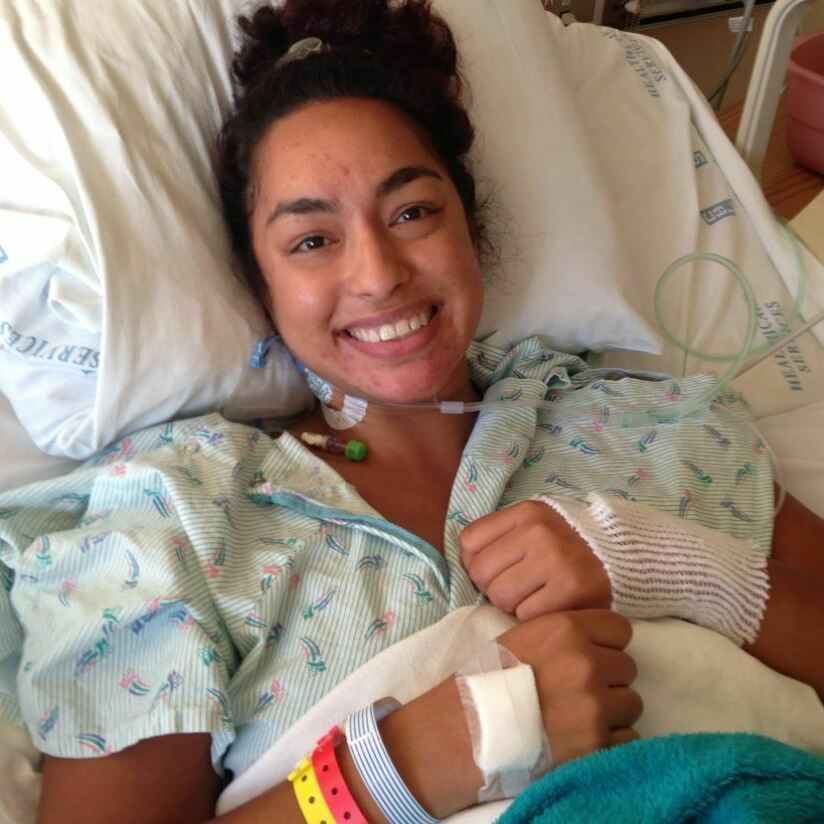
Leila Mirhaydari faced a significant challenge eight years after her kidney transplant surgery in 2014. Her body began rejecting the donated organ, despite her efforts to care for it. In February 2021, as pandemic restrictions eased in Hawaii, Leila had her first face-to-face consultation with her kidney doctor. This meeting was pivotal for her health management after a year of relying solely on her own care.
Leila’s initial lab results were alarming. “Immediately, all my levels were just out of whack and I knew that I was in rejection,” she shared. This news brought a wave of emotional pain, making her feel like she had let her donor down. Her original kidneys had failed at 27, and following years of dialysis, she patiently awaited a new kidney. Her step-cousin, Miles Landis, emerged as a hopeful living donor, finally offering her a renewed chance at life.
“I’ve fondly named it The Hulk,” Leila once said about her donated kidney. “Sometimes I just kind of hold it and say, ‘Thank you.'”
Leila credits The Hulk for eight “beautiful years” free from dialysis. But as rejection approached, she had to prepare for another arduous journey.
The Immune System’s Role
The body’s natural response to a transplanted organ is to attack it as a foreign element. To prevent this rejection, recipients need immune-suppressing medications. Nicolae Leca from the University of Washington explains, “Our immunosuppression keeps that snowball from moving. But if the immunosuppression is too low, that snowball starts to roll faster and becomes bigger, leading to clinical rejection.” Living donor kidneys generally last 15-20 years, but rejection can occur earlier.
The High Cost of Medications
In March 2020, as the pandemic unfolded, Leila lost her job at a restaurant and consequently her health insurance. Affording her immunosuppressant medications became an overwhelming challenge. Eventually, she took the risky decision to reduce her tacrolimus intake. “I made the very big mistake of trying to elongate my medications because I couldn’t afford them,” she admitted, believing this decision allowed her immune system to attack her kidney.
A Second Chance
Now, Leila anticipates going back on dialysis while awaiting another donor. She has rejoined the UNOS list for organ sharing. “I recently just was placed active on the UNOS list…,” Leila stated, revealing her mixed emotions about re-entering the transplant process.
According to UNOS, over 100,000 Americans are in need of organ transplants, with the majority seeking kidneys. Tragically, 17 individuals die daily while waiting for a match. As she waits, Leila is actively seeking another living donor.
Looking forward, the Medicare policy update in December 2020, which covers immunosuppressive medication costs regardless of insurance, offers hope for many. Though this change misses aiding Leila, it’s a comfort knowing others will benefit. “Anyone who’s in need of immunosuppressants will be able to receive them,” Leila mentioned, highlighting her wish that others don’t face similar struggles.
For further details on living organ donations, the United Network for Organ Sharing offers extensive resources.