
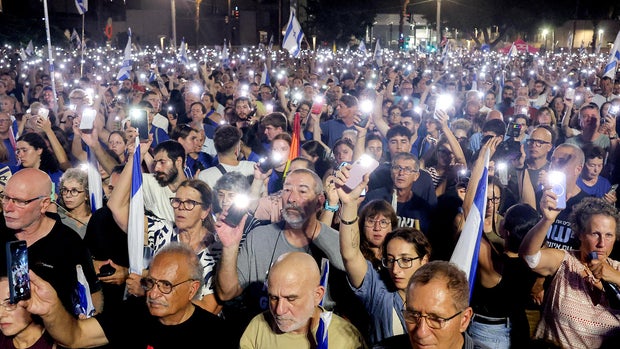
On the night of October 24, 2026, tens of thousands gathered in Tel Aviv to demand accountability from Prime Minister Benjamin Netanyahu’s government. They focused on the failures preceding the terror attacks on October 7. Protesters filled the Hostages Square with calls for a state commission of inquiry.
These protests come just before Israel’s parliamentary elections. This marks the first election since the attacks. While 39 parties are competing, the focus remains largely on Netanyahu. Known locally as Bibi, his political influence has stretched over three decades.
In a nearby market, opinions about Netanyahu differ. Benny Abraham, a restaurant owner, expressed support for Netanyahu and his Likud party. Abraham views Bibi as a charismatic leader, referring to him as the “king of Israel.” However, others, like Liat and her husband Sharon, prefer alternatives. They acknowledge Netanyahu’s past contributions but no longer see him as an effective leader.
The prime minister’s controversial actions contribute to the divide. These include changes to the judiciary, an ongoing corruption trial, and ignored warnings about the October 7 attacks. While some believe Netanyahu ensures Israel’s safety, others feel less secure under his leadership. Margalit Moses, an 80-year-old abducted by Hamas on October 7, advocates for a government shift toward the center or left.
Netanyahu’s campaign presents these elections as critical. With political posters echoing “Right or Palestine,” the stakes are high. The opposition is led by Gadi Eisenkot, a former military chief. Eisenkot left Netanyahu’s 2024 government over accusations related to the Gaza War and hostage negotiations. Political analyst Dahlia Scheindlin describes Eisenkot as the “anti-Bibi,” aiming to exclude religious extremists from the government.
Polls indicate a lead for Eisenkot’s party. However, forming a government would require coalition-building with other parties. Despite polling, Scheindlin suggests Netanyahu may remain in power, given his expertise in political maneuvering.
The outcome of Tuesday’s election will determine if Netanyahu retains his role as prime minister or if a new leadership emerges in Israel.