
Iran Reviews Latest U.S. Peace Proposals
Iran is examining recent peace proposals sent by the U.S., according to state media. The proposals aim to end ongoing conflicts. Pakistan’s Army Chief, Field Marshal Asim Munir, is due in Tehran to deliver a message from the U.S. Nour News, affiliated with Iran’s Supreme National Security Council, reported that Foreign Ministry spokesman Esmaeil Baqaei stated, “We have received the views of the American side and are currently reviewing them.”
Baqaei added that the discussions, mediated by Pakistan, are based on Iran’s initial 14-point framework. This framework calls for an end to all conflicts, including those involving Lebanon, the release of frozen Iranian assets, and an end to actions perceived as “piracy” against Iranian commercial vessels.
Pakistani Mediation Efforts Continue
Pakistan is actively mediating between the U.S. and Iran, aiming for a peace agreement. Army Chief Asim Munir’s visit to Tehran underscores Pakistan’s role in facilitating dialogue between the two nations.
Iranian General’s Growing Influence
Brig. Gen. Ahmad Vahidi, leader of Iran’s Revolutionary Guard, plays a significant role in negotiations with the U.S. Vahidi is part of a trusted group in direct contact with Iran’s Supreme Leader, Ayatollah Mojtaba Khamenei. His influence reflects the complex power dynamics within Iran as competing individuals vie for influence.
Weapons Displays in Tehran
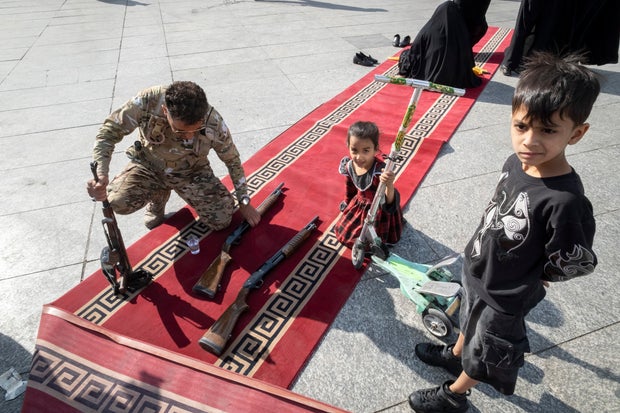
The Iranian Revolutionary Guard is showcasing weapons in Tehran as the nation faces threats from the U.S. Displays are intended to rally support among hard-liners and show military readiness amid ongoing economic challenges and uncertainty.
Iran’s Controlled Maritime Zone Announcement
Iran released a map detailing a “controlled maritime zone” in the Strait of Hormuz. The Persian Gulf Strait Authority (PGSA) requires coordination for vessels transiting this area. The PGSA plans to manage the passage and collect fees from ships crossing the strait.
U.S.-Iran Negotiation Updates
President Trump is awaiting Iran’s response to ongoing negotiations but emphasized a limited timeframe for talks. He praised Iranian negotiators for their reasonableness and competence.
A Senate resolution aims to limit President Trump’s war powers in relation to Iran, highlighting ongoing legislative efforts to influence U.S. foreign policy.
Global and Regional Reactions
China and Russia condemned recent U.S. and Israeli attacks on Iran, emphasizing the urgency of a ceasefire to prevent further escalation. Iran criticized U.S. claims about a strike on a girls’ school, calling it an “appalling lie.”
The U.N. warns of potential food price crisis due to the blocked Strait of Hormuz, vital for global shipping of oil and fertilizer.
Continued Ship Blockades
The U.S. military redirected 90 ships as part of a blockade of Iranian ports. Iranian authorities claimed coordination with 26 ships transiting the Strait of Hormuz in recent days.
Pro-Palestinian flotilla activists received degrading treatment in Israeli custody, resulting in Italy summoning Israel’s ambassador for explanation.