
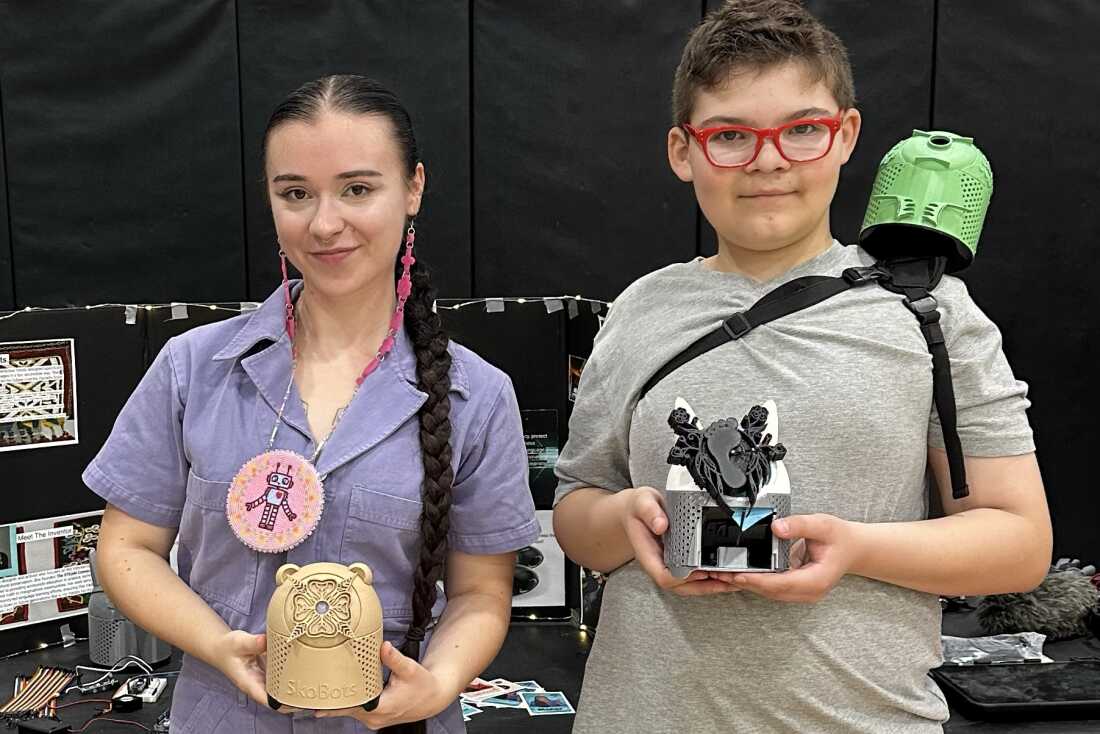
Holden Hoy, a young enthusiast, is working on a project to learn and preserve the Ojibwe language, Anishinaabemowin, which is considered endangered. His mentor, Danielle Boyer, guides him in learning coding and electrical circuitry as part of this initiative. The region’s dwindling number of Anishinaabemowin speakers highlights the urgent need for preservation efforts.
Boyer’s inspiration struck while observing a Tickle Me Elmo toy. She noticed a lack of educational toys teaching Anishinaabemowin. Anishinaabemowin encompasses the Potawatomi, Odawa, and Ojibwe languages. While precise numbers vary, fewer than 10,000 people speak it in the U.S., with about 25,000 in Canada. Many native languages face similar challenges, with some having very few or no fluent speakers left.
Boyer, whose grandmother is among the last fluent speakers of their dialect, acknowledges the risk of losing cultural identity. “It’s devastating to think about losing your language,” she expressed. The U.S. Indian boarding schools contributed significantly to the erosion of Indigenous languages by forcibly teaching children not to speak their native tongues, which resulted in fewer speakers over generations.
You lose your culture; it’s a way to describe who you are.
Many Native youth now learn their languages in schools, yet some perceive it as merely a homework task. This is why Boyer invented the SkoBot, a customizable toy robot that makes language learning engaging. The SkoBot responds to queries in Anishinaabemowin and is akin to R2-D2 droids but with Native American adornments.
Boyer founded a nonprofit to mentor Native American children in building SkoBots. Holden Hoy, a 12-year-old in Michigan, is among the mentees. He presented his SkoBot, named Sabe, meaning Bigfoot, at his school’s science fair. Hoy programmed Sabe to answer questions, such as its name, incorporating humor and culture in its responses.
The SkoBot functions through pre-recorded audio, avoiding generative AI’s tendency to produce inaccuracies, often referred to as hallucinations. Hoy recognizes the importance of accuracy to prevent misinformation. Boyer emphasizes that SkoBots aim to spark interest not just in language but in STEM fields while ensuring ethical AI use.
Boyer warns of the potential harm AI can cause if not developed by Indigenous people. Misleading AI-generated translations could impede language preservation efforts. She insists accurate learning is crucial, or it should not proceed at all. The community’s trust lies in safeguarding their cultural and linguistic heritage.
Holden’s mother, Jocelyn Hoy, appreciates her son’s deepening connection to their culture. He teaches her new words, reversing the cycle of language loss. She believes SkoBots could help many rediscover their identities. Hoy concludes, “Language is integral to culture; protecting it is vital for preserving a way of life across generations.”