
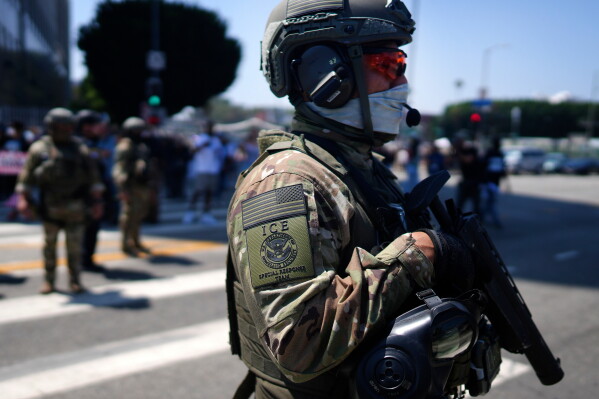
U.S. Immigration and Customs Enforcement (ICE) plans to equip every officer and agent in the field with body cameras by the end of August. This move represents a significant expansion in documenting immigration enforcement operations. However, public access to the footage remains largely under ICE’s discretion.
Questions have arisen regarding ICE’s policy that allows leadership to withhold or indefinitely delay footage release following serious incidents in custody. Acting Director David J. Venturella stated these restrictions aim to protect ongoing investigations and individual privacy, aligning with federal law and practices of other federal law enforcement agencies.
Venturella addressed these policies following an Associated Press (AP) report, which highlighted concerns over footage release post serious injuries or deaths in custody. Venturella claimed the AP article misrepresented the policy by confusing a specific provision for expedited footage release deemed in the agency’s best interests with broader authority ICE holds over body camera footage.
The AP focused on ICE’s policy regarding the release of footage after significant interactions involving serious injury or death. Prior to publishing its report, the AP had sought comments from ICE but received incomplete responses that did not address the relevant provision about release in the agency’s best interests.
ICE has faced increased scrutiny following incidents such as the fatal shooting of a 25-year-old motorist in Maine by an officer with a known history of violent behavior and another shooting in Houston. Despite these events, neither incident was captured by body cameras. Venturella reaffirmed ICE’s commitment to transparency and accountability, stating efforts are on track for implementing body-worn cameras by August’s end.
Christopher Schneider, a sociology professor at Brandon University, noted that selective footage releases are routine, yet rarely explicitly stated in policies. This contrasts ICE’s approach to making clear such policy options.
In a related context, Customs and Border Protection (CBP), an ICE sister agency, withheld footage of a fatal shooting in Minneapolis involving Alex Pretti. CBP Commissioner Rodney Scott informed legislators that such releases are contingent on investigation timelines and would occur when deemed fit.