
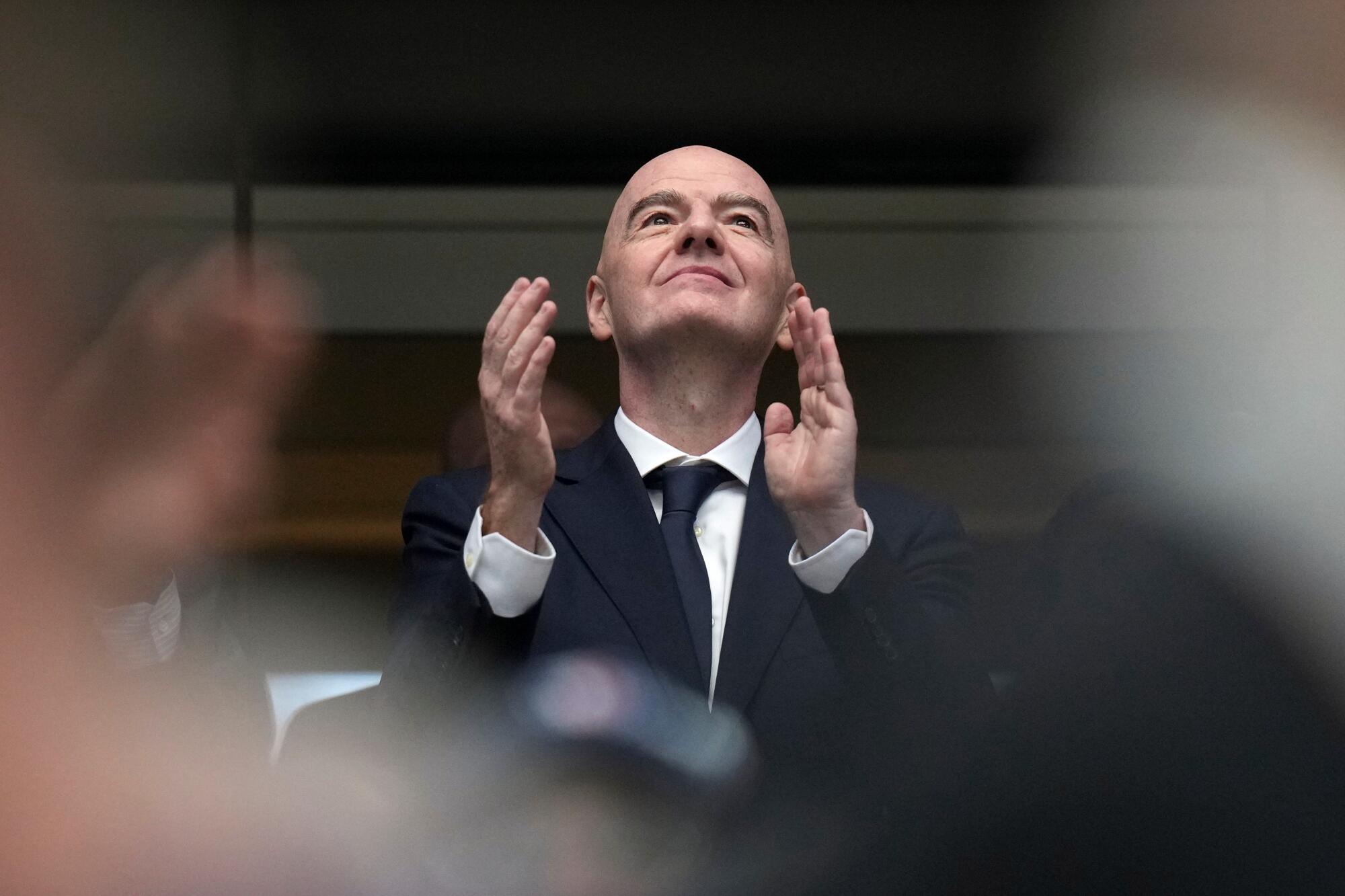
Heading into the final weekend of the summer’s World Cup, reports indicated overwhelming support for FIFA president Gianni Infantino. Over 200 of the 211 member associations endorsed his bid for a fourth term. This support seemed to ensure an uncontested election in March.
However, Infantino’s situation quickly deteriorated. Calls for his resignation came from prominent figures, including British Prime Minister Andy Burnham and Spanish soccer association president Javier Tebas. Key allies also distanced themselves from him.
The controversy centered around Infantino’s plan to sell a 20% stake in the World Cup to private investors. This move would give investors influence over planning and commercial activities related to the tournament. When these details emerged, Infantino was forced to retract the proposal.
Dubbed the FIFA Forward Enterprise, the plan aimed to transform the tournament into a more profitable venture. Infantino sought approval from at least half of FIFA’s member countries by promising substantial financial incentives. Nevertheless, the plan faced strong opposition, leading to its abandonment.
FIFA issued a statement indicating the initiative had created insurmountable divisions, rendering it unfeasible. This turn of events has raised questions about Infantino’s future in leadership.
The rapid decline in his fortunes is in stark contrast to the successes of previous events. The 2026 World Cup exceeded expectations, attracting over 6.8 million live fans and a global audience of 6 billion. It became the first sporting event to generate over $10 billion in revenue.
Despite the organization’s nonprofit status, Infantino has previously pushed boundaries. His past attempts to involve private equity in FIFA ventures were met with resistance. Moreover, his introduction of revenue-generating innovations like hydration breaks and luxury ticket pricing has been controversial.
The backlash to his latest proposal was immediate and severe. Critics like Burnham emphasized that the World Cup belongs to fans, not investors. The secretive nature of Infantino’s plan particularly angered stakeholders.
Bernd Neuendorf, a member of the FIFA Council, expressed surprise and frustration upon learning about the initiative from media reports. Additionally, Infantino’s choice of partners raised eyebrows. His collaboration with Thrive Eternal, a firm linked to President Trump, fueled further scrutiny.
This association with Trump’s circle added to the controversy, especially after Infantino’s past favors during the World Cup, such as lifting Folarin Balogun’s red card suspension after Trump’s intervention.
In light of the revelations, UEFA held an emergency meeting where its members voted to boycott FIFA competitions. Additional opposition came from CONCACAF and the Asian Football Confederation.
Facing a lack of support for his plan, Infantino abandoned it. The failure was attributed as much to poor execution as to the concept itself. Soccer clubs frequently engage with private investors, and several leagues have sold commercial stakes similarly.
Alan Rothenberg, a former U.S. Soccer president, suggested the idea of private equity involvement wasn’t inherently flawed but criticized the process Infantino followed. Others, like Carlos Cordeiro, highlighted FIFA’s robust financial standing, questioning the necessity for external investment.
Infantino has faced contentious moments in his career, previously aligning with controversial figures during tournaments in Russia and Qatar. This time, discontent within FIFA has reached a critical level, putting his presidency in jeopardy.