
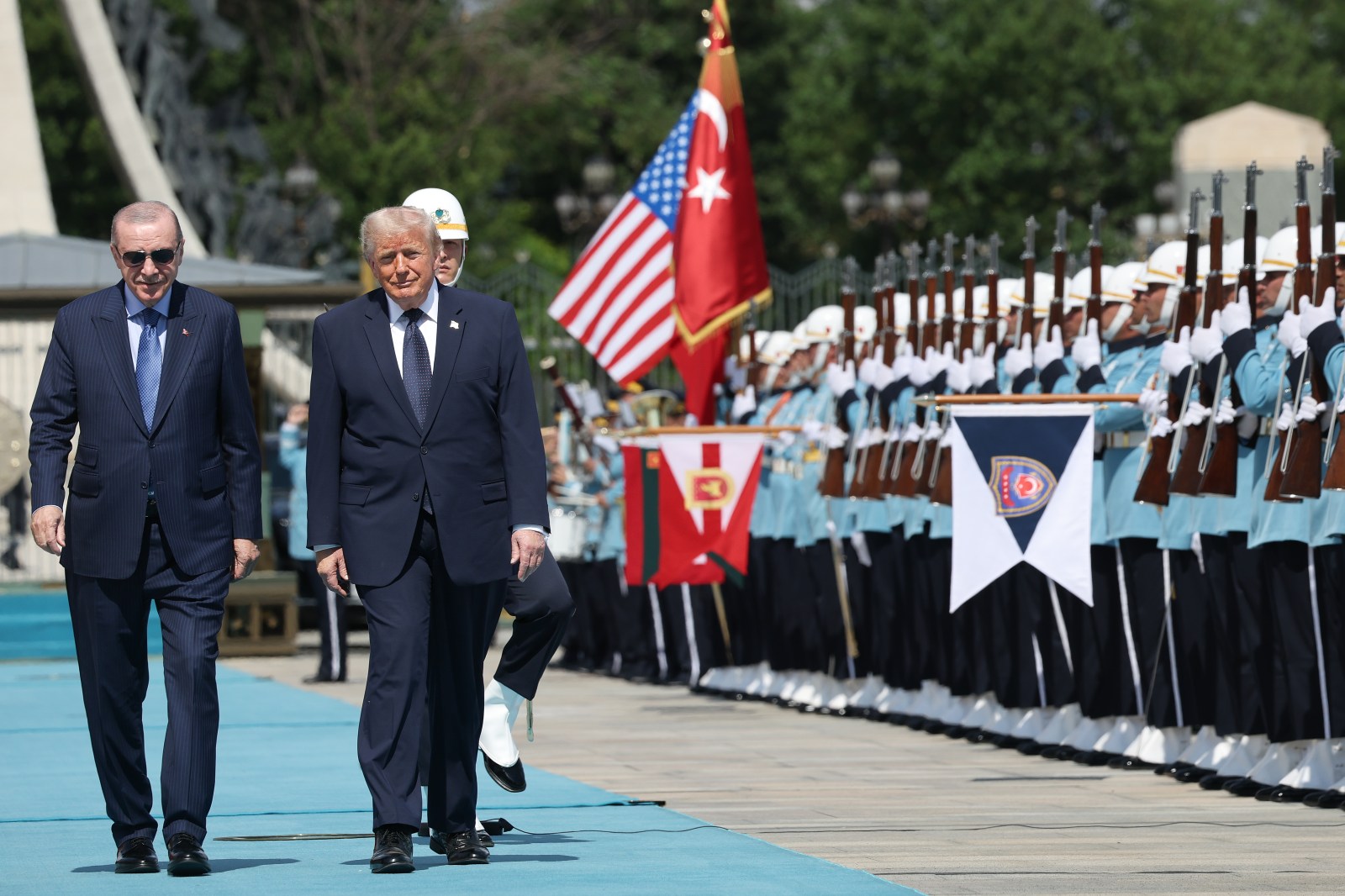
Signs of growing dissonance have emerged between U.S. President Donald Trump and Israeli Prime Minister Benjamin Netanyahu. An Israeli strike on a Syrian military site may have broader geopolitical implications. The targeted site, the Abu al-Duhur Air Base in Idlib province, was visited by a Turkish military delegation hours before the strike. The delegation aimed to rehabilitate the base as Turkey strengthens ties with Syria’s new government under President Ahmad al-Sharaa.
The Turkish Foreign Ministry condemned the Israeli attack. It is the latest in a series of disputes between two U.S. allies in the Middle East. Netanyahu’s office justified the strike by accusing Syria of allowing Turkish troops to deploy at a nearby airbase. Turkey dismissed these allegations as excuses for Israel’s unlawful actions.
Washington criticized the Israeli operation, with Special Envoy Tom Barrack expressing concern over an escalation. The Trump administration has previously sided with Turkish President Recep Tayyip Erdogan over Netanyahu. This rift could affect upcoming elections as domestic pressures pull leaders in opposite directions.
President Trump and Prime Minister Netanyahu are both in weak political positions at home,
said Brian Katulis, a senior fellow at the Middle East Institute. Trump faces low approval ratings and economic pain from his policies, while Netanyahu’s reputation is damaged by past conflicts.
Netanyahu has prioritized demonstrating his ability to protect Israeli citizens, appealing to a right-wing coalition through aggressive military campaigns. In contrast, Trump seeks to deescalate tensions. He faces a public tired of war and affected by economic issues.
Trump’s Middle East Strategy
Trump has maintained close ties with both Erdogan and Netanyahu. His relationship with Erdogan grew stronger when Erdogan played a role in Syria’s leadership change. Trump aligned with Turkey’s support for the new Syrian government, lifting some sanctions on Syria and fostering partnership. The White House’s cooperation with Syria under Sharaa faced opposition from Netanyahu.
The U.S. criticized Israeli strikes supporting Druze militias against Syrian forces. It called on Israel to avoid actions undermining Syria’s stability after years of civil war. At a NATO summit in Ankara, Trump reaffirmed U.S.-Turkey ties, defying Netanyahu’s protests by planning to lift restrictions on selling F-35 jets to Turkey. Despite rocky points, Trump and Netanyahu’s rapport has persisted.
The U.S. administration and Israel have previously aligned, seen in actions against Iran. However, differences in interests between Netanyahu and Trump persist, especially in their joint efforts against the Islamic Republic. Tensions between Erdogan and Netanyahu have bolstered Trump’s encouragement for regional self-reliance.
President Trump’s approach to the Middle East prioritizes self-reliance and autonomy,
said Katulis. However, this strategy increases the risk of regional conflicts.
New Regional Alliances
Countries are forming new networks to balance regional power. Turkey, Saudi Arabia, and Pakistan have signed the “Mecca Pact.” This agreement forms a mutual defense coalition in response to alliances developed by Israel with countries like Greece and India.
Ali Burak Daricili, a former Turkish intelligence officer, views Turkey’s participation as a strategic move to counter Israel and limit Iran’s influence. He noted ongoing competition and friction between Turkey and Israel in several areas, including Syria.
Trump praised the Mecca Pact as evidence of Middle Eastern countries taking charge of their defense. Daricili said the U.S. strategy seeks to establish a stable Middle Eastern order while shifting focus to the Asia-Pacific.
Challenges persist in achieving a pivot to East Asia, with Middle Eastern issues complicating U.S. plans. Scenarios like a direct Israel-Turkey clash add unpredictability to U.S. regional disengagement efforts.
Daricili argued for establishing mechanisms to prevent conflict between Turkey and Israel. He suggested Turkey act cautiously and pragmatically, awaiting the outcome of future Israeli elections.
Regional Escalations
Netanyahu appears inclined toward regional escalation, according to Eyal Zisser of Tel Aviv University. Israel’s aggressive stance contrasts with past leaders who advocated for strategic caution.
Analysis suggests growing Israeli fervor against Erdogan and Turkey’s influence among Sunni powers. Former officials see Turkey as a significant threat. An Israeli-Turkish confrontation could threaten both countries’ interests.
Zisser believes Trump’s influence would likely prevent such conflicts. He said Israel targets Syria instead of Turkey and emphasizes that Trump’s leverage keeps Netanyahu’s actions in check. Even with a pragmatic approach, regional complexities demand cautious navigation.