
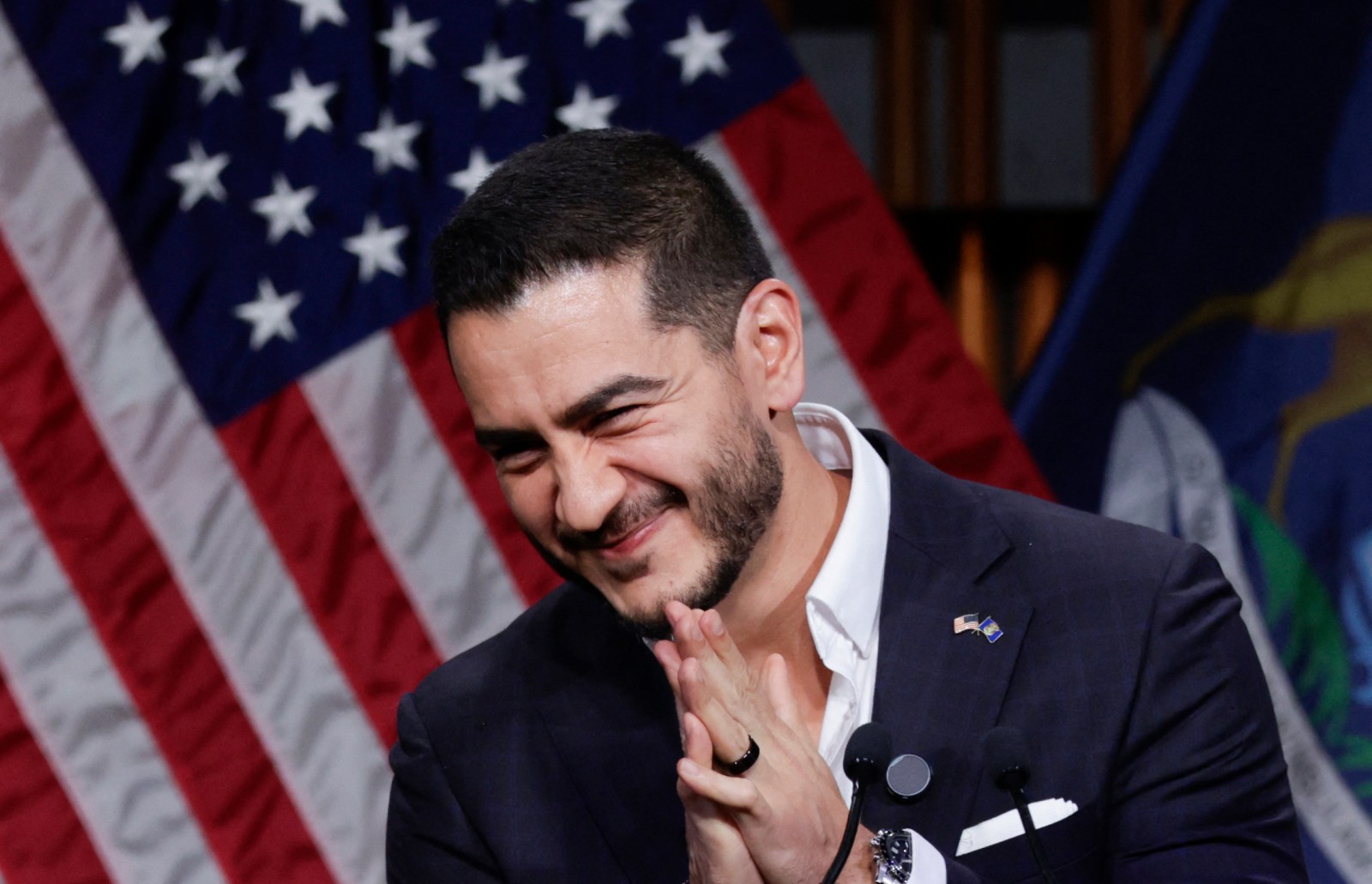
Thomas Jefferson’s Quran, acquired during his law studies in 1765, may become significant as new U.S. senators are sworn in. Senator-elect Abdul El-Sayed, a Michigan Democrat, expressed intention to swear on the Quran. He will be the first Muslim senator in American history, having won against Republican Mike Rogers in the midterm elections.
El-Sayed mentioned considering Jefferson’s Quran, which Keith Ellison used when he became the first Muslim member of Congress in 2007. Another possibility is an ancient Quran housed at the University of Michigan. El-Sayed emphasized his commitment to take the oath on a Quran.
Significance of El-Sayed’s Oath for the U.S.
Michigan State University’s Mohammad Hassan Khalil noted that El-Sayed’s oath signifies religious freedom in the Constitution. He added that American politics is seeing religious identity becoming less of a barrier.
Political scientist Youssef Chouhoud viewed El-Sayed’s election as significant amidst anti-Muslim rhetoric. He acknowledged obstacles still facing American Muslims but noted progress in acceptance.
Chouhoud explained that previously, few Muslims ran for office, and those who did faced challenges. Now, Muslims receive broader support from diverse voter bases.
Newsweek sought El-Sayed’s campaign’s comments via email.
Previous Quran Oaths in Congress
While El-Sayed’s oath will be a Senate first, past lawmakers in the House of Representatives have sworn in using the Quran. Diana Eck from Harvard University highlighted the growing trend of swearing on cherished texts.
In 2007, Keith Ellison’s use of Jefferson’s Quran drew criticism from some, such as Dennis Prager. Since then, Representatives Ilhan Omar and Rashida Tlaib, the first Muslim women in Congress, have also taken their oaths on the Quran.
Eck considers this trend inevitable as the U.S. grows more religiously diverse. She cited changes after the 1965 Immigration and Nationality Act as a catalyst.
Diverse Texts for Congressional Oaths
Congress members increasingly use diverse texts for oaths. No legal requirement mandates a religious text for swearing in. Jewish Senator Adam Schiff used a Mishneh Torah, and Tulsi Gabbard, a Hindu, used the Bhagavad Gita.
Some lawmakers choose nonreligious texts. Representative Robert Garcia used a vintage Superman comic, and former Senator Kyrsten Sinema chose the U.S. Constitution.
El-Sayed will be the first senator sworn in on the Quran, marking a historical moment.
El-Sayed’s Faith as a Campaign Issue
Throughout the campaign, El-Sayed’s faith faced scrutiny. President Donald Trump accused him of supporting jihadists, a claim criticized as Islamophobic.
El-Sayed responded to being asked to disavow the Muslim Brotherhood. He denied any association, emphasizing his commitment to serving the U.S.
Mike Rogers echoed these questions. El-Sayed’s family was scrutinized for alleged ties, which he denied.
El-Sayed highlighted efforts to portray him negatively based on his faith, criticizing Trump’s divisive politics.
Chouhoud acknowledged the anti-Muslim sentiment El-Sayed faced. However, the political barrier tested in Michigan ultimately failed.
Muqtedar Khan from the University of Delaware described El-Sayed’s election as defeating Islamophobia. Yet, he emphasized the importance of candidates fulfilling campaign promises.
For El-Sayed, focusing on issues like Medicare for All is key to success, despite ongoing identity challenges.