
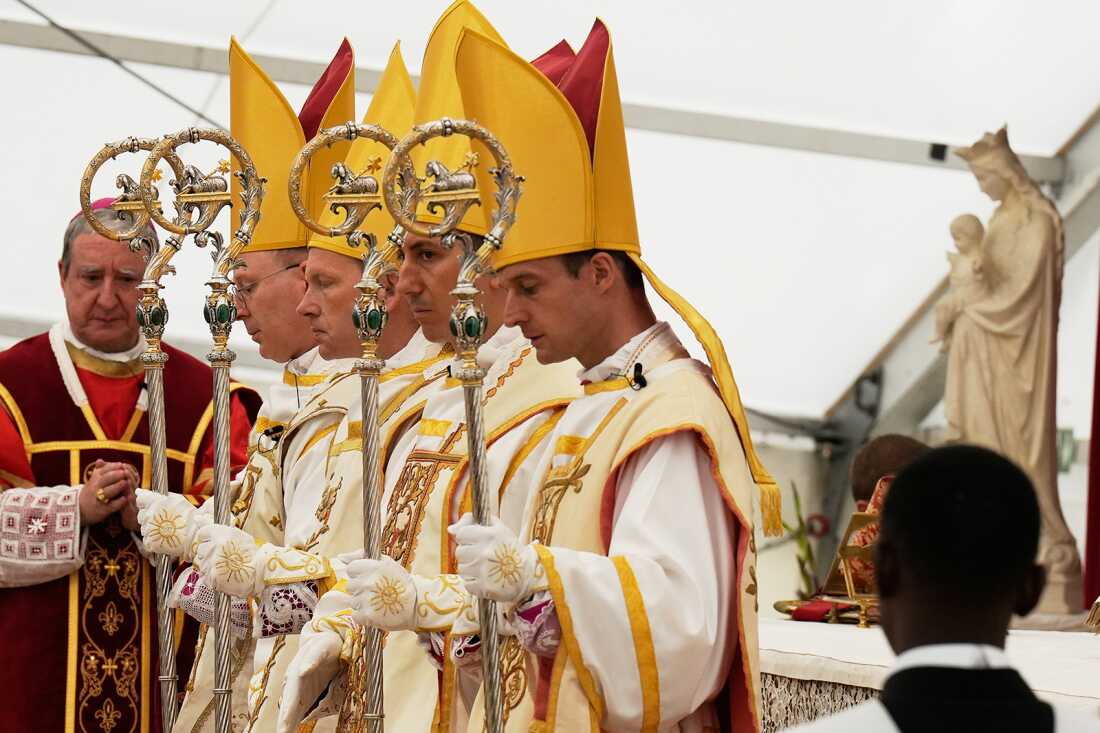
The Catholic Church excommunicated bishops from the Society of St. Pius X (SSPX) on Thursday. This decision stems from the ordination of four new bishops without the consent of Pope Leo XIV. The ceremony took place at the society’s seminary in Écône, Switzerland.
Defiance Against Vatican Warnings
SSPX had ignored repeated Vatican warnings regarding the schismatic nature of the ordinations. These actions led to the excommunication of the newly ordained bishops, the two who consecrated them, and all associated members.
Excommunication is severe, barring individuals from church membership and sacraments. It occurs for schism, defined as rejecting the Pope’s authority.
Pope’s Plea and the Ceremony
Before the consecrations, Pope Leo urged SSPX to reconsider in a letter to their superior general, Rev. Davide Pagliarani. He warned that these actions threatened church unity.
Despite this, over 1,000 clergy and 15,000 faithful attended the ceremony, showcasing their defiance with “Écône 2026” hats.
The SSPX declared that any sanctions “will have no validity.”
Since his papacy began, Pope Leo has advocated for unity but now faces a crisis with SSPX. Pagliarani stated in his sermon that their actions are out of love for the Pope.
Background of SSPX
Founded in 1970, SSPX opposes the Second Vatican Council reforms. These reforms emphasized lay roles, interreligious dialogue, and allowed Mass in local languages.
In 1988, Archbishop Marcel Lefebvre consecrated bishops without papal approval, leading to excommunication. The strained SSPX-Vatican relations saw Pope Benedict XVI lift these excommunications in 2009, yet doctrinal divides remain.
Pope Francis tried to bridge gaps, permitting SSPX priests to hear confessions and perform marriages. However, restrictions on the Latin Mass in 2021 frustrated traditionalists.
New Ordinations and Consequences
The recent ordinations could end years of Vatican-SSPX dialogue. The Vatican declared that SSPX sacraments are illicit, reversing previous accommodations.
SSPX claimed necessity due to only two surviving bishops from 1988, impacting their global operations across 800 churches and numerous followers.
Reasons for SSPX’s Actions
Rev. Foucault le Roux, SSPX’s secretary general, criticized Vatican II reforms as contrary to faith. Pagliarani characterized the consecrations as service, not rebellion, emphasizing sacrifices for the Church.
SSPX views interfaith dialogue as damaging, opposing changes like vernacular Mass and ecumenism. On the day, attendees from 70 countries gathered to support new bishops from the US, Switzerland, and France.
The entire five-hour Mass adhered to SSPX traditions, conducted in Latin, except for specific parts.
Reflections of Attendees
Pope Leo’s plea was ineffective against the ceremony, though weather temporarily halted it. Attendees engaged in singing and prayer during the pause, maintaining their spirits.
Alexander De Volleda, a 25-year-old SSPX adherent, described the experience as unique. Dennis Vu, another attendee, expressed mixed emotions but maintained sympathy with SSPX stances.
This article was produced through NPR and Religion News Service collaboration.