
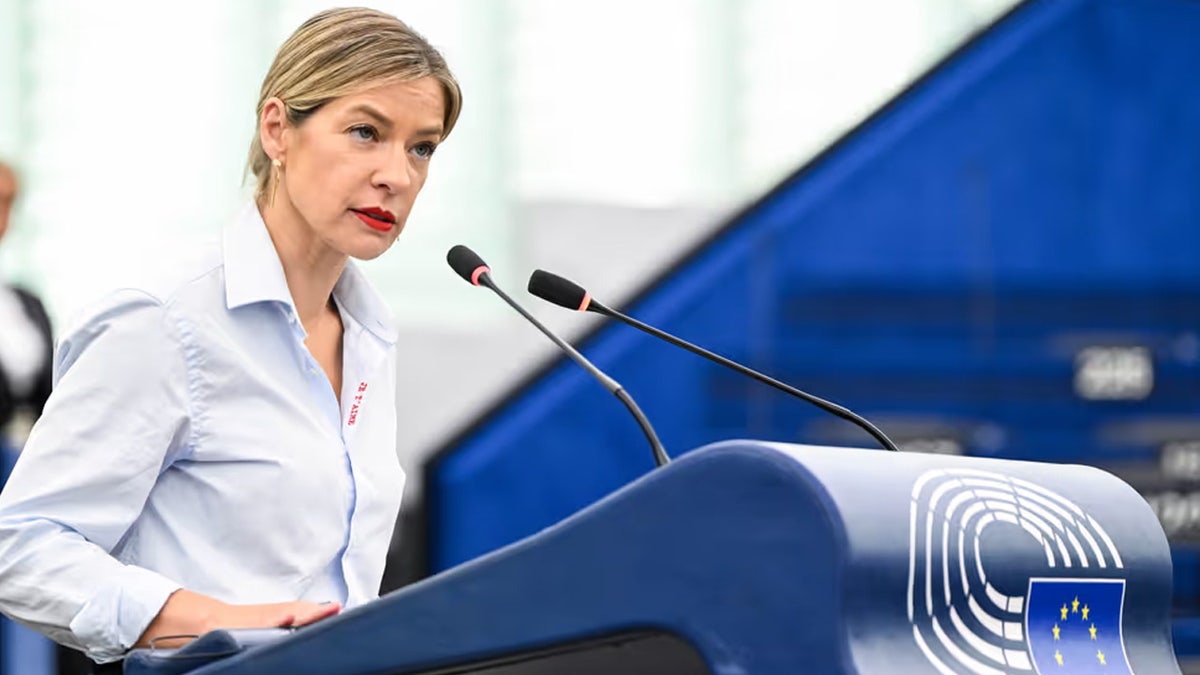
Following the Trump administration’s actions against foreign Muslim Brotherhood groups, the European Parliament has also taken steps against this transnational radical Islamist organization. In a recent move, the European Parliament passed a resolution condemning the Muslim Brotherhood and its activities across Europe. This marks a significant response to the threat of radical Islam on the continent.
Member of the European Parliament, Céline Imart from France, who sponsored the resolution, noted the vote as a ‘historic victory.’ She stressed that this is the first instance of Europe voting on a text addressing Islamist entryism and the influence of the Muslim Brotherhood. Imart highlighted breaking a long-standing taboo in Europe and shifting the doctrinal stance of its institutions.
Lorenzo Vidino, the director of the program on extremism at George Washington University, mentioned that France and Austria have been advocating for this resolution for nearly a decade. The resolution was driven by the European People’s Party (EPP), the largest center-right coalition in the European Parliament. Vidino pointed out that although the right heavily favored the resolution, a notable portion of the left opposed it.
The European Parliament emphasized the need to protect Muslim citizens from discrimination and warned against treating organized Islamist networks as representative entities. The resolution called for Europe to remain open but demanded an end to supporting networks that undermine its values. It stressed that anti-discrimination policies shouldn’t shield Islam from critique nor legitimize Islamist networks.
Notably, the resolution drew criticism from ENAR, a pan-European anti-racism organization, which condemned it as racist and Islamophobic. ENAR rebutted claims associating it with the Muslim Brotherhood and accused the resolution of promoting a politics of suspicion against Muslim communities.
Edmund Fitton-Brown from the Foundation for Defense of Democracies commended the resolution, noting it as the beginning of Europe’s pushback against Islamist entryism. He underscored challenges in turning the resolution into legally binding measures, warning that so-called ‘non-violent Islamism’ can act as a gateway to terrorism.
Despite existing security warnings, Vidino remains skeptical about the resolution’s immediate impact. He cautioned that Islamist groups adeptly disguise their activities and resist when funding is jeopardized, often playing the victim card to claim Islamophobia.
As part of the resolution, the European Council is tasked with assessing whether entities linked to the Muslim Brotherhood should be recognized as terrorist organizations. It calls for transparency in EU funding and examination of financial activities tied to political Islam, particularly involving Qatar or Turkey.
Céline Imart emphasized this resolution as a beginning, pressing for actionable steps by the Commission and the Council. She pledged ongoing efforts to hold these bodies accountable in implementing the resolution’s directives.
Tyler Speicher, an American journalist now residing in Slovenia, reported on this matter. He has an extensive background in journalism, covering diverse stories over his 25-year career, including significant events like 9/11.