
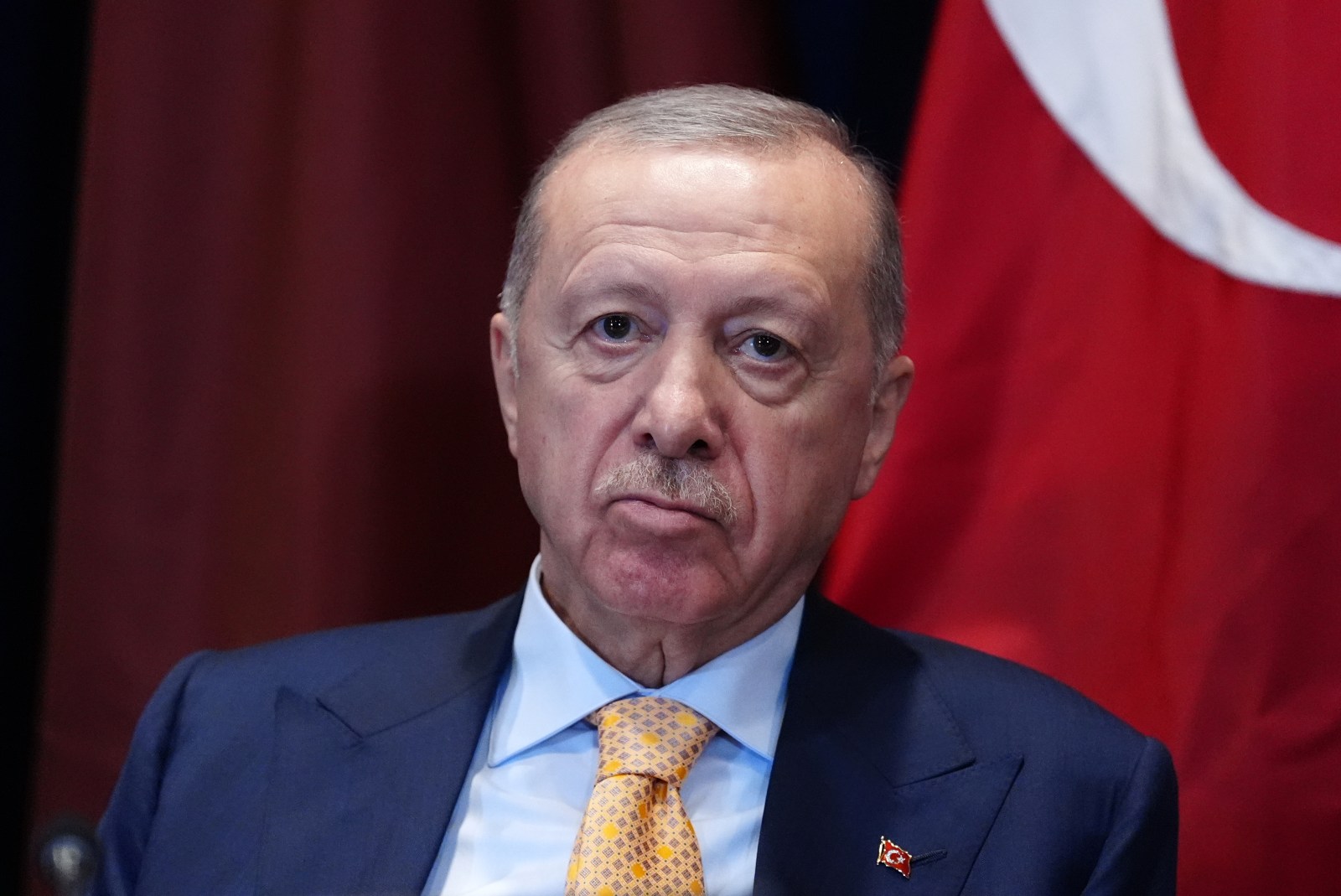
In a recent discussion with Newsweek, Turkish President Recep Tayyip Erdogan criticized Israel for promoting a misleading narrative that aims to portray Turkey as a threat to both Israel and the wider region. This exchange of heated rhetoric includes remarks from Israeli Prime Minister Benjamin Netanyahu, who described Erdogan as a ‘tyrant’ attempting to undermine Israel. These comments were part of Netanyahu’s speech at the United Nations General Assembly, where he also accused Erdogan of increasing influence in Syria and repressing journalists and the Kurdish minority.
Erdogan acknowledged their significant differences with the Israeli government on numerous issues, which seem to be intensifying as both leaders navigate their conflicting strategies in the Middle East and beyond. Nonetheless, Erdogan insisted that Turkey was not seeking confrontation. ‘Recently, a misguided narrative aimed at portraying Türkiye as a new source of threat has been fueled in Israel,’ Erdogan stated. ‘We believe this rhetoric is connected to Israel’s internal political dynamics and electoral climate.’
‘We do not see this rhetoric as a responsible approach that encourages regional peace,’ he added. ‘Turkey harbors no enmity toward the Israeli people or any other society. Our opposition lies with policies we deem contrary to international law and steps that increase regional instability.’
Read the full exclusive interview on Newsweek.
The Battle for Syria
The clearest sign of rising tensions between Israel and Turkey is evident in Syria, a neighbor they share. Erdogan supported Syrian President Ahmad al-Sharaa’s administration, formed after a rebel offensive ousted longtime leader Bashar al-Assad. Erdogan’s influence impacted former U.S. President Donald Trump’s support for Sharaa, with Trump acknowledging Erdogan’s role in Assad’s removal.
Netanyahu also initially supported Assad’s downfall, recognizing him as an ally of Iran. However, he soon expressed concerns about Sharaa’s past affiliations with jihadist groups. This led to Israeli airstrikes on Syrian military sites and expanded territorial claims in the Golan Heights.
Israel maintains involvement in Syrian matters, especially in the southwest, supporting Druze factions against the central government. However, the White House criticized Israeli strikes supporting Druze militias. More recently, Israeli airstrikes targeted the Abu al-Duhur Air Base in Idlib hours after a Turkish military visit. Israeli officials accused Syria of breaking agreements on foreign presence, while Turkey strongly condemned the actions.
Erdogan reiterated a commitment to Syria’s sovereignty, territorial integrity, and unity, suggesting that Israel’s actions undermine these efforts. ‘Stability in Syria would benefit peace and development across the region, including Israel,’ Erdogan commented, underscoring Turkey’s stance on avoiding conflict-driven foreign policy.
Testing Alliances
The Israel-Turkey rivalry extends beyond Syria to the Eastern Mediterranean. After Turkey signed a mutual defense pact with Pakistan and Saudi Arabia, Israel entered a major defense agreement with Greece. This deal, known as ‘Achilles’ Shield,’ aims to protect Greek territories, including areas near Turkey.
Greece and Turkey have a long-standing history of conflict over Mediterranean territorial rights and the Cyprus division. Israel has strengthened its defense ties with Greece and Cyprus, with Netanyahu promoting a strategic ‘hexagon of alliances’ that also involves India and the UAE.
Erdogan criticized the Israel-Greece defense pact but emphasized nations’ autonomy in foreign relations. ‘Türkiye does not view every bilateral relationship as a threat,’ Erdogan stated, reaffirming Turkey’s commitment to monitoring actions impacting national security. He stressed the importance of diplomatic solutions over conflicts, citing Turkey’s strong NATO influence.
Competition in the U.S.
Competition for influence extends to Washington. Both Erdogan and Netanyahu share a history of ties with Trump. The recent conflict in Gaza, however, has strained these relationships. Erdogan has consistently opposed Israeli military actions in the region, advocating for diplomacy. Despite Trump’s alignment with Netanyahu against Iran, he also supports some Turkish positions, like endorsing the Syrian government and reconsidering F-35 restrictions against Turkey.
Erdogan stressed the independence of U.S.-Turkey relations from other nations. ‘Our discussions with the U.S. involve direct interaction with its administration,’ Erdogan mentioned, highlighting their longstanding alliance. He noted continued cooperation in defense, trade, and security, projecting further strengthening of these ties.
For additional insights and details, reach out to Newsweek editors Jason Lemon and Geoffrey Rowland.