
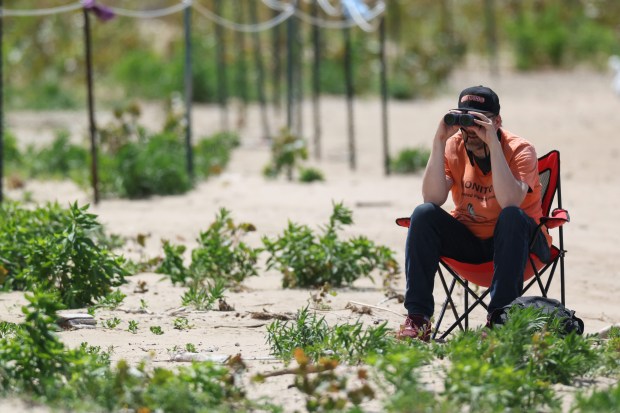
Last week, Montrose Beach offered a glimpse of summer life as temperatures reached 80 degrees. Families and children indulged in beach activities, while some ventured into the water. Nearby, at the stone pier, bird-watching enthusiasts focused on spotting the elusive piping plover, a sand-colored shorebird.
Alongside other alterations, changes made by President Donald Trump’s administration have impacted the Endangered Species Act, putting several species at risk. These modifications redefine “harm,” excluding significant habitat alteration from its purview. Experts like Ben Greuel of the Sierra Club argue this shift endangers species like the piping plover, an Act success story. The Great Lakes piping plover population dwindled to 13 pairs in the 1980s due to habitat loss but rebounded to around 80 pairs last year with conservation help.
Tamima Itani, leading Chicago Piping Plovers, expressed concerns about the birds’ winter habitats. Kristen Boyles of Earthjustice noted that developers had previously been required to create habitat conservation plans to obtain permits. The removal of such requirements could lead to greater habitat degradation.
Legal battles ensue as advocacy groups, with Earthjustice, challenge these changes. The U.S. Department of the Interior defends its stance by citing a 2024 Supreme Court decision. However, Boyles refutes their interpretation, suggesting judicial roles in regulatory interpretation.
Further changes include the removal of automatic protections for threatened species and a requirement to consider economic impacts when designating critical habitats. An area can now avoid this designation if its exclusion won’t cause extinction.
Beyond piping plovers, the whooping crane represents another species vulnerable to these changes. The whooping crane has recovered from a North American population of 15 birds in 1938 to over 500 today, largely due to the Endangered Species Act. Rich Beilfuss from the International Crane Foundation highlights its role in opposing harmful developments, like power lines near their habitats.
The Hine’s emerald dragonfly, requiring specific environmental conditions, faces threats from habitat destruction. Marla Garrison from McHenry County College emphasizes that habitat preservation is crucial for its survival. Andres Ortega from the Forest Preserve District of DuPage County explained that recreating conditions for these dragonflies is a challenge, though modifications show promise.
Insects often go unnoticed in conservation discussions. People like Alex Terrana engage with nature by bird-watching, enhancing appreciation for urban environments. She acknowledges Chicago’s efforts in expanding piping plover habitats, yet notes that federal regulatory changes could undermine these local initiatives.