
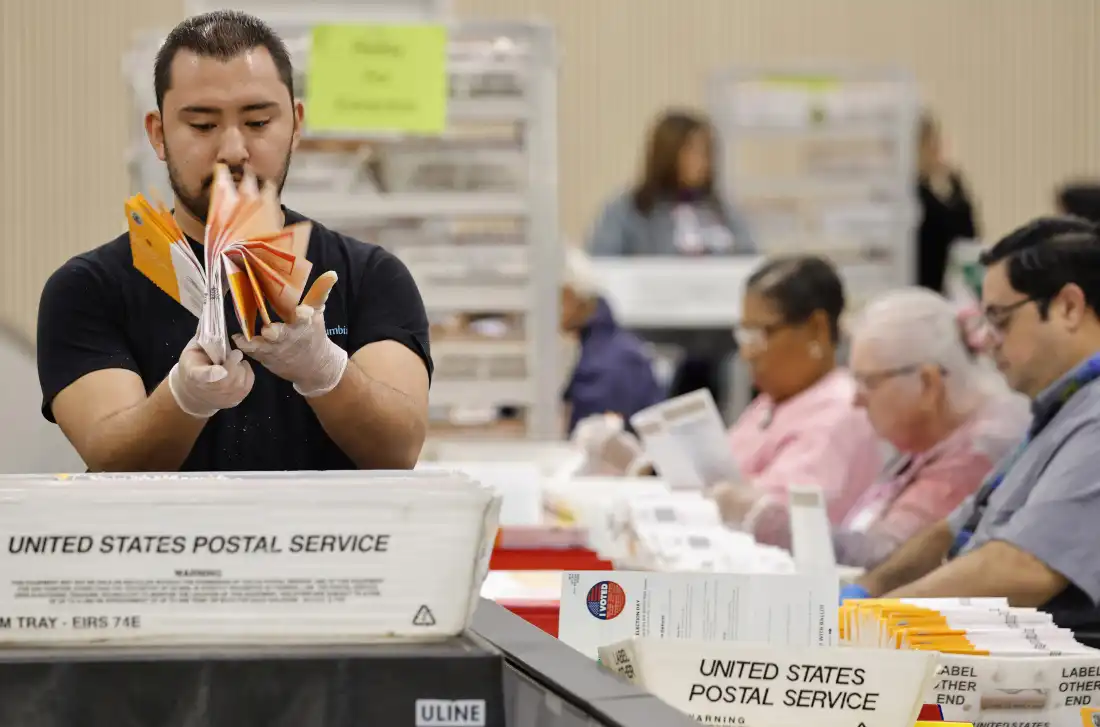
In the lead-up to Election Day, the Trump administration heightened its efforts to combat alleged voter fraud, focusing heavily on California. Despite the election being over, officials and civil rights lawyers anticipate ongoing scrutiny from the administration regarding noncitizens on state voter rolls and what they perceive as intimidation tactics against election officials.
James Williams, county executive for California’s Santa Clara County, expressed readiness to continue addressing the administration’s actions. “It’s clear that efforts to create non-existent facts persist,” he stated to NPR. This preparation is in sharp focus following the criminal charges federal prosecutors filed against individuals accused of voting or registering without U.S. citizenship. But such instances are rare compared to voter numbers.
In mid-October, the federal government alleged that 20,000 “likely” noncitizens were on California’s voter rolls. The Department of Justice (DOJ) attempted to prevent ballots from being counted if citizenship wasn’t verified. However, their requests were rejected by a federal judge, a federal appeals court, and the U.S. Supreme Court. Even after dropping their lawsuit, the DOJ has yet to withdraw subpoenas sent to California counties seeking records on responses to their actions.
U.S. Attorney General Todd Blanche confirmed ongoing investigations in several states regarding voter processes. Recent rulings have posed new challenges to federal intervention in state voter maintenance. “They’ve encountered substantial legal setbacks because Congress never authorized this program,” Anna Baldwin, a voting rights litigation director, told NPR.
“Do I think they will persist? Yes, but they’ve met significant legal hurdles,” Baldwin said.
Court orders have underscored state authority over elections and questioned the credibility of federal noncitizen data. A Washington, D.C., judge ruled that the DOJ and Department of Homeland Security lacked authority to provide these lists, violating the Privacy Act. Though the federal government plans to appeal, earlier orders vacated the DOJ’s attempts to require unredacted voter rolls for federal comparisons, considering them unlawful.
Federal prosecutors remain committed to pursuing noncitizen voting cases. Some local prosecutors, like San Luis Obispo’s District Attorney Dan Dow, have responded to federal alerts, charging individuals as necessary. Yet Loyola Law School’s Justin Levitt expects only minor follow-through due to the infrequency of noncitizen voting.
The tension remains whether the Justice Department will reduce its criminal threats against local election officials. In October, federal warnings indicated potential criminal liability for counting ballots from federally identified noncitizens. President Trump echoed these consequences on social media.
Leading up to Election Day, subpoenas demanded county records relating to possible noncitizens and responses to DOJ mandates to set aside questionable ballots. Santa Clara’s Williams emphasized the need for federal cooperation with local and state governments to support rightful voting while ensuring voter rolls exclude noncitizens.
The inflated estimates of noncitizens presented by the Trump administration faced criticism for inaccuracies. State officials countered the federal data, labeling the figures as inflated potential counts. Analysis by UCLA’s Voting Rights Project revealed substantial inaccuracies in the DOJ’s lists, including indicating naturalized citizens and duplicate entries.
Tricia Webber, Santa Cruz County’s election official, identified multiple errors in DOJ’s listed individuals, including non-registrants and inaccuracies in dates of birth.
Federal attorneys recognized the flaws in these noncitizen lists after judicial scrutiny. Judge David Carter had intended to review the DOJ’s claims but will no longer do so following the DOJ’s case withdrawal.
Going forward, scrutiny may intensify regarding federal methods used to identify noncitizens on voter rolls. As Democrats assume control of Congress, they may explore the federal approach and potential Privacy Act breaches, noted David Becker from the Center for Election Innovation and Research. “Serious examination of the Department of Homeland Security’s assistance in these efforts seems likely,” Becker concluded.