
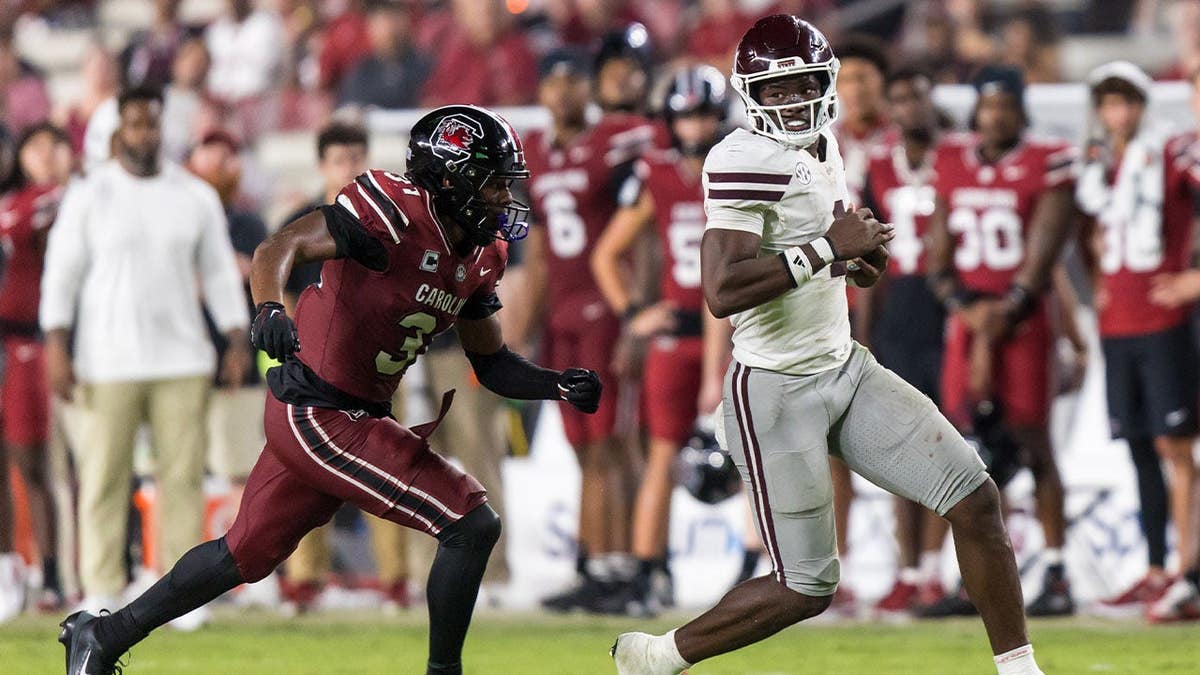
The market for college football quarterbacks is experiencing significant inflation, but this has little to do with grocery prices. Recently, Mississippi State quarterback Kamario Taylor secured a lucrative $7.5 million contract to remain in Starkville. Reports suggest the figure could exceed $9 million with incentives.
Kamario Taylor’s Significant Deal
Taylor’s contract highlights the increasing investment in talented quarterbacks. The Bulldogs have struggled in recent years, and Taylor’s potential as a top-tier draft pick made him a valuable asset for the program. Locking him in was a strategic decision amid a competitive quarterback market.
As college programs invest more, questions arise about sustainability. Taylor has shown promise, but with limited experience, his large contract reflects a broader trend.
NIL Saga and Market Dynamics
The college football landscape is shifting due to Name, Image, and Likeness (NIL) deals. Programs face pressure to secure top talent amid growing competition. Historical examples illustrate the potential pitfalls of hefty investments in emerging players.
For instance, Texas Tech’s $5-6 million agreement with Brendan Sorsby, following a solid Cincinnati season, did not yield expected results. Tennessee’s $8 million investment in Nico Iamaleava also fell through when he chose UCLA.
Rising Costs and Competitive Edge
The market for quarterbacks is heating up, with players commanding unprecedented sums. Keelon Russell, playing for Alabama, serves as another example. A successful season could lead to substantial demands from boosters.
The financial dynamics of college football are evolving quickly. With programs seeking championship rosters, the cost of assembling competitive teams continues to climb. The need for substantial financial backing is evident, as seen in Ryan Day’s $20 million requirement for a championship team at Ohio State.
Future Considerations
College football is witnessing an influx of revenue, granting players significant leverage. Discussions around salary caps and agreements are emerging, though the sport continues operating in a largely unmanaged environment.
The trajectory of these financial trends remains uncertain. However, the current pace of investment shows no signs of slowing. The evolving financial landscape poses questions about the long-term sustainability of college football’s economic model.
Austin Perry reports for OutKick.