
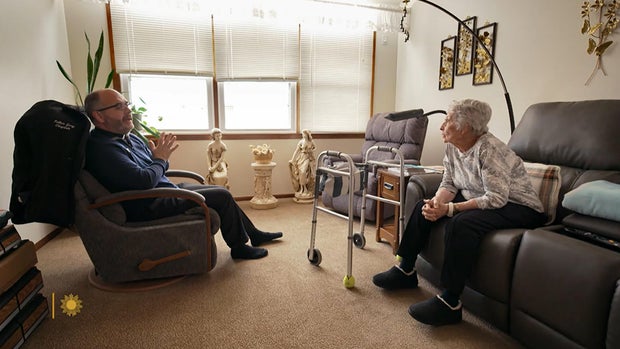
In North Dakota’s small farming towns like Hebron and Glen Ullin, many retirees face ongoing challenges. Mae Buchli, aged 98, is committed to remaining in her home despite these difficulties. She said, “We decided we’re not going to move, ’cause we want to stay home. You know how that is.”
Across the United States, rural areas are aging faster than urban regions. The USDA reports a rise in counties where at least 20% of the residents are 65 or older since 2010. This older demographic often encounters health risks linked to loneliness and social isolation.
Lynda Hoerauf, 88, has always lived in these rural areas and desires no other life. She describes rural towns as vastly different from cities and expresses contentment in staying. However, she admits Sundays can be tough due to inactivity.
Father Gary Benz, having grown up on a nearby farm, regularly visits his parishioners who can’t visit him. His visits to parishioner Viola Weinhart, age 96, have influenced his ministry. “It’s helped me,” he noted, “because I think it’s made me more compassionate.” Weinhart appreciates his company, saying, “He spends a little time with me each week and fills me in on the latest news, especially on the church.”
Rural counties report one in five adults aged 65 or older. Moving to urban areas is often unaffordable for many seniors despite having better resources. The Rural Health Transformation Program, initiated by President Trump’s “Big Beautiful Bill,” intends to improve access to healthcare for seniors. Although the program allocates $50 billion, it cannot address all senior challenges, many of which are not medical.
“Sometimes older adults, especially in the challenging years, get overlooked, forgotten,” remarked Jane Strommen, a gerontology specialist at North Dakota State University Extension in Fargo.
Strommen takes a grassroots approach to assist rural seniors, promoting local help. Funded by Margaret A. Cargill Philanthropies, Strommen leads a pilot program called Aging in Community, which motivates neighbors to support each other.
Kyla Sanders, a retired nurse from rural Montana, coordinates the Aging in Community initiative. Sanders supports elderly individuals in isolated rural areas of North Dakota, delivering aids like a calendar with audio assistance to Mae Buchli, who exclaimed, “Oh, is that ever neat!” Such help enhances seniors’ sense of belonging and value.
Sanders navigates remote roads to aid with tasks ranging from fixing wristwatches to arranging game days. Having worked in the program for five years, she observes meaningful changes. “Our clients are saying that they have a higher quality of life,” Sanders stated. “They feel more confident living at home and more connected to local resources.” This positive impact fuels the program’s expansion to 12 counties, some with only six people per square mile.
During a visit to Lynda Hoerauf, conversations lingered long after Sanders left, highlighting the importance of the setting. As Hoerauf and many others say, “There’s no place like home.”
For more info:
- Rural Health Transformation (RHT) Program (Centers for Medicare & Medicaid Services)
- Jane Strommen, gerontology specialist, North Dakota State University, Fargo, N.D.
- Aging in Community Program
Story produced by Michelle Kessel. Editor: Remington Korper.