
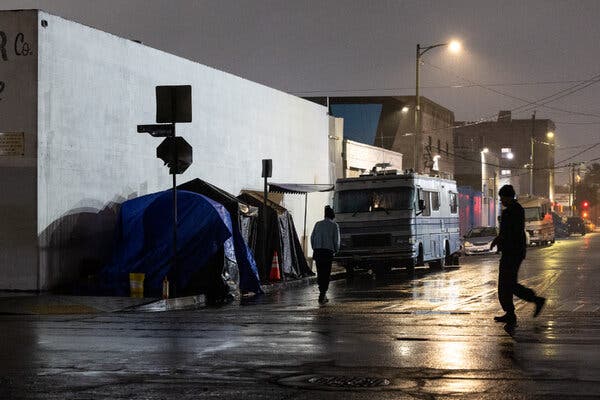
In California, the issue of homelessness often becomes visible in the form of recreational vehicles (R.V.s) parked on streets. Some see these vehicles as eyesores, especially in light of the state’s ongoing homelessness crisis. Neighbors and local politicians express the desire to have them removed, while residents of these R.V.s feel they are under siege.
A law effective from January in Los Angeles and Alameda Counties allows authorities to swiftly dismantle oversize vehicles with a value up to $4,000, saving them from being towed. This is a significant increase from the previous limit of $500.
Homeless rights lawyer Tori Larett in Sacramento argues that the number of people using vehicles as homes is underestimated. She believes the real figure could be double the estimated 34,000 people. For about half of these individuals, an R.V., converted bus, or travel trailer serves as their primary residence.
“The whole state is waging a war on R.V.s right now,” said Larett, who also works as the research director at the National Vehicle Residency Coalition. Conducting research, Sam Lutzker, a sociology Ph.D. candidate at U.C.L.A., explores the lives of those living in R.V.s. For three days in March, he collected stories across Los Angeles.
His research centered on City Council District 11, led by Councilwoman Traci Park, who promotes towing operations to remove these vehicles. When R.V.s are eliminated, she shares her achievements on social media. Echoing community concerns, local businesses and residents sometimes employ private security to pressure R.V. inhabitants to relocate, regardless of legal parking status.
Park describes these R.V. residents as living in extensive encampments filled with dilapidated “nuisance vehicles” amidst rampant crime and unsanitary conditions. She states, “There’s widespread illegal dumping, including of human waste. These encampments are a public health emergency, a public safety emergency.”