
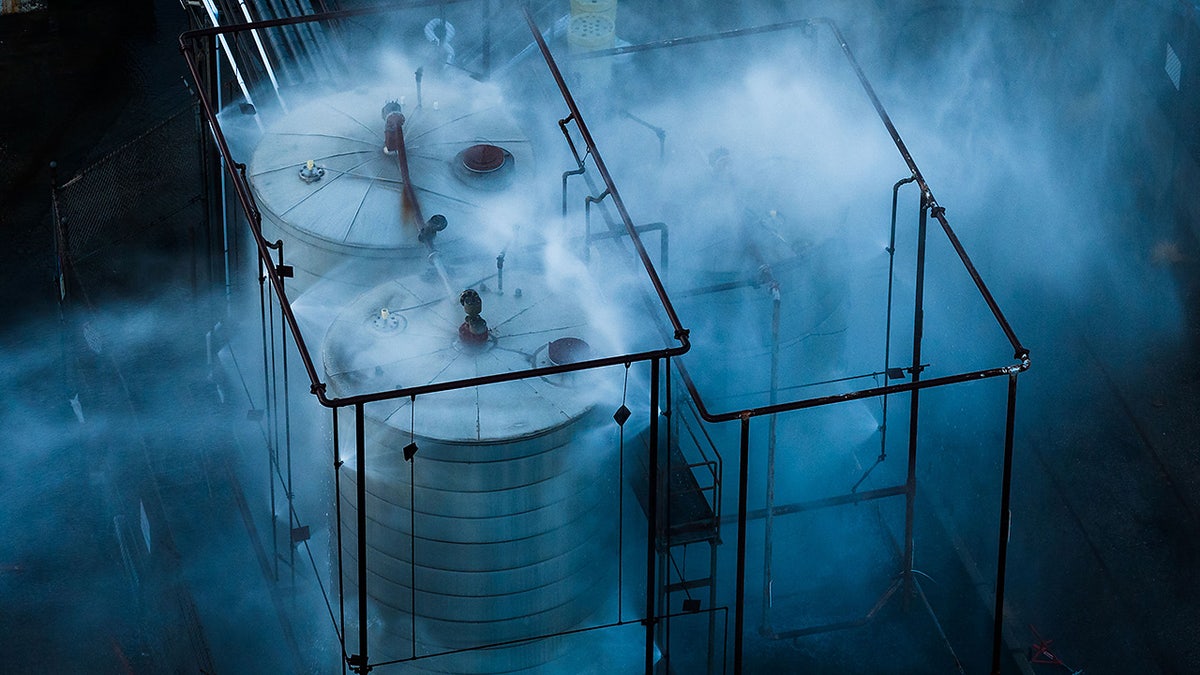
Emergency crews in Southern California have undertaken a high-risk operation to stabilize a chemical tank threatening public safety. The internal temperature of the failing tank had increased to 90 degrees Fahrenheit, prompting over 40,000 residents to evacuate and the declaration of a state of emergency by Governor Gavin Newsom.
Emergency Efforts and Risks
The Orange County Fire Authority is spearheading efforts to neutralize the chemical threat. Incident Commander Greg Covey revealed that the temperature within the tank rose an average of one degree per hour, reaching a concerning level of 90 degrees after starting at 77 degrees the previous day. The primary concern is that the tank could either leak 6,000 to 7,000 gallons of hazardous chemicals or experience a thermal runaway, leading to an explosion.
Firefighters, supported by chemists, focused on ensuring the 15,000-gallon tank would not explode if the smaller 7,000-gallon tank burst. They devised a method of using continuous water spraying to gradually harden the chemical, reducing the risk of a sudden reaction.
Contingency Plans and Evacuations
Officials are developing contingency measures to contain any potential spills. Strategies include creating diversions to channel any chemical overflow away from sensitive areas such as storm drains and ocean waters, preventing ecological harm. Interim Fire Chief T.J. McGovern emphasized that allowing an explosive failure is not an option.
The emergency declaration allows for the mobilization of additional resources. State and local agencies, under the direction of Governor Newsom, are working to safeguard the affected communities while exploring solutions to the chemical threat.
Initial Leak and Response
The crisis began when methyl methacrylate, a volatile plastic epoxy, leaked at the GKN Aerospace facility in Garden Grove. Initially, cooling efforts seemed to manage the situation. However, by Friday morning, the crisis worsened, leading to the implementation of a ‘water curtain’ to buy time for finding solutions. The evacuation zone was expanded to maximize public safety.
Health Concerns
Health authorities have warned about severe hazards if the tank ruptures. Dr. Regina Chinsio-Kwong from the Orange County Health Care Agency highlighted the dangers of toxic vapor inhalation, which could trigger respiratory issues along with eye, nose, and lung irritation. Ensuring people remain out of the risk zone is crucial for safety.
Authorities including Rep. Derek Tran are closely monitoring the unfolding situation. He is coordinating with federal agencies like FEMA and the EPA.
This story continues to develop as emergency services work tirelessly to manage the threat and protect the community.