
SpaceX’s New Starship Launch
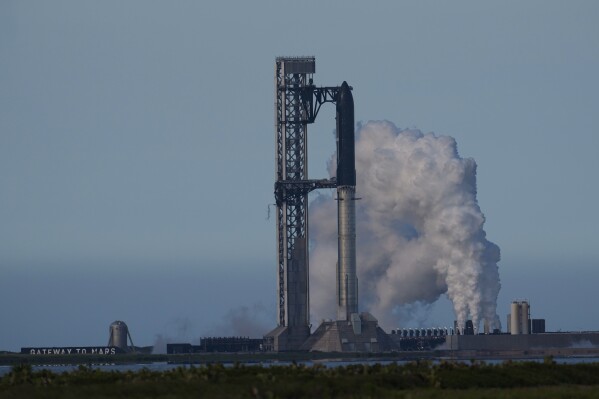
SpaceX launched its largest and most powerful Starship on a test flight, marking a significant advancement for the company’s lunar aspirations with NASA. The launch took place from Texas, carrying 20 mock Starlink satellites. These were released during the flight that stretched halfway around the globe. The spacecraft reached the Indian Ocean, despite engine issues, and erupted in flames upon impact, as anticipated by SpaceX.
Musk’s Evaluation of the Launch
Elon Musk described the launch as an “epic” event and praised his team for their accomplishments. He emphasized the test flight’s importance in paving the way for future missions aimed at reaching Mars. The mission is a part of the ongoing development for NASA’s Artemis program.
Development and Challenges
The Starship test was its 12th flight, demonstrating its potential use in space exploration. SpaceX’s third-generation model, V3, launched from a new pad at Starbase, near the Mexican border. Early launch attempts faced technical issues that delayed the launch.
Previous test flights often ended in midair explosions, but this launch avoided such incidents until the spacecraft’s final descent into the ocean. The spacecraft demonstrated control and capability throughout the flight, despite some engines failing to fire.
Technical Specifications
The new Starship model stands at 407 feet. It features improved navigation, camera systems, and docking technology aimed at supporting future missions. The revamped booster contains larger grid fins and a stronger fuel transfer line, drawing comparisons to SpaceX’s Falcon 9 booster.
Nasa’s Partnership and Future Plans
NASA is investing billions in SpaceX and Blue Origin to develop lunar landers for the Artemis program. Both companies are in a competitive race to be the first to successfully land astronauts on the moon. NASA plans to follow up on its lunar successes with a trial run next year, leading to a potential moon landing by 2028.
Private Space Travel Reservations
SpaceX is already taking reservations for private lunar and Martian flights. One high-profile reservation includes Dennis Tito, who has planned a trip around the moon. Another is bitcoin investor Chun Wang, who announced plans for Mars travel. Exact dates and costs for these missions remain unspecified.
The Associated Press Health and Science Department receives support from the Howard Hughes Medical Institute’s Department of Science Education and the Robert Wood Johnson Foundation. The AP is solely responsible for any content.