
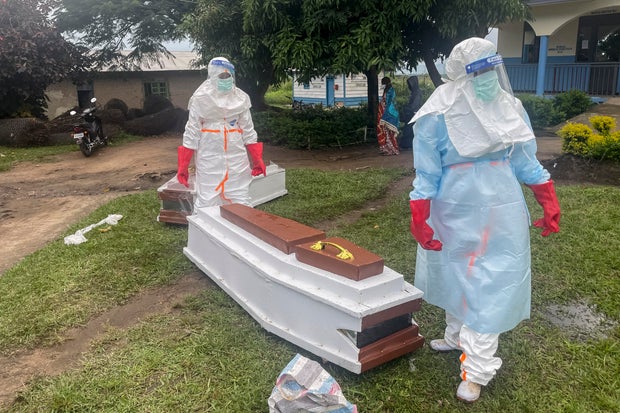
The World Health Organization (WHO) Director-General, Tedros Adhanom Ghebreyesus, announced a concerning escalation in the Ebola outbreak in the Democratic Republic of Congo. The outbreak is now deemed to pose a ‘very high’ risk nationally. As a result, northeastern Congo’s authorities have restricted funeral wakes and gatherings exceeding 50 individuals.
Ghebreyesus stated that the WHO’s alert has been elevated due to the virus’s rapid spread. Although the risk remains high regionally, the global threat remains low. Currently, 82 cases are confirmed, resulting in seven deaths. However, there are nearly 750 suspected cases and 177 potential deaths.
Neighboring Uganda remains stable, with only two confirmed cases from individuals who traveled from Congo, including one death. In efforts to contain the virus, northeastern Congo’s provincial government mandates that funerals adhere to health protocols. Additionally, journalists must acquire permits to cover the outbreak, complicating their work.
Community resistance, partly fueled by misinformation and clashing medical policies, has been significant. Recent tensions erupted in Rwampara with an arson attack on an Ebola treatment center. Local youths set the center ablaze after being denied the body of a deceased local man, highlighting the challenges health workers face. These incidents reveal the tension between health measures and entrenched local customs.
Deputy Senior Commissioner Jean Claude Mukendi explained that the youths misunderstood Ebola burial protocols. Humanitarian organizations and authorities face protests when enforcing these regulations. Despite the attack, ALIMA, a humanitarian organization, confirmed that calm has been reestablished as aid teams continue their work.
The situation underscores the challenges both Congolese authorities and aid agencies encounter in combating the outbreak, specifically declared a public health emergency. Jean Kaseya, Director-General of the Africa Centers for Disease Control and Prevention, anticipates a rise in cases as surveillance intensifies.
Effective response requires early virus detection. However, the region’s fragile health infrastructure, further impaired by aid cuts, complicates efforts. Over 920,000 internally displaced people in Ituri Province compound these challenges. Recent armed conflicts have exacerbated the crisis, with at least 17 people killed in Alima by ISIS-linked militants.
A major obstacle for health workers is the absence of a vaccine or treatment for the Bundibugyo strain causing the outbreak. Development of a vaccine is projected to take at least six to nine months. Ariel Kestens of the International Federation of Red Cross and Red Crescent Societies emphasizes the urgency of collaborative action with affected communities.
Ebola, a highly contagious virus transmitted via bodily fluids, presents symptoms such as fever, vomiting, and muscle pain. Initial misdiagnosis delayed awareness of the current outbreak. Authorities have yet to identify ‘patient zero,’ which suggests an earlier start to the outbreak than recorded.
The U.S. has implemented travel restrictions for individuals from Congo, Uganda, and South Sudan, requiring screenings at Washington Dulles International Airport. The India-Africa Forum Summit has been postponed in response to the ‘evolving health situation.’ Moreover, Congo’s soccer team canceled World Cup training to mitigate outbreak risks.
References: Ebola, Democratic Republic of Congo, Uganda, World Health Organization