
The United States government has implemented a strategy against Cuba similar to that used in Venezuela. This approach includes oil blockades, increased US military presence, federal charges, and threats of intervention. Although these pressure campaigns appear similar, experts note they do not guarantee similar outcomes. President Donald Trump often warned, ‘Cuba is next.’
Brian Finucane, a senior adviser at the International Crisis Group and former State Department lawyer, explained the situation. He stated, ‘President Trump viewed the intervention in Venezuela as a fantastic success.’ Trump has attempted to replicate this model in other nations, including Iran. However, Cuba, like Iran, differs significantly from Venezuela. Should the US topple the Cuban government, no apparent successor exists to collaborate with Trump’s administration. This contrasts sharply with Venezuela, where US forces captured President Nicolás Maduro in January, and Delcy Rodríguez took control with US approval, maintaining her position. Cuban officials, speaking anonymously, indicated that ‘there is no Delcy in Cuba.’
The US military force in the Caribbean is now smaller and less imposing than the vast deployment off the coast of Venezuela prior to Maduro’s capture, Finucane noted. Furthermore, a formal charge against 94-year-old former Cuban President Raúl Castro carries less impact than charging Venezuela’s sitting president with drug trafficking and using that as a justification for his capture.
Trump has threatened military operations. In other conflicts, he laid the groundwork for US intervention in Venezuela, and potentially in Cuba, with increasing threats months before military action occurred.
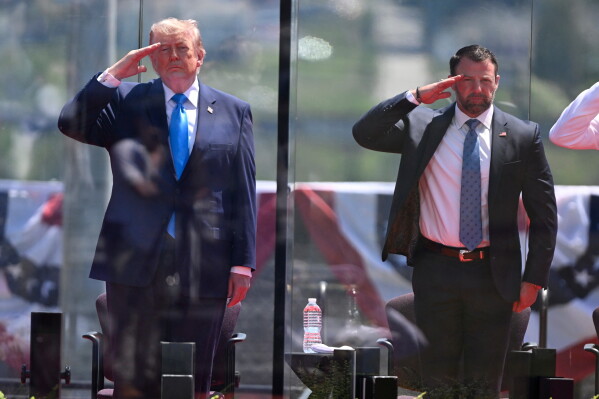
Trump warned Caribbean leaders to align with the US or face its might. Weeks before the military operation against Maduro, Trump appeared with his top national security advisers in Florida, issuing one of his final public threats to Maduro. ‘If you want to do something, if you act tough, it will be the last time you can act tough,’ Trump warned in December. Shortly after Maduro’s transfer to the US, where he awaits trial, Trump shifted focus to other regional countries, particularly Cuba, claiming it was next on his list. ‘Cuba is ready to fall. Cuba seems ready to fall. I don’t know if they will hold,’ Trump told reporters on January 5.
Trump then threatened tariffs on any country supplying oil to Cuba, asserting the US could ‘honorably take Cuba.’ He repeated his threats Thursday, describing Cuba as ‘a failed country.’ ‘Other presidents have looked at this for 50, 60 years,’ Trump said. ‘And it seems I will be the one to do it.’
The US employs oil embargoes against Cuba and Venezuela to exert intense pressure on ruling elites, though their methods differ. In Venezuela, the Trump administration targeted oil exports, aiming to deprive Maduro’s government of income. Following Maduro’s departure, the focus shifted to restricting Venezuela’s ability to export oil to certain countries, primarily Cuba, which did not pay in cash, and forcing it to accept US conditions for shipments. Much of Venezuela’s crude now passes through US refineries.
The embargo against Cuba aims to deprive the country of oil imports, intensifying its energy shortages. Though the US has permitted limited shipments to the island, Cuba recently reported running out of reserves. The oil blockade, an extension of a broader embargo the US has imposed on Cuba for decades, has made it much harder for the government to provide electricity and gasoline to citizens. Finucane warned these measures could go too far, prompting many Cubans to head to Florida in makeshift boats, similar to the 1990s refugee crisis. ‘President Trump is particularly concerned about immigration,’ Finucane noted. ‘If they push Cuba too hard and destabilize the island, there is a potential for some kind of refugee crisis.’
The US has charged officials. During Trump’s first term in 2020, the Department of Justice accused Maduro of drug trafficking and other charges. This case led to Maduro’s capture, with him now awaiting trial in New York, pleading not guilty. The move altered Venezuela’s relationship with the US, allowing previously sanctioned Venezuelan oil to be sold to US companies and on global markets, a significant change after years of blocked business with Venezuela and its oil sector.
The immediate goal of the formal accusation against Castro for the 1996 downing of civilian aircraft piloted by Miami-based Cuban exiles is to escalate Trump’s pressure campaign, explained William LeoGrande, a Latin American politics professor at American University in Washington. Capturing Castro on charges including murder would not alter Cuban government operations. ‘Castro still wields influence, and leaders seek his advice on significant decisions, but he doesn’t run the government daily,’ LeoGrande noted.
Increasing US military presence in the region. Prior to Maduro’s capture, the US deployed warships near Venezuela, marking its largest military deployment in Latin America in generations. The advanced warship, the USS Gerald R. Ford, was redirected from Europe to join the operation. Three amphibious assault ships transported about 2,000 Marines, helicopters, and Osprey aircraft. US forces spent months attacking small vessels accused of drug smuggling in the Caribbean and eastern Pacific Ocean, with these attacks ongoing. Meanwhile, fighter jets flew over the Gulf of Venezuela. The actual mission to capture Maduro involved over 150 aircraft across the Western Hemisphere.
Though the US now has a smaller force in the Caribbean, it still includes two amphibious assault ships with Marines aboard. The arrival of the aircraft carrier USS Nimitz and accompanying warships coincided with charges against Castro. The Nimitz is on its final tour, conducting maritime exercises in the region before decommissioning.
Finucane commented, ‘These are very different situations, and it’s difficult to foresee similar outcomes. A lightning strike to capture Raúl Castro or someone genuinely in a leadership position doesn’t seem likely to produce the same result in Cuba as in Venezuela.’