
The International Court of Justice (ICJ) has made a landmark ruling, determining that Myanmar committed genocide against the Rohingya Muslim minority. This decision marks the first instance where a state has been held responsible for genocide in the history of the ICJ, which began operations in 1945.
In 2017, Myanmar’s military conducted a series of operations in northern Rakhine State. These operations resulted in significant casualties, with at least 10,000 people killed. Among the victims were up to 2,109 children under the age of five. The campaign also forced over 700,000 individuals to flee their homes.
This decision could impact the legal treatment of cases under the 1948 Genocide Convention. Melanie O’Brien, an international law professor at the University of Western Australia, discussed its potential implications, noting its relevance to other cases involving genocide charges.
A spokesperson from Myanmar’s government labeled the ruling as “unfair” and highlighted that it was not unanimous. The military junta denies any genocide claims. However, the National Unity Government, established after the 2021 coup, has expressed respect for the decision.
The ruling serves as a public acknowledgment in a court of law that genocide occurred against the Rohingya, according to activists and legal experts.
For the Rohingya community, this decision is a significant step in recognizing their struggle and existence. Sayed Ullah, a community leader in a Bangladeshi refugee camp, emphasized the importance of this acknowledgment.
Genocide as a Historic First
The ICJ’s ruling is unprecedented among state accountability cases. Prior ICJ cases, like those involving the Yugoslav wars, did not result in a state being held directly responsible for genocide.
In 2007, the court considered a case against Serbia, acknowledging genocide in the 1995 Srebrenica massacre, but did not find sufficient evidence to hold Serbia directly responsible. A subsequent case involving Croatia had similar limitations.
Marko Milanovic, a professor of public international law, noted that the ICJ adapted its approach to evidence rather than redefining genocide.
Implications for Myanmar
The ICJ has ordered Myanmar to facilitate the safe and voluntary return of the Rohingya and to prosecute those guilty of genocide. Myanmar has a two-year window to submit reports on its efforts. Failing this, compensation must be arranged.
The decision, while binding, may face implementation challenges. The Gambia, which filed the case, may seek U.N. Security Council intervention, although political complexities, like potential vetoes, exist.
International responses, including possible sanctions, may pressure Myanmar to comply. Notable actions include the U.K.’s expulsion of Myanmar’s defense attaché and ASEAN’s call for supportive measures.
Further developments include the International Criminal Court’s consideration of a warrant for Min Aung Hlaing in 2024. However, achieving restitution involves numerous hurdles.
Impact on Rohingya Refugees
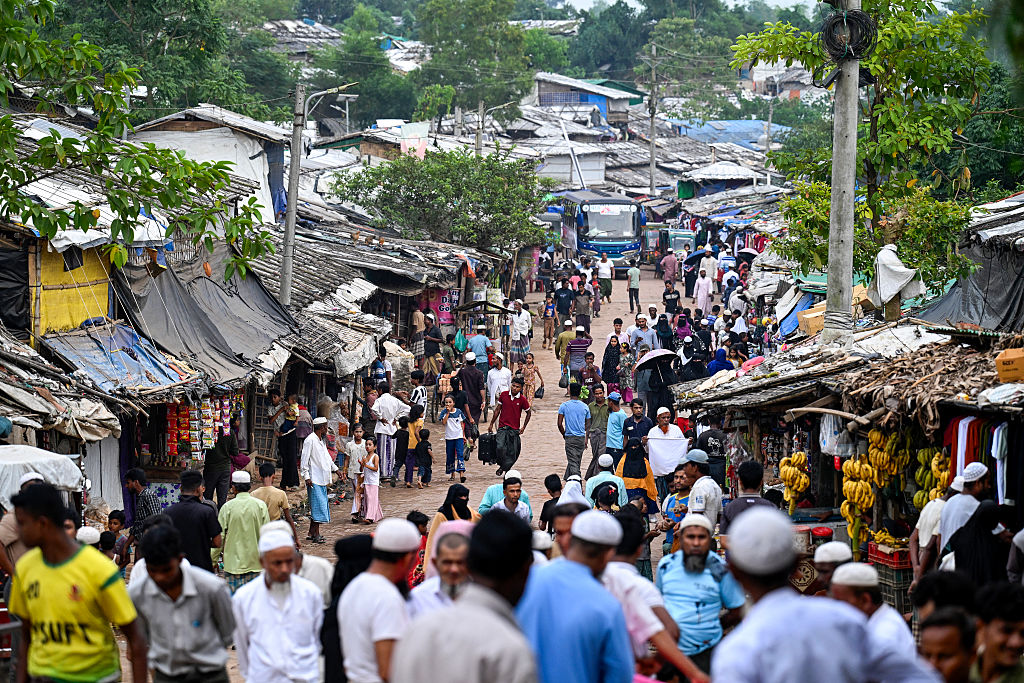
An estimated one million Rohingya refugees reside in Bangladesh, mostly in camps like Cox’s Bazar. Though some wish to return, their homes have largely been destroyed. O’Brien underlines the decades of persecution the Rohingya have endured.
The concept of restitution aims to restore victims to their pre-crisis status, which remains challenging given the losses experienced by the Rohingya.
Potential Influence on Genocide Case Against Israel
The ICJ’s ruling may affect South Africa’s ongoing genocide case against Israel. This involves allegations of Israeli actions in Gaza. The case, currently in written pleadings, hinges on claims of genocidal conduct.
The Myanmar ruling demonstrated that genocide encompasses more than killing; it acknowledged acts like rape and forced displacement as components.
South Africa highlights patterns of conduct, invoking parallels to Myanmar’s case. However, Israel defends its military actions as self-defense.
Casualty figures from Gaza, largely from local ministries, cite tens of thousands of deaths, though differentiation between civilians and combatants remains unverified. Additional accusations surround tactics like alleged sexual violence and home demolitions.
The ICJ found child targeting significant in Myanmar’s case, highlighting it in the judgment. This detail might resonate in South Africa’s case against Israel.
Despite notable similarities, international law lacks a binding precedent doctrine. Thus, the ICJ’s ruling on Myanmar may not dictate outcomes for Israel’s case.
Nonetheless, experts like William Schabas suggest potential messages within the Myanmar judgment applicable to Israel’s situation, warranting close observation as proceedings continue.