
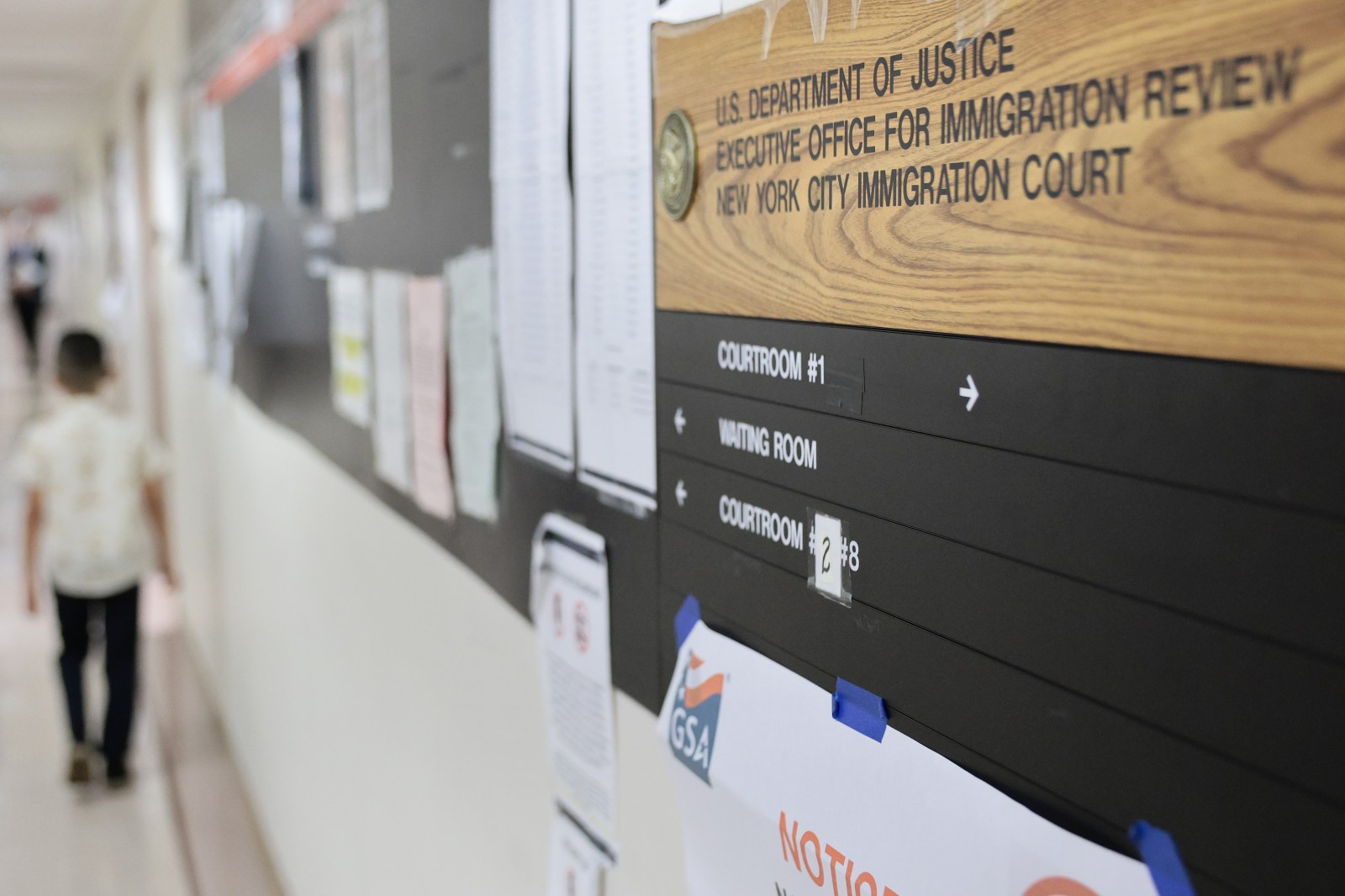
Immigrants facing deportation will have only 10 days to appeal many immigration court decisions according to a new rule from the Trump administration. This rule, set to be published in the Federal Register by the Department of Justice (DOJ), reduces the usual appeal period from 30 days to 10 days. It aims to accelerate a system overwhelmed by a growing backlog. A federal judge had blocked this major change earlier this year.
The DOJ previously attempted this change in February but faced legal challenges that partially stalled it. Following a notice and comment period, the DOJ has reinstated the policy as a final rule.
“This rule is part of the Trump Administration’s efforts to provide only a facade of due process,” stated Jill Family, a professor at Widener University Commonwealth Law School, in an interview with Newsweek. “These procedures do not allow for meaningful internal review of immigration judge decisions. To address the backlog, more resources and procedural innovation are needed. However, innovation must enhance, not diminish, the process. The administration’s approach seems to be: ‘The line is too long, so let’s eliminate the service.'”
Under the Trump administration, immigration court hearings have increased, partly due to the rising number of people detained by U.S. Immigration and Customs Enforcement (ICE) suspected of lacking legal status. The court system also struggles with a growing backlog due to the sweeping replacement of longtime immigration judges.
Newsweek attempted to reach the Department of Justice and Amica Center for Immigrant Rights, the organization that initiated the original challenge, for further comments.
Changes for Immigration Appeals
The Board of Immigration Appeals (BIA) serves as the Justice Department’s highest administrative body for interpreting and applying immigration law. It handles numerous appeals from removal decisions made by immigration judges. Under the plan in the Federal Register filing, the appeal window for many cases will drop from 30 to 10 days. Appellants will need to specify the issues they are raising in their Notice of Appeal. Some asylum cases will retain the 30-day window.
The new system expands summary dismissal significantly. This means an immigration judge’s decision to issue a removal order will be the final government decision unless the BIA accepts the case via a majority vote from its members. The DOJ cites a surge in waiting cases as the reason for the changes, which it describes as a “lengthy and unprecedented” backlog.
In Fiscal Year 2017, the BIA had 35,837 pending cases. This increased to 325,774 by Fiscal Year 2026, representing a near ninefold rise.
Reason Behind Blocking the 10-Day Deadline
On February 6, the DOJ issued its interim final rule for this proposal. This initiated a legal challenge in the U.S. District Court for the District of Columbia, with plaintiffs arguing that the new deadline severely limits meaningful BIA reviews. The lawsuit raised claims under the Administrative Procedure Act, the Immigration and Nationality Act, and the Constitution.
On March 8, Judge Randolph D. Moss set aside parts of the rule. Consequently, DOJ informed immigration judges that the 10-day deadline was lifted and the appeal deadline remained 30 days. The March ruling did not constitutionally enshrine a 30-day period but criticized the DOJ’s implementation method, citing bypassed notice-and-comment requirements for policy changes.
Potential Due Process Violations
This restored deadline may renew a deeper debate on how much process the Constitution requires before deporting someone. The Justice Department contends that although noncitizens are entitled to due process during removal proceedings, the Constitution does not inherently guarantee an administrative appeal before the BIA.
With a 10-day time frame, an immigrant facing deportation must acquire the judge’s decision, secure counsel, comprehend any mistakes, and prepare a Notice of Appeal outlining the issues, potentially while in ICE custody and without English proficiency. Organizations opposing the original rule claim it disproportionately impacts those detained, unrepresented, disabled, children, or speakers of less-common languages.
“The BIA Interim Final Rule makes a mockery of due process,” said Emilie Raber, Senior Attorney at the Amica Center for Immigrant Rights, in a press release in February. “Beyond stripping any BIA benefits for immigrants, it will create chaos in immigration court and federal appellate processes.”
In 1994, the Ninth Circuit Court of Appeals evaluated a 20-day immigration appeals deadline in Gonzales-Julio v. INS, referenced by the DOJ in its 2026 rule. The court deemed a 10-day deadline unconstitutional under certain scenarios, with that case involving an immigrant from Hawaii needing to file an appeal in San Diego, California, within that timeframe. The DOJ argues in 2026 that modern technology addresses this issue, as electronic filing allows documents to be sent anytime online.
The Way Forward
The DOJ plans to publish the changes on November 17, with the rule taking effect 30 days later for cases filed after this date. Existing pending cases will not face the reduced appeal deadline. The department probably anticipates additional legal challenges, with concerns about due process, access to counsel, and thorough case review laid out in its plan.
As the final layer of the immigration tribunal process, the BIA’s decision is pivotal. Yet, dismissed cases may still proceed to federal court for further examination.