
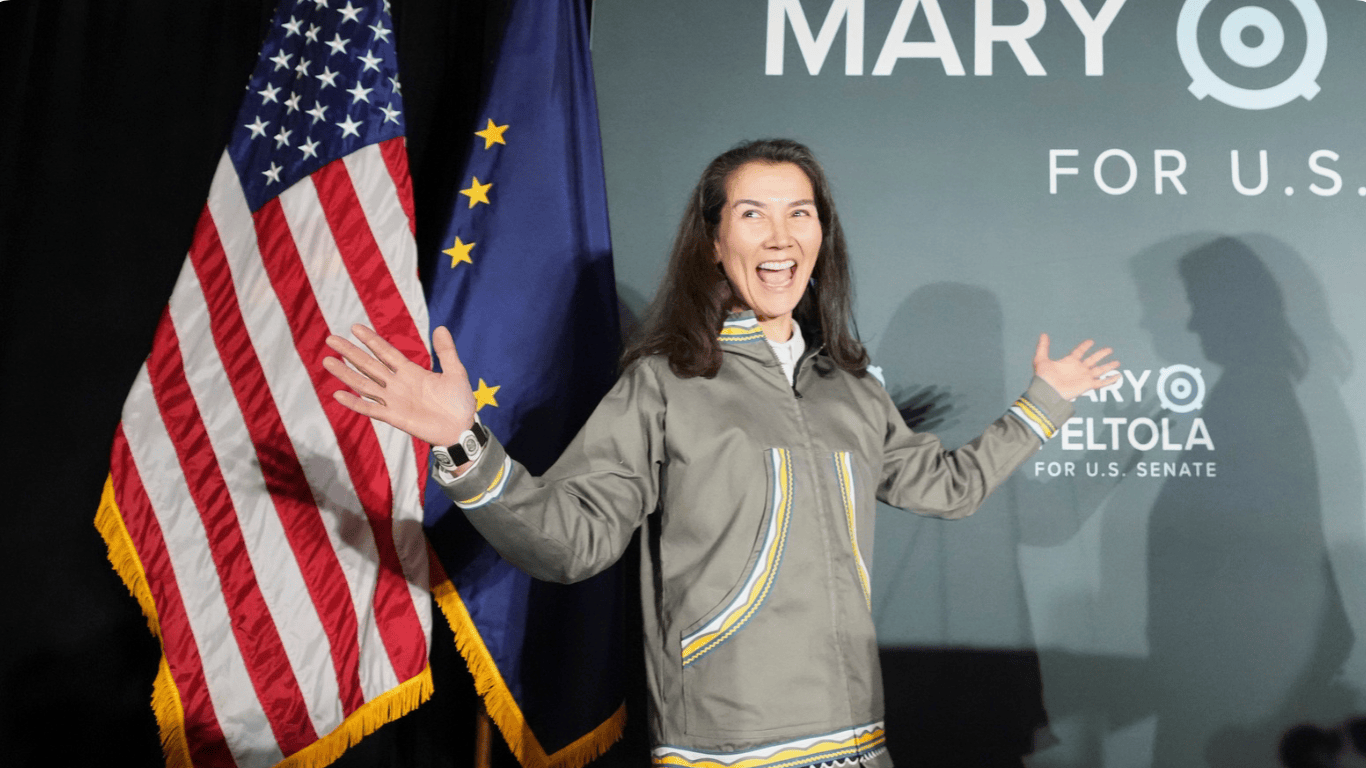
Alaska’s ballot counting process is famously slow, often due to the state’s vast distances. In the current race for the U.S. Senate, Democrat Mary Peltola is 157 votes away from securing an outright majority. The Division of Elections released an unofficial report showing Peltola with 140,637 first-choice votes, representing 49.94% of the total. Republican Senator Dan Sullivan has 129,424 votes, or 45.96%. Republican Gerald L. Heikes received 6,002 votes, and Daniel J. Sullivan Jr., not to be confused with the senator, received 4,652. Write-ins accounted for 872 votes. The Associated Press estimates that 97% of ballots are counted but has not declared a winner.
Interpreting Initial Vote Counts
The Division of Elections groups unresolved write-ins, totaling 872, in the initial round. This approach affects tight races since candidates need more than half the first-choice votes to win outright. Without a majority winner, a ranked-choice tally begins on November 18. The process eliminates the candidate with the fewest votes, redistributing these based on voters’ next choices, until a candidate reaches over 50% or only two candidates remain.
Challenges in Winning a Majority
Peltola must obtain around 52% of the remaining votes to cross the 50% threshold. The AP provides no count of uncounted ballots, but their estimate suggests thousands still need to be processed. This rests on assumptions about which races the ballots include since some voters skip certain races.
Pathways for Sullivan
Senator Sullivan’s first-choice count shows a deficit of 11,213 votes. According to Newsweek’s analysis, this gap exceeds the number of ballots yet to be counted. Even if the remaining ballots favored Sullivan, Peltola would likely lead in first-choice votes.
A ranked-choice system presents an alternative path if Peltola falls short of a majority. Then, the race shifts focus to voters’ ranked preferences beyond their first-choice candidate.
Ranked-Choice Tabulation
Newsweek analyzed a record of ballots using RCTab software, mirroring the Division’s rules for handling write-ins and overvotes. Out of 282,698 ballots, 1,059 didn’t rank anyone in the Senate race. The process sees ballots from lower-ranked candidates reallocated to next-preferred contenders. As votes were redistributed, Peltola continued to lead, with a final model showing her 51.83% to Sullivan’s 48.16%, a margin of 10,142 votes. This model only includes scanned ballots, not hand-counted ones, and excludes untallied votes.
The state’s official result will consider all eligible ballots, including ones counted manually and those arriving by deadline.
Election Outcome and Controversies
Sullivan’s campaign has not conceded, awaiting the official count. Meanwhile, Peltola’s team believes her victory is likely. Disagreements arise from speculations about Sullivan Jr.’s candidacy potentially affecting the election outcome, with legal actions initially challenging ballot handling. A federal judge dismissed such actions citing a lack of standing, preserving voters’ rights to secrecy.
Political Context and Implications
This Senate seat contributes to Congress’s composition, with Democrats already securing control. Alaska’s result could influence their Senate majority size, especially as Peltola aims to capture a seat not held by a Democrat since 2014. Final overseas ballots are due Wednesday, with the ranked-choice process starting if no candidate achieves a majority, aiming for certification by November 25.