
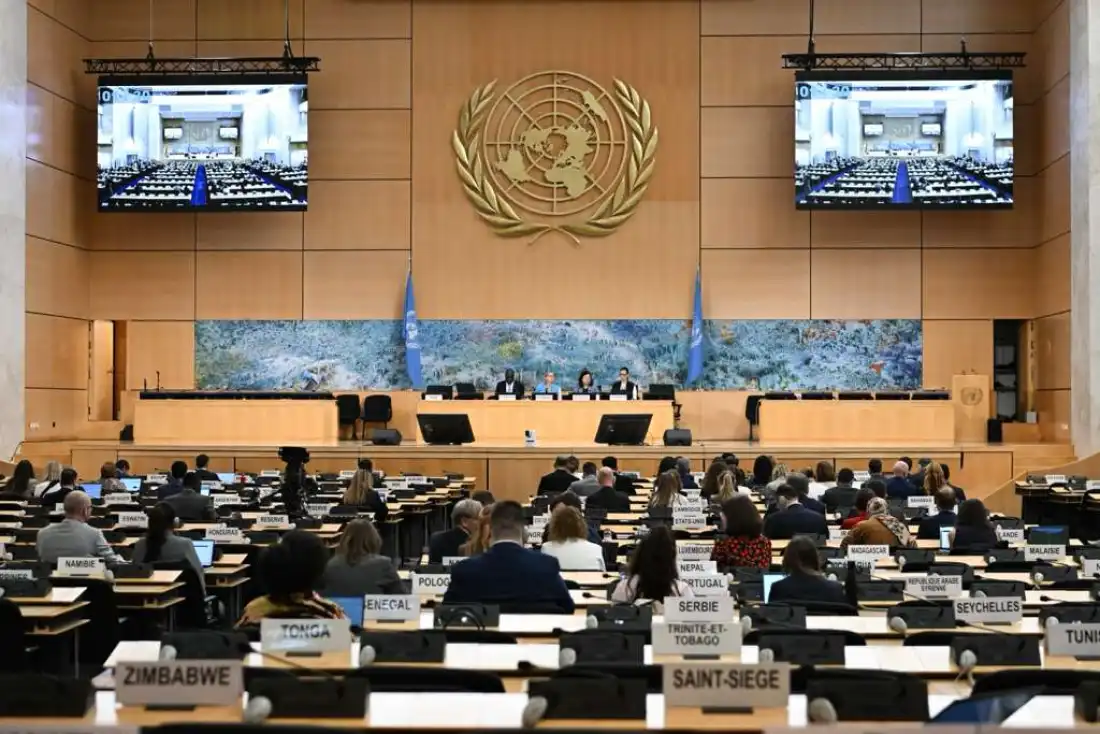
The United Nations Human Rights Council convened at the Palais des Nations in Geneva on September 30, 2026. The United States continued its boycott of the human rights review, leaving a significant vacancy as the only member state to do so consecutively. This review, termed the universal periodic review, encompasses all member states, assessing each every four to five years.
The objective is to maintain an equitable examination of human rights records globally. Member states appoint diplomats to attend these reviews, while civil society organizations can also contribute evidence. The American Civil Liberties Union, led by its human rights director Jamil Dakwar, was among those present. Dakwar accused the current U.S. administration of unabashed human rights violations, specifically highlighting issues concerning immigrants, student protesters, and the LGBTQ community. He urged the U.N. for accountability, suggesting that the Trump administration aimed to dismantle human rights.
The U.S. State Department, in a written statement, referred to its withdrawal from the U.N. Human Rights Council, condemning its alleged anti-American stance. Withdrew does not free the U.S. from the obligatory review, applicable to all 193 U.N. member states.
Many human rights organizations view the U.S.’s actions as indicative of a broader detachment and direct opposition to multilateral bodies. Examples include sanctions on the International Criminal Court and the decision to exit the World Health Organization.
What comes next? The U.N. encounters limitations in penalizing a non-compliant member. Israel’s protest in 2013, due to perceived anti-Israel bias, saw a brief absence. However, Israel returned after the U.N. adjusted the timeline. The U.S., until now, is unique in missing the review twice.
Human rights advocates suggest proceeding with the review, incorporating submitted evidence of alleged U.S. violations. Member states had prepared queries for the U.S., covering topics like the death penalty and abortion restrictions. U.N. insiders express concern, fearing a review without U.S. representation might establish a risky precedent. Even North Korea, an authoritarian state, participates.
If the U.N. permits a review minus U.S. participation, it risks encouraging similar withdrawals, with rights groups presenting evidence in what has been described as “in a vacuum.” For now, decisions on handling this situation are postponed until early next year. This pause leaves a vital recourse for victims of human rights violations in the U.S. unavailable, marking what one activist in Geneva termed “a crisis of accountability.”