
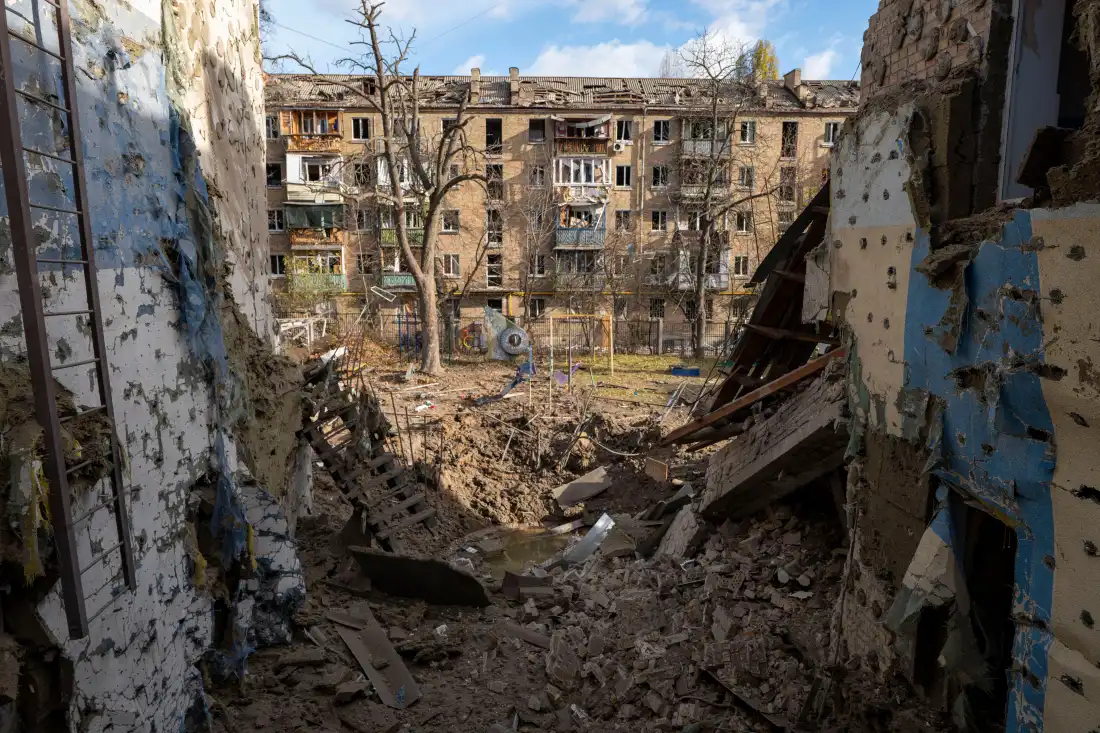
A missile attack in Kyiv left a kindergarten and a residential building heavily damaged. A crater marked the site as tensions continued to escalate.
This violence comes just before U.S.-mediated peace talks in the United Arab Emirates (UAE), which promise to include European officials despite initial resistance from the Kremlin. French Foreign Minister Jean-Noël Barrot confirmed France’s involvement, yet details on representation remain unclear.
Previously, these discussions were outlined as a tri-nation dialogue between the U.S., Russia, and Ukraine. Russian spokesperson Dmitry Peskov stated that the format had been pre-agreed, questioning Europe’s role due to its internal disagreements. Nonetheless, he acknowledged the need for European involvement in security discussions.
In related news, President Trump suggested the upcoming agreement might extend beyond Ukraine. Ukrainian President Volodymyr Zelenskyy expressed concern, referencing past agreements where regional voices were ignored, such as the Yalta Conference in 1945. This historical comparison highlights the concern for comprehensive inclusion in decision-making processes.
A shift in negotiations marks these new talks, mediated by the Trump administration after stalled attempts earlier this year. Prior sessions yielded little progress, partly due to the U.S.’s engagement in a separate conflict in Iran. Recent talks between U.S. envoy Steve Witkoff and Russian President Vladimir Putin renewed diplomatic efforts with Russia’s decision to release an American prisoner, reciprocated by the U.S.’s easing of sanctions on Russian diesel exports.
Agenda items include postwar security and humanitarian concerns, reflecting recent efforts to facilitate aid in affected regions. Russia’s delegation, led by Vladimir Medinsky, now includes senior officials like Deputy Foreign Ministers Sergei Ryabkov and Mikhail Galuzin, marking a potential shift towards addressing complex military and political issues.
Despite these developments, Russia’s demands continue to hinder progress. Moscow insists Ukraine cede significant territory and forego NATO aspirations, clashing with Zelenskyy’s demands for clear security guarantees. The challenges are formidable, with past officials having slowed or hardened discussions to align with Moscow’s objectives.
Cultural tensions persist. Celebrating National Unity Day, President Putin appeared to convey a message of resilience to any external pressures.
Expectations from these talks vary. Analysts like John Herbst remain skeptical, perceiving Putin’s engagement as strategically superficial. Meanwhile, the aftermath of the U.S. midterm elections, bringing Democratic gains, could impact future U.S. support for Ukraine.
Potential political shifts underscore the urgency. An upcoming meeting between Trump, Xi, and Putin at the Asia-Pacific Economic Cooperation summit may influence dynamics, though details are scarce.
As global leaders convene, the conflict endures. Recent missile attacks demonstrate ongoing volatility, highlighting the precarious balance between diplomacy and aggression.
With an attack in southern Ukraine claiming lives, the fragile peace process demands urgent attention and cooperation from all involved parties.