
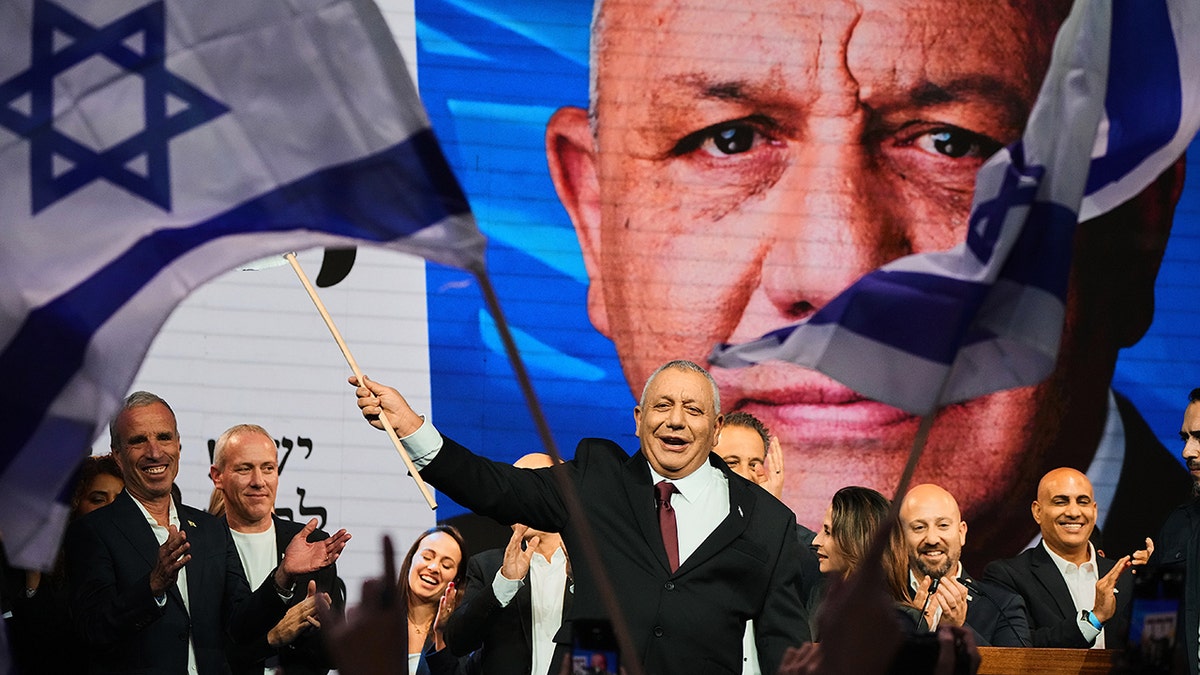
In Tel Aviv, Israel, critical coalition discussions are taking place as political groups engage in talks with President Isaac Herzog. After the recent elections, Benjamin Netanyahu and his political competitor Gadi Eisenkot strive to gather the necessary endorsements to form a new government.
President Isaac Herzog announced on Saturday his decision to appoint opposition leader Gadi Eisenkot to attempt forming the next government. This decision was made after an inconclusive national election, giving Eisenkot the first chance to build a coalition. The formal handover of the mandate is set for Sunday, November 8, at 5 p.m. Israeli time. Eisenkot will have 28 days to set up a government, with the possibility of a 14-day extension.
This choice might be a crucial step in potentially ending Netanyahu’s leadership. However, it triggers another challenging round of coalition talks, with parties deeply divided in their efforts to replace him.
“The results of the consultations may appear clear,” Herzog explained, but he warned of the uncertainties arising from competing political demands and vetoes.
Eisenkot’s backing comprises endorsements from parties that represent 67 members of the Knesset’s 120 seats. Although Netanyahu secured support from 46 lawmakers, seven members of the ultra-Orthodox United Torah Judaism party refrained from endorsing either candidate.
Netanyahu’s Likud party emerged as the largest single party, winning 27 seats, while his broader bloc claimed 53. The four-party alliance intending to replace him gained only 48 seats. The extra endorsements for Eisenkot came from two Arab-led parties, the Joint List and Ra’am, holding 19 seats together. Although they supported Eisenkot, their backing poses issues for some of his potential coalition partners, who oppose relying on Arab parties for governing.
The broader support for Eisenkot does not directly translate into an effective governing coalition of 67 seats.
Eisenkot’s plan is to form a National Emergency Government. It would initially include the parties committed to unseating Netanyahu, while staying open for other parties and lawmakers to join. In his statement, Eisenkot expressed concern for Israel’s critical national emergency. He criticized the outgoing government for jeopardizing Israeli democracy and warned that persistent political instability risks further security and diplomatic challenges.
The proposed government would rest on four core principles: affirming Israel as a Jewish and democratic state, embracing the values in Israel’s Declaration of Independence, requiring universal military, national, or civilian service, and denouncing Hamas as a terrorist group with a pledge to dismantle its military and governing abilities.
Eisenkot called on lawmakers across the political spectrum to join his coalition if they agreed with these principles.
Despite this, internal disagreements remain within the anti-Netanyahu bloc on securing the necessary parliamentary backing. Avigdor Lieberman, leader of the secular nationalist Yisrael Beitenu party, suggested a potential compromise on military draft laws for ultra-Orthodox Jews, a shift from a long-standing barrier to cooperation with religious parties. Lieberman emphasized that avoiding further elections and ending Netanyahu’s leadership calls for compromises.
The conflict over military conscription remains a significant obstacle. Ultra-Orthodox parties aim for legal protection for yeshiva students studying religious texts over military service, while Eisenkot and some associates have campaigned for expanding the service requirement.
Even if United Torah Judaism joins the four-party opposition bloc, Eisenkot would still lack the 61 seats needed for a straightforward parliamentary majority. The religious Shas party, holding six seats, has backed Netanyahu.
A minority government supported by parties abstaining outside the coalition remains an option under discussion. However, Lieberman objects to this if it depends on the Arab factions abstaining.
While Netanyahu continues as caretaker prime minister amid ongoing political negotiations, he has also contested parts of the election results amid reports of alleged voting irregularities. Israel’s Central Elections Committee has affirmed the election’s integrity was maintained, according to Reuters.
The disagreement highlights the central challenge for Eisenkot: despite a majority of lawmakers endorsing him to form a government, consensus on its structure is absent. Failure to resolve these disputes could result in another political stalemate and potentially a subsequent election.