
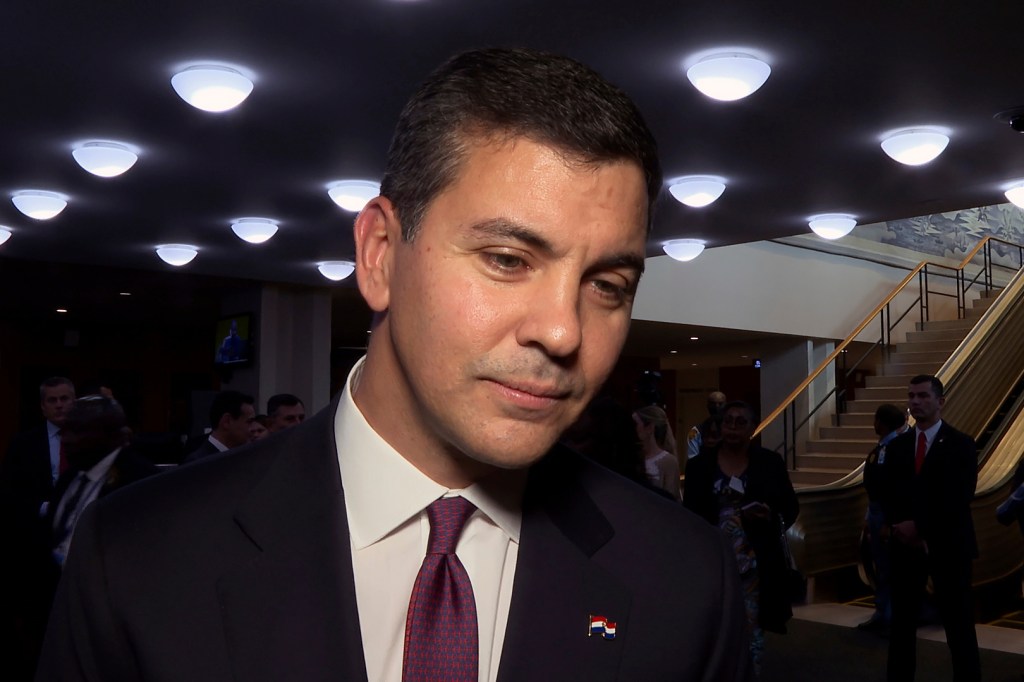
Paraguay faces a significant political crisis as its president, Santiago Peña, has been removed from office and placed under house arrest. The Senate voted unanimously to impeach him due to allegations of misconduct related to the downfall of Ueno Bank. This is the second presidential impeachment in Paraguay since the fall of Gen. Alfredo Stroessner’s dictatorship in 1989.
The impeachment follows the government’s takeover of Ueno Bank, which denied access to funds for nearly half of Paraguay’s six million citizens. Protesters gathered outside Congress during the impeachment, chanting “Dictatorship never again!”
Allegations and House Arrest
Peña was accused of breach of trust, influence peddling, and personal gain from his public office. These charges could result in up to ten years of imprisonment. Accusations involve his political influence to steer massive public funds into Ueno Bank, despite risky insider lending practices. Peña, however, denies any wrongdoing.
Authorities ordered him to remain at his residence in Asunción, surrounded by police, until he appears before prosecutors. Vice President Pedro Alliana has stepped in as the interim president, inheriting the task of returning depositors’ money and ensuring accountability for the bank’s failure.
Public Discontent and Economic Impact
The collapse of Ueno Bank led to widespread public dissatisfaction. Unbanked and poor Paraguayans, who had opened accounts with Ueno due to its attractive offers, found themselves unable to access their savings. Even national soccer team players and a ride-hailing app relying on Ueno have been affected.
The nation’s bonds are sliding and the guaraní has weakened. Some customers began receiving their funds back, but only those with smaller balances. Most deposits are insured, but larger account holders remain uncertain.
Executives Under Scrutiny
The dismantling of Ueno has put 27 people, including its former CEO Miguel Vázquez, in legal trouble, facing charges like breach of trust and attempted fraud. Assets linked to Vázquez have been seized, including luxury vehicles and planes.
Rise and Fall of Ueno Bank
Ueno Bank quickly rose by leveraging over $800 million in public funds. It attracted over two-thirds of Paraguay’s adult population. Impeachment charges against Peña relate to his past stake in Ueno’s holding company and his appointment of Carlos Carvallo, who served as the central bank chief and supported Ueno’s unchecked growth.
Analysts indicate that Peña’s political connections allowed Ueno to bypass necessary regulatory scrutiny, causing eventual financial troubles.
Political Turmoil
Amidst the scandal, Peña lost the support of his Conservative Colorado party, which is led by former President Horacio Cartes. Cartes, who had backed Peña, withdrew his support, accelerating Peña’s political fall. This emphasizes the fragile nature of Peña’s power base built around Ueno Bank’s growth.