
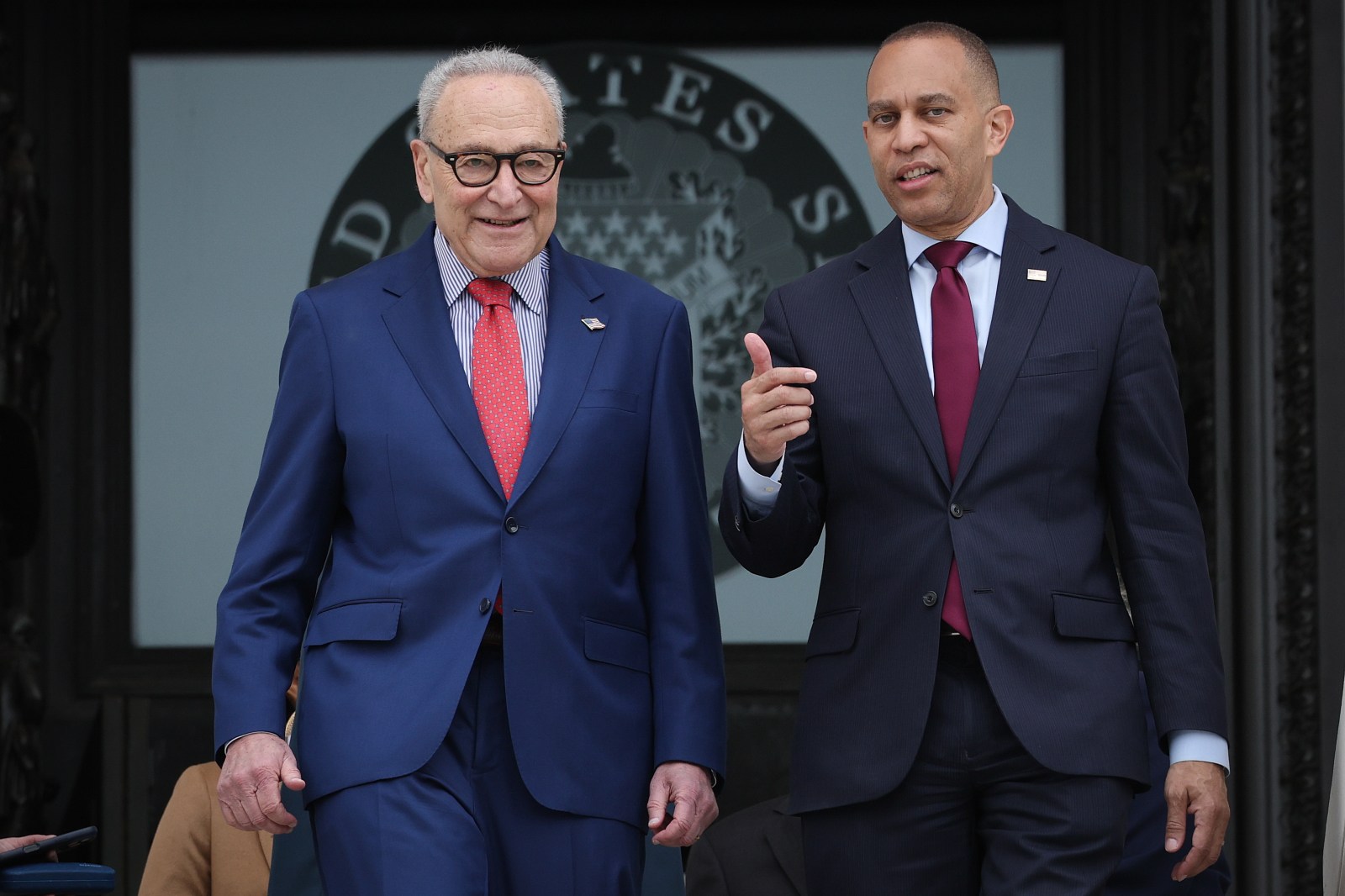
House Minority Leader Hakeem Jeffries is poised to assume the speaker’s role following the Democratic success in the midterm elections. Despite this, voters rated him less favorably compared to the outgoing Republican leader. A poll by Economist/YouGov conducted from October 23-26 showed Jeffries with 26% approval and 47% disapproval among registered voters. His counterpart, Speaker Mike Johnson, received 32% approval and 45% disapproval, placing Jeffries 8 points behind in net approval. The poll involved 1,440 registered voters and had a margin of error of about 3 percentage points.
In contrast, Senate Minority Leader Chuck Schumer had the lowest approval ratings among the four congressional leaders surveyed. He garnered 24% approval while 54% disapproved. Senate Majority Leader John Thune received the lowest approval at 21%, but faced a lower disapproval rate of 46%.
Calls for new Democratic leadership in both Congressional chambers have gained momentum, with petitions amassing hundreds of thousands of signatures since Tuesday’s elections. These petitions reflect a growing desire for change among Democratic voters, despite no declared challengers to the current leaders within their parties. Newsweek contacted Jeffries and Schumer’s offices for comment without receiving a response.
Jeffries’ Position and Petitions for Change
Democrats made significant gains during the midterm elections, overturning seven Senate seats and more than 40 House seats. However, confidence in their leaders has not substantially risen. The poll, conducted a week before the Democratic victory, does not reflect any subsequent approval increases.
Congress as a whole had a low approval rating, at 18%, with 59% disapproving. When asked about priorities for the new Congress, 24% of respondents wanted it to challenge and oppose the Trump administration.
A petition on Change.org, titled “House Democrats: CHOOSE A NEW SPEAKER,” had reached 762,343 signatures by Thursday night. Initiated by author and TikTok creator Nicole Whitted in September with only 20,000 backers, the push was supported by actor Mark Ruffalo, who urged others to sign. The petition advocates against Jeffries as speaker in January 2027, seeking an alternative candidate.
Whitted expressed disapproval of Jeffries’ links to corporate interests and pro-Israel lobbying. Her concerns go beyond policy issues, focusing on leadership, accountability, and whether the party voices voter demands for change. Similar sentiments are shared by some new House members, such as William Lawrence from Michigan and Representative-elect Melat Kiros from Colorado.
Despite this, some, like New York City Mayor Zohran Mamdani, continue to back Jeffries for leadership.
Schumer’s Challenges and Support
Among the four leaders surveyed, Schumer was the only one viewed negatively by his own party members. 42% of Democrats disapproved while 38% approved of his leadership. Two petitions urging Senate Democrats to select a new majority leader gained over 100,000 signatures combined by Thursday. One, initiated by Laura Ciocia, criticized Schumer for not adequately standing firm in critical situations. It also condemned his opposition to Barack Obama’s Iran nuclear deal and accepting campaign funds from pro-Israel donors.
Indivisible, a progressive group, released a memo urging senators to foster a contested leadership race. Criticism of Schumer partly stems from his support for reopening federal agencies during a past government shutdown, labeled as a “capitulation” by California Governor Gavin Newsom.
At least seven incoming Democratic senators have signaled their intention to vote against Schumer’s leadership. Juliana Stratton from Illinois and Troy Jackson from Maine are among those vocal in their opposition. Calls for generational leadership change, exemplified by South Carolina Senator-elect Annie Andrews, highlight the ongoing discontent.
Despite these challenges, Schumer remains confident in his re-election as majority leader, focusing on addressing priorities of the American people.
Future of Leadership
Jeffries, aiming to become the first Black speaker in U.S. history, formally announced his run in a letter to colleagues. He emphasized the accomplishments of House Democrats and the urgency to deliver significant changes now that they hold the majority.
No other House Democrat has announced plans to contest Jeffries, and Nicole Whitted has not heard of anyone intending to do so. The caucus plans to hold leadership elections on November 18 and 19, with a full House vote in January requiring 218 votes for the speaker. Democrats hold 250 seats, suggesting Jeffries can govern without fearing leverage from dissenters. Arizona Representative Greg Stanton expressed confidence in Jeffries’ leadership margin.
For the Senate majority leader role, Schumer will require a simple majority from the caucus, standing at 54 members, with elections set for early December. Although Chris Van Hollen’s name is mentioned among progressives, he has not indicated interest in running against Schumer.
Democrats flipped seven Republican Senate seats in states like Iowa and Ohio, with many of the new senators being Schumer recruits. New Jersey Senator Cory Booker lauded Schumer for orchestrating a historic Democratic sweep. Booker acknowledged the need for internal discussions but praised Schumer’s strategic success.
Despite calls for leadership change, Democratic National Committee Chair Ken Martin predicted both Jeffries and Schumer would retain their positions.