
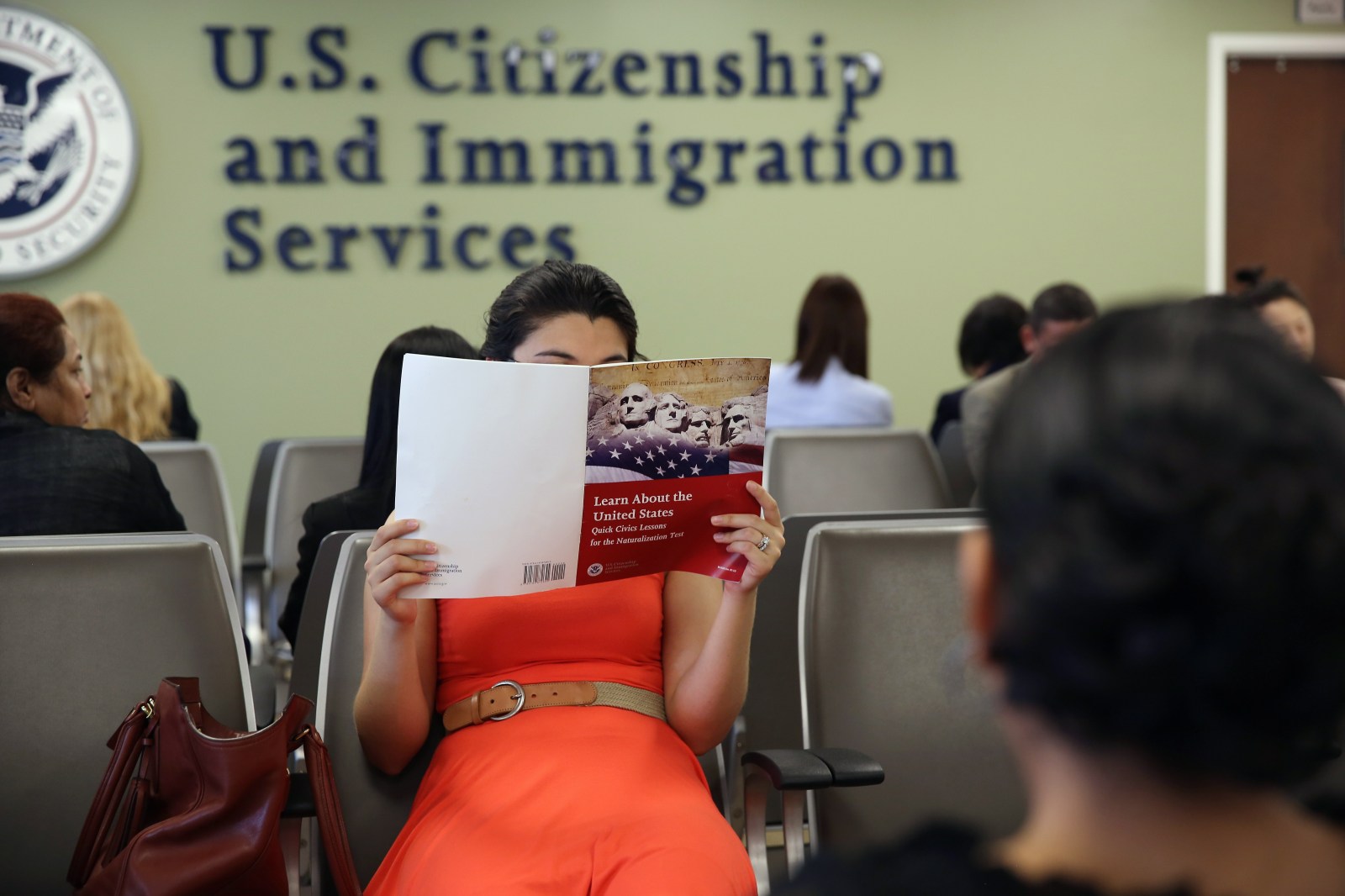
At the end of June, the United States faced over 1.5 million pending green card applications. Data from the U.S. Citizenship and Immigration Services (USCIS) showed 1,560,290 Form I-485 applications were pending as of June 30. Form I-485 allows eligible immigrants in the U.S. to apply for permanent resident status, or a green card.
USCIS is the federal agency managing the nation’s immigration system. It processes applications for green cards, citizenship, work permits, asylum, and other immigration benefits. The backlog’s concentration reveals where stringent measures under the Trump administration are impacting those seeking immigration benefits. This data covers April 1 to June 30, 2026.
Green Card Application Concentrations
Newsweek produced a map highlighting pending green card applications across USCIS field offices. Key concentrations were observed in Florida, Texas, and California. Florida had 265,495 pending cases across nine USCIS field offices. Tampa had the highest number with 46,609 pending applications, followed by Kendall and Hialeah. Texas recorded 140,743 pending cases with Houston, Dallas, and San Antonio leading. California noted 161,398 pending applications, with major counts in San Jose, Los Angeles, and San Francisco.
These figures reflect processing by USCIS offices, not where applicants reside. The map includes field offices only, excluding service centers which contribute significantly to the backlog. For instance, Vermont Service Center managed 246,100 cases, Nebraska 42,805, California 21,108, and Texas 13,250.
Breakdown of Pending Applications
Humanitarian applications contributed to nearly 40 percent of pending cases with 618,097 awaiting decisions. Family-based applications had a similar share with 611,067 cases. Employment-based applications stood at 268,408, while other categories accounted for 62,718 cases. Combined, family and humanitarian applications represent nearly 80 percent of all pending I-485 applications. This data captures a snapshot of the backlog but does not indicate waiting duration or case-specific delays.
Policy Impact on Immigration
In fiscal 2024, about 1.36 million individuals gained lawful permanent resident status, up from 1.17 million in 2023, marking a peak in annual totals from 2015 to 2024. President Trump’s immigration orders issued since January aimed to restrict humanitarian parole and suspend the U.S. refugee admissions program.
USCIS reported over 12.8 million pending cases across the agency by June 30, 2026, despite a 34 percent drop in applications compared to the year before. The approval rate for green card applications fell by 2.6 percentage points from the previous quarter. New USCIS guidance in May emphasized approval of adjustment status as discretionary, often requiring consular processing outside the U.S. for applicants on temporary status unless facing extraordinary circumstances. These legal changes accompany a broader crackdown on ICE arrests and deportations, adding complexity to the process of obtaining legal immigration benefits.
For further queries, contact Newsweek editors Matthew Cannon and James Debens.