
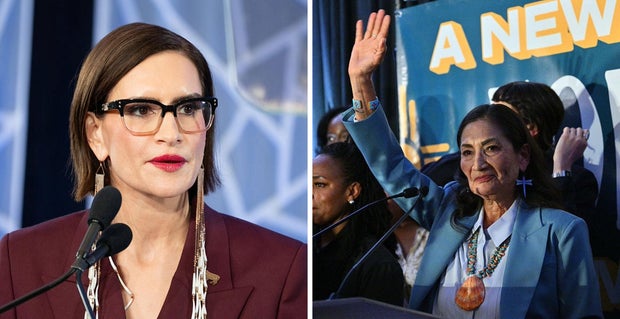
On Tuesday night, the 2026 midterm elections made history with two Native American women winning significant political positions. These victories marked the first time Native women have held a Senate seat and a governorship. The wins came as part of a broader Democratic sweep across the nation.
In New Mexico, Deb Haaland, a former Interior Secretary, was elected as governor. She became the first Native American woman to lead a U.S. state. In Minnesota, Lt. Gov. Peggy Flanagan secured a Senate seat, also a first for Native American women.
Trailblazing Political Careers
Deb Haaland, a citizen of the Laguna Pueblo, broke barriers early in her career. In 2015, she became the first Native American woman to chair a state political party when she was elected to lead the Democratic Party of New Mexico. In 2018, she was among the first two Native American women elected to Congress, alongside Rep. Sharice Davids of Kansas.
Haaland served as Interior Secretary under former President Joe Biden from 2021 to 2025. Her campaign focused on issues such as the cost of living, reforming New Mexico’s child welfare system, and protecting the state’s Universal Child Care program.
Peggy Flanagan has a background as an organizer and served on the Minneapolis School Board. As Minnesota’s lieutenant governor since 2019, she worked to improve relations with the state’s 11 tribal nations. Raised in Section 8 housing by a single mother, Flanagan faced childhood asthma. She has been a strong advocate for Medicaid, crediting it with saving her life.
Platform and Vision
Haaland criticized former President Trump for federal safety net program cuts and plans to halt new large-scale data center projects until state regulations are in place. Her agenda includes supporting families and ensuring economic stability.
Flanagan ran a progressive campaign advocating for ‘Medicare for All’ and national paid family and medical leave. She leveraged her life experiences to connect with financially strained voters. At her St. Paul election party, she declared victory against Trumpism, celebrating with tribal leaders.
Historic Significance
The victories hold substantial cultural and political weight. The National Congress of American Indians hailed the achievements as milestones for Indian Country. Native American women are approximately 1% of the U.S. population, according to Census Bureau data, and have faced long-term underrepresentation in elected positions.
Larry Wright Jr., Executive Director of NCAI, emphasized the significance of these wins for young Native girls, reinforcing their potential and vital leadership roles. Wright expressed hope for improved representation and progress, especially concerning tribal lands and treaty obligations with the U.S. government.
Another potential historic win looms in Alaska, where Democrat Mary Peltola, of Yup’ik heritage, is challenging incumbent Republican Sen. Dan Sullivan. The race remains undecided, with final results expected later due to ranked-choice voting.