
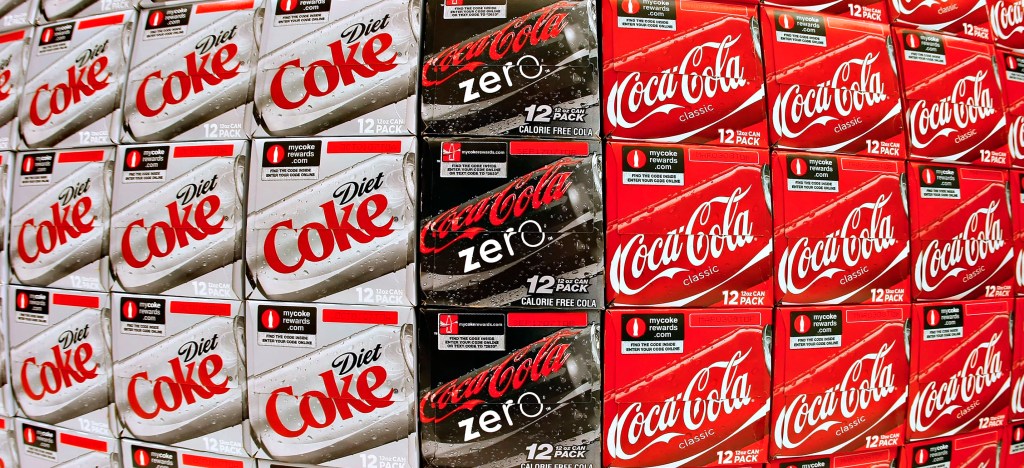
A heated rivalry is developing across office desks and pub tables, as Coke Zero Sugar threatens to dethrone Diet Coke as the favorite sugar-free soda. Diet Coke has long been a staple of daily life for many, serving as a key afternoon pick-me-up at work or as a low-calorie mixer for weekend socializing. This drink has gathered a loyal following across generations, with younger consumers even dubbing it a modern “fridge cigarette” as a non-nicotine stress reliever.
However, in recent years, its younger counterpart, Coke Zero Sugar, has quietly gained ground. It was responsible for a substantial 52% of soft drink sales growth last year. Meanwhile, Diet Coke sales have remained relatively flat since reaching their peak in 2006. This shift has created a cultural gap between the dedicated fans of both beverages.
The Ongoing Debate
The debate among Australian consumers became evident during a routine lunch order when my request for Coke Zero was met with, “We only have Diet Coke.” This simple exchange highlighted a common issue: despite my loyalty to Coke Zero Sugar, I couldn’t easily identify what set them apart.
To explore this difference, I organized a blind taste-test in the newsroom to see if others could distinguish the two drinks by taste alone. Before tasting, colleagues shared varied opinions. Bucky thought Diet Coke tasted metallic. Gabi questioned whether Diet Coke contained hidden carbs. Abisha dismissed the differences as a psychological placebo effect. Ben, a regular Coke Zero drinker, noted specific flavor distinctions, declaring that Diet Coke tasted “stale” compared to the more flavorful Coke Zero.
Heath praised Diet Coke for its distinct, crisp profile, while Naomi labeled Coke Zero as “far superior” for its potent Coke flavor.
Conducting the Taste Test
Many participants claimed they could distinguish the drinks with over 80% certainty. However, the results revealed something different. Bucky and Heath correctly identified their drinks, as did Naomi with Coke Zero. Others, faced with unmarked cups, were surprised. Gabi and Abisha found the drinks nearly identical, and Ben, unable to identify his daily choice, blamed the paper cups for his failure.
For me, testing both side by side blurred the flavors, challenging my long-held assumptions. According to Coca-Cola, while both drinks are sugar-free, they have distinct flavor profiles. A spokesperson clarified Diet Coke’s lighter flavor distinguishes it from Coke Zero Sugar, which aims to mimic the taste of Coca-Cola Classic without the sugar.
A Marketing Battle
The soaring popularity of Coke Zero, introduced in 2005 and rebranded in 2016, aligns with recent sales data. Even as Diet Coke sales rose slightly by 1.3% in the first nine months of 2025, Coke Zero leapt by 4.8%, building on a 10% increase from 2024.
Analysts note that the two drinks appeal to different demographics. When Diet Coke debuted in Australia in the 1980s, it was marketed with silver-and-white cans, targeting mostly diet-conscious women. Male consumers, wary of the “diet” label, leaned more towards Coke Zero, which uses black-and-red packaging and appeals to men through sports, gaming, and barbecue-related marketing.