
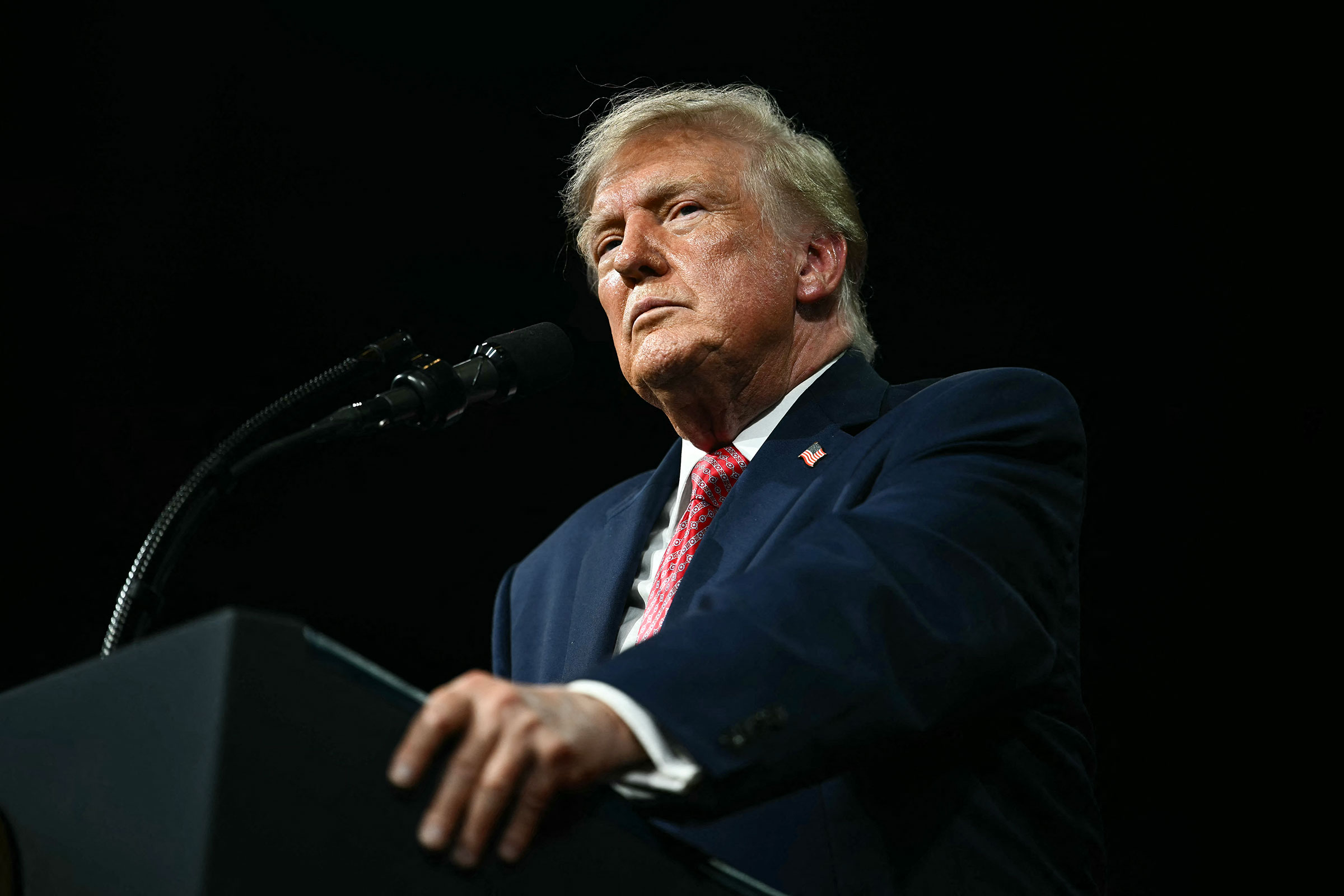
President Donald Trump addressed supporters during a campaign rally in Park City, Kansas, on Oct. 19. As the election approached, which many believed could disrupt his presidency, Trump visited the Lincoln Memorial Reflecting Pool. He had overseen a costly renovation of the pool, which faced setbacks when its coating peeled and algae grew. Despite the pressing issues like rising gas prices, costly groceries, and conflicts in the Middle East, Trump’s speech largely focused on construction projects rather than pressing national concerns.
This was a fitting end to a peculiar campaign. Trump’s tendency to stray from central issues puzzled allies as he toured the nation. He remarked on oil companies’ profits amidst consumer struggles with energy prices. Trump also made odd claims, such as New Yorkers not calling their mothers ‘mom’ and proposed renaming New Mexico. His frequent diversions even included comments on men’s physiques. As one aide noted, “It’s hard to connect with voters who can’t afford gas when the candidate discusses celebrities unnecessarily.”
The Democrats decisively won, taking control of both the House and Senate, and performing strongly in Republican strongholds. This overwhelming defeat was a rejection of Trump. Many of his personal picks, like Ken Paxton in Texas and Darlene Graham in South Carolina, suffered serious losses. By the night’s close, Trump admitted the opposition’s success and noted that the situation with Iran influenced the outcomes negatively for him.
While Trump’s advisors observed his detachment from the midterms, seeing them as part of a historical trend, they attempted to convince him he had influence over the election’s direction. However, Trump focused on historical patterns, believing losses were inevitable. He resigned himself to forthcoming conflicts with Democrats, anticipating investigations and challenges.
Trump has long enjoyed unparalleled Republican loyalty, exerting influence over lawmakers and stifling dissent. Following the November defeats, his influence appears weakened. An NBC News exit poll revealed that 43% voted to express their disapproval of Trump. Presidents in the latter half of their second terms often turn to foreign policy for influence. Trump is signaling a return to significant military actions against Iran and an increased focus on the Western Hemisphere.
However, checks on his authority will increase. Confirmations for his nominees may be complicated, and Supreme Court battles are anticipated over acting officials. Those close to Trump believe that, despite these challenges, he will remain defiant and combative. Aides expect a continuation of his aggressive style rather than a shift in demeanor.
Toward the midterms, Trump’s aides noticed his seeming disengagement. Despite having substantial funds for political operations, Republicans urged him to invest in key races, such as Ken Paxton’s campaign in Texas. Eventually, Trump began spending significantly to help Republicans maintain Senate control.
Advisors prompted Trump to actively participate in rallies, appealing to him as necessary for saving their campaigns. In October, Trump visited several competitive districts aiming to aid Republicans. However, consistent diversions from expected topics bred new controversies.
In an attempt to mirror past campaign successes, Trump aimed to connect with less-engaged voters through alternative media. Advisors recruited celebrities and athletes to create local engagement. Figures like boxer Jake Paul and rapper Nicki Minaj appeared at events. This strategy sought to replicate past successful tactics, despite often veering off course.
Throughout the election cycle, Trump’s political instincts seemed misaligned. His offer of substantial checks for keeping Republican control led to ethics criticisms, calling it potential vote-buying. Disastrous personnel decisions, like replacing the White House press secretary, compounded his issues. Advisors recommended against endorsing Israeli leader Benjamin Netanyahu due to his unpopularity. Nevertheless, Trump’s endorsements followed pressure from Netanyahu’s allies in the U.S.
High-profile interventions frequently exacerbated Trump’s challenges. Polls showed that a majority of Americans questioned his judgment on significant decisions. Meanwhile, the Republican candidates closest to Trump struggled, reflecting backlash against his presidency.
Discontent with heightened living costs and external factors contributed to Republican struggles. A vast number of Americans expressed concerns over governmental corruption. As results processed, White House allies realized an era of Trump’s presidency was ending, while another phase was potentially beginning.
Despite the defeats, Trump may grow more aggressive against Democratic oversight. Advisors suggest that Democrats’ actions could be leveraged by Trump as political persecution, potentially benefiting him.
Advisors expect staffing changes within Trump’s circle as his presidency continues. The potential result is a more insular group of loyalists surrounding him, unlikely to challenge or deliver unwelcome news. Internally, the White House contemplates navigating divided government in the coming years.
Trump’s post-election path differs from previous experiences. With constitutional limits barring another candidacy, Republicans are contemplating future leadership. As the 2028 presidential race emerges, Vice President J.D. Vance faces the task of distinguishing his political identity while maintaining ties to Trump. The broader coalition supporting Trump shows signs of strain, with former allies turning away.
The enduring question is whether Trump’s fear-induced grip on the GOP will persist as the party begins to search for leadership beyond him.