
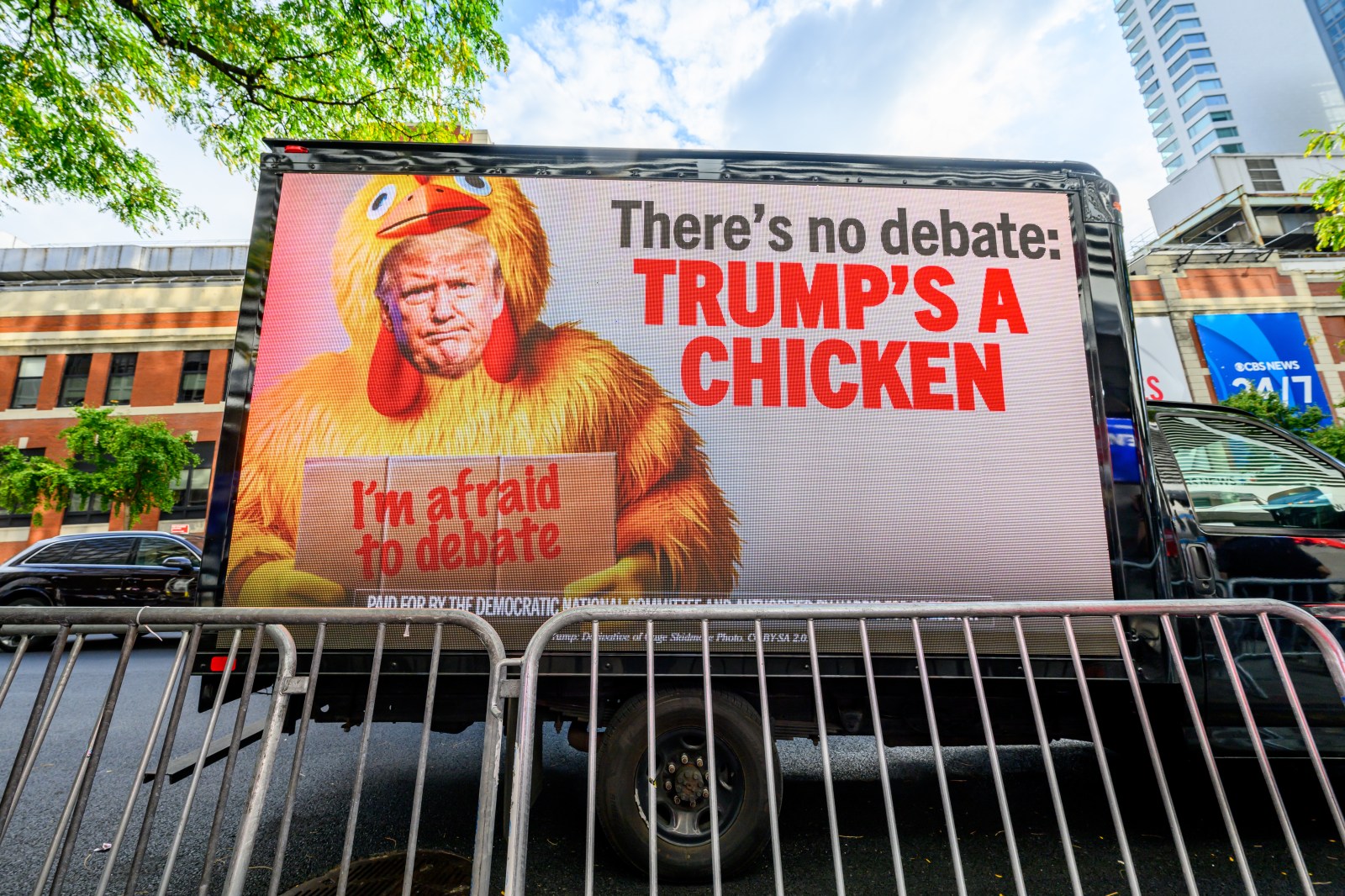
Anthony Constantino, a Republican congressional candidate, faced a unique situation when his opponent refused to debate him. In response, he chose to debate a staffer in an inflatable chicken suit, using prerecorded clips of the absent Democrat, Blake Gendebien, during an event known as the “Pumpkin Rally” held on October 24. The event included an array of unusual elements like a horse skeleton and a wall of pumpkins.
Throughout history, politicians have used animals as part of their campaigns. They’ve employed a variety of creatures, such as rats, bears, and pigs. There have even been instances involving allegations of Bigfoot erotica and ads with cocaine-using monkeys.
Constantino’s choice of a chicken as a mascot comes with a risky history. The chicken has historically had a poor electoral record. Examples include the 2014 mock debate involving Democrat Irv Halter against three men in chicken suits after Republican Doug Lamborn avoided a debate. Lamborn won that election.
Mockery within campaigns acts as a hallmark of democratic processes, differing from authoritarian states that suppress such actions. In China, images comparing Xi Jinping to Winnie the Pooh were deleted from social media.
Some animals have perfect campaign records. The largemouth bass puppet, used in 1966 to promote Governor Nelson Rockefeller without directly linking him due to his unpopularity, marked the first instance. Rockefeller won reelection. Other successful examples include Georgia’s Roy Barnes portrayed as a giant rat and Carly Fiorina’s sheep-themed video.
Unlike these successes, the chicken mascot consistently experiences failure. From Colorado’s Lamborn to Gary Peters fleeing money sharks and Little Henrietta in South Carolina, chickens have failed. Constantino hopes to change this narrative and secure a win in his race.
Other animals have varied results. Dogs have a losing record, while mythical creatures like Bigfoot have mixed outcomes. Interesting victories belong to animal mascots used by Democrats who went head-to-head with Republican opponents, including Raphael Warnock’s beagle and John Fetterman’s ad featuring Nora, a rescued beagle.
Despite mixed success in the utilization of animals, campaigns are likely to continue drawing on these creatures as election mascots. This tactic embodies the broader characterization of American politics as diverse, symbolic, and unpredictable.