
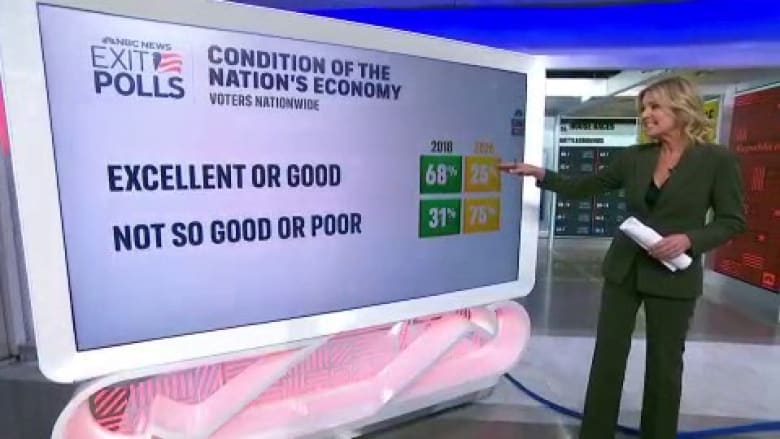
The sentiment about the U.S. economy among voters has shifted dramatically since Trump’s first term as President. According to NBC News exit polls during the recent midterms, only 25% of voters now consider the economy to be excellent or good, a sharp decline from 68% in 2018.
Financial concerns have heightened for many, with 82% indicating that their financial situations have either worsened or remained unchanged compared to two years ago. This decline is linked to a combination of higher consumer prices, driven by inflation outpacing wage growth.
The cost of living remains a pressing issue, with families reportedly spending nearly $2,000 more on essentials like food and housing compared to the previous year. This financial strain has led to widespread dissatisfaction, as more than 60% of voters have blamed Trump’s policies for rising prices.
“It’s harder for many people to make ends meet,” said one voter outside the polls. “Everything feels more expensive now.”
Voters have also expressed mixed sentiments about tariffs, a key aspect of Trump’s economic strategy, with a significant number critiquing their impact on both national and local economies.
Moving to the ground-level impact, NBC News gathered insights from voters in Texas who voiced diverse political choices. Some, like Cindy Bonilla Candanedo, prioritized issues like healthcare and public school funding. Others, like Beth Burgess, emphasized a desire for genuine legislative action over partisan bickering.
In Alaskan politics, early voting trends signal potential shifts, with records breaking numbers showing a key Senate race between Mary Peltola and incumbent Dan Sullivan. The impact of tariffs and economic policies featured heavily among voter concerns, with discussions about the national economy pointing largely towards the current administration’s influence.
Meanwhile, in Indiana’s Hamilton County, a significant early lead by Democrat J.D. Ford suggests a potential sign of Democratic strength in regions traditionally leaning Republican.
Throughout these electoral shifts, a recurring theme is the electorate’s concern about artificial intelligence and its societal implications. According to polls, about two-thirds of voters fear its potential negative impact, underscoring the technological apprehensions amid economic uncertainties.
In a night underlined by such diverse voter opinions, early voting records in Alaska and shifting dynamics in districts like Indiana’s 5th suggest a complex electoral landscape influenced significantly by economic sentiment and policy perspectives.