
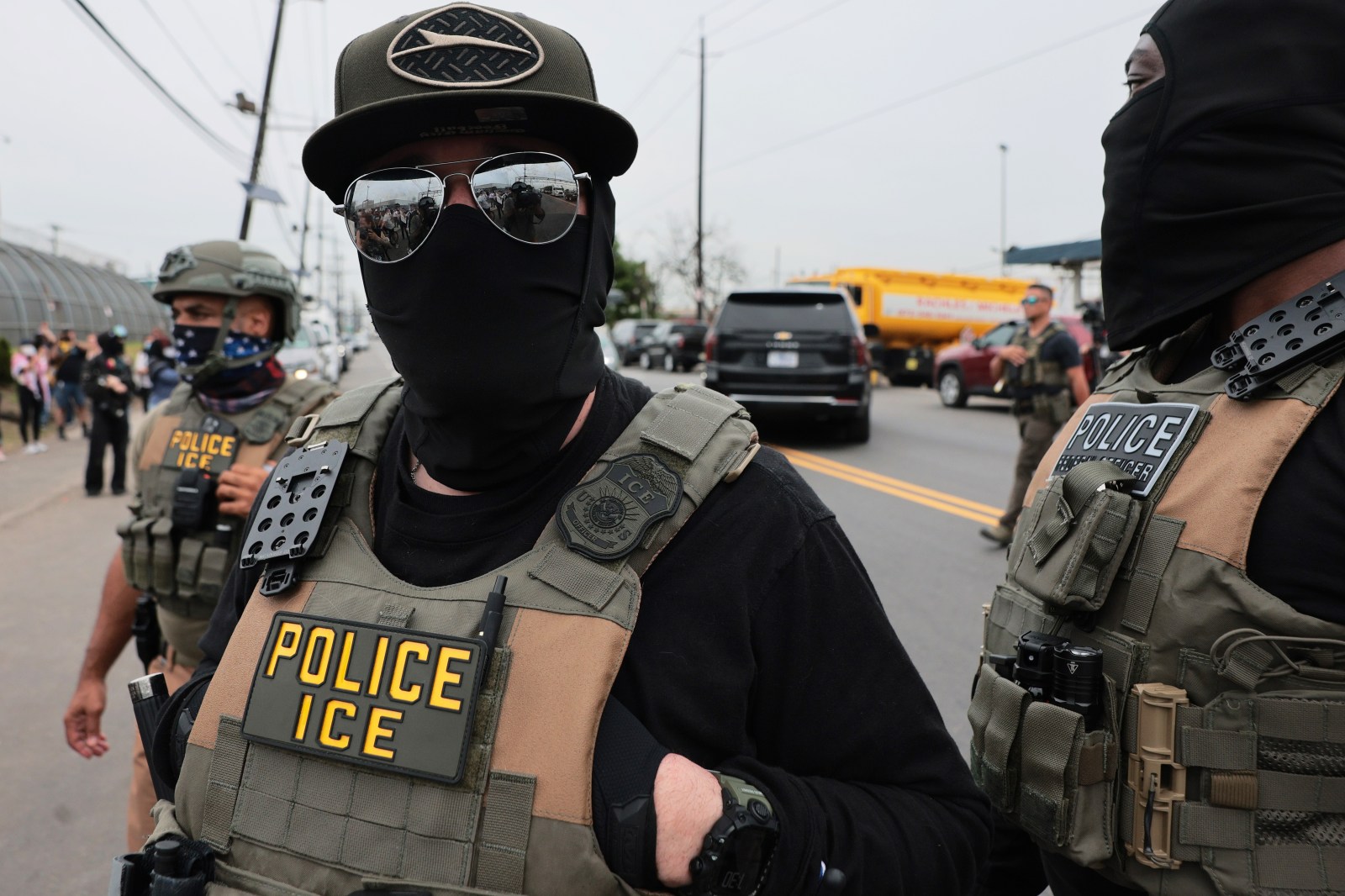
A federal judge in Oregon has called for increased testimony from Immigration and Customs Enforcement (ICE) agents after discovering that an officer falsified an arrest record. U.S. District Judge Mustafa T. Kasubhai, appointed by President Biden, stated that live testimony is crucial in cases where government accounts are questioned. Judge Kasubhai highlighted that relying solely on written statements is inadequate when witnesses might lie.
Judge Kasubhai emphasized the importance of live testimony, explaining that examination and cross-examination are essential. This assertion came in an order enforcing a previous injunction against the Department of Homeland Security (DHS) and ICE regarding warrantless immigration arrests in Oregon. The case contested ICE’s practice of making arrests without warrants. Kasubhai’s prior injunction required officers to individually assess whether a person was likely to flee before obtaining a warrant.
The Trump administration had frequent conflicts with federal courts over its deportation policies, accusing judges of activism. Judges have imposed stricter measures on ICE as they face lawsuits alleging racial profiling and aggressive arrests. Newsweek has reached out to DHS and ICE for comment.
ICE Officer Falsifies Official Record
After further hearings with testimony from immigration officers, Judge Kasubhai noted that federal authorities had not complied with his order, and that ICE’s reports on warrantless arrests were unreliable. A critical arrest report by ICE officer J.G. claimed officers identified H-D-G-H- before approaching his vehicle and had a warrant for his arrest. J.G., however, testified under oath that he was unaware of H-D-G-H- when initially stopping the vehicle and had no warrant, as per the court order.
J.G. admitted he copied parts of another report and failed to correct the inaccuracies. Kasubhai dismissed his explanation as intentional falsification meant to convey a lawful warrant-based arrest. The judge noted the deception might have gone unnoticed without the officer’s court testimony.
Judge Kasubhai emphasized the significance of holding government agents accountable through sworn testimony. He warned that without public scrutiny, misconduct could go unchallenged.
Judge Withdraws Presumption of Regularity for ICE
Kasubhai stated he would no longer assume that ICE acted properly without evidence, a standard known as the “presumption of regularity.” He remarked that credibility must be earned through integrity. The judge cited similar concerns nationwide, noting a Massachusetts judge’s decision to withdraw presumption due to repeated misrepresentations by ICE officers.
Problems with ICE’s Arrest Records
Kasubhai identified issues with ICE’s arrest records and reporting. ICE reported 13 warrantless arrests over six months, while Kasubhai concluded there were significantly more than reported. ICE’s figures showed 574 arrests in Oregon from February to July, with 504 categorized as noncustodial.
Kasubhai also noted errors and false information in ICE’s I-213 arrest records, resulting in their unreliability for validating warrantless arrests. This, he wrote, questions the validity of all I-213 forms filed by ICE officers in Oregon. However, not all encounters were deemed unlawful. In one instance, officers had reasonable suspicion to detain a man initially misidentified.