
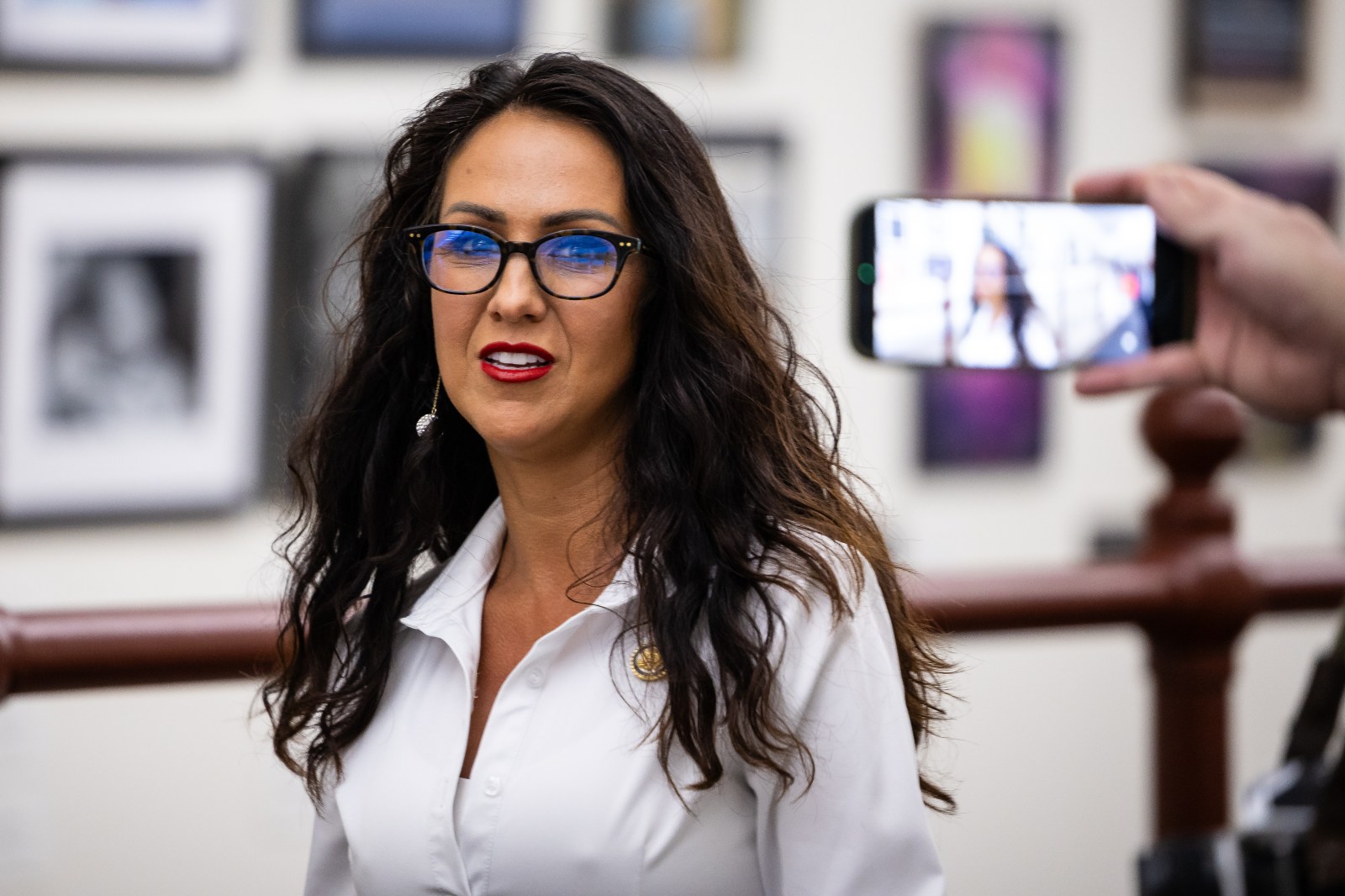
President Donald Trump has strategically endorsed several Republican candidates who have publicly differed with him on critical issues. This move aims to solidify party unity as the GOP endeavors to retain control of Congress in the midterm elections.
Endorsement of Lauren Boebert
Trump recently extended a “complete and total endorsement” to Representative Lauren Boebert of Colorado. This endorsement follows months of tension where Trump had disparaged her and threatened to withdraw his support over a disagreement involving GOP Representative Thomas Massie of Kentucky and files related to Jeffrey Epstein.
On Friday, Trump labeled Boebert as an “America First Patriot” and a “MAGA Warrior,” commending her efforts in representing Colorado’s 4th Congressional District. Despite earlier conflicts, he affirmed, “Lauren Boebert has my Complete and Total Endorsement for Re-Election. GET OUT AND VOTE FOR LAUREN — SHE WILL NEVER LET YOU DOWN!”
The earlier dispute centered on Boebert’s support for Massie, who opposed the administration’s handling of Epstein-related records and lost his reelection bid. Boebert’s alignment with Massie on government record disclosures had placed her at odds with Trump.
In an X post, Boebert shared her enthusiasm about a Tele Rally with Trump, expressing confidence in winning the election and “saving America.” As of October 23, the Cook Political Report has categorized Colorado’s 4th Congressional District as “Lean Republican,” down from “Solid Republican.”
Maria Elvira Salazar’s Immigration Stance
In Florida’s 27th Congressional District, Representative Maria Elvira Salazar has maintained Trump’s endorsement despite her criticisms of his immigration policies. In a September campaign ad, Salazar contended that the administration’s enforcement had gone “too far,” urging Trump to reconsider advice from his advisers on immigration, highlighting a sense of betrayal felt among Hispanic supporters.
Trump responded critically but upheld his endorsement, recognizing Salazar as a “nice person” and attributing her election success to his support. He acknowledged her softening stance on border policy, which he does not share, yet praised her earlier “Wisdom and Courage.” As of September 25, Salazar’s race is deemed “Lean Republican” by the Cook Political Report, a shift from “Likely Republican.”
Ashley Hinson Balances Independence
A key balancing act arises for Ashley Hinson in Iowa, where she is contesting for an open Senate seat. Having won the primary with 74% of the vote, Hinson navigates her alliance with Trump while maintaining independent positions.
Trump endorsed Hinson in September, noting her as a “winner” with family values. Despite his backing, Hinson has criticized Vice President JD Vance and the administration’s Iran war stance, linking the conflict to economic issues affecting Iowans. Her remarks highlight a nuanced approach, stressing affordability amid local campaign controversies.
Hinson has also distanced actions affecting farmers in Iowa. She opposed Trump’s diesel deal with Russia last month, calling it a “bad idea.” The Senate race now holds a “Toss Up” status from the Cook Political Report, down from a “Lean Republican” rating.
Potential Impacts of Republican Loss
If Republicans lose control of either Congressional chamber, Trump’s legislative agenda may face significant limitations. A Democratic House could obstruct GOP legislation and heighten oversight on the administration, while a Democratic Senate could complicate confirmation processes for judicial and executive nominees.
Democratic majorities in both chambers might heighten legislative gridlock, as they could pass bills potentially vetoed by Trump. However, overriding vetoes would require a two-thirds majority in both chambers, not feasible for Democrats alone.
Losing Congress might pivot the White House toward executive actions and regulatory measures, though these could face judicial challenges. Additionally, a Democratic takeover could revive impeachment discussions, albeit with limited removal prospects.