
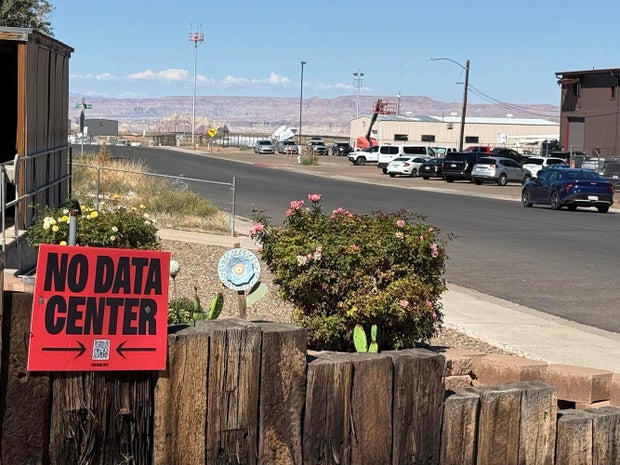
In Arizona, Doug Herrera remains in the house his father constructed, although his father passed away from cancer possibly tied to local uranium mining. Now, Herrera is alarmed by the proposed $10 billion mega data center that might affect his health. ‘I consider myself patriotic, but I’m against the data center,’ the 64-year-old says from his porch, next to a ‘No Data Centers’ sign.
Residents of Page, Arizona, are divided over the impact of a potential data center. The area is known for its scenic desert landscapes, dotted with Joshua trees and red-rock formations. The city council has approved land sales for the center, but further zoning and other approvals are needed. Local community members have organized petitions to halt construction due to health concerns.
The surge in data centers is causing electoral friction within communities like Page. Candidates in Arizona’s 1st Congressional District are divided over new centers. The state attorney general has even called for a halt on approvals. As developers in Page, Arizona, look to secure 500 acres for a center, political dynamics shift with emerging research highlighting potential health risks associated with data centers.
Hyperscale centers housing AI infrastructure require enormous energy and are often placed in rural areas, affecting local environments significantly. These centers can cause increased air pollution, tied to heart conditions and respiratory issues. Studies project emissions could cause nearly 1,300 deaths annually by 2030. Additional concerns include forever chemicals associated with cooling systems, and noise pollution reaching 90 decibels.
Concerns about data centers extend beyond health. Politically, data center debates span party lines, creating challenges for GOP members who once had strong rural support. A Washington Post-ABC News-Ipsos poll indicates that two-thirds of Americans oppose new data centers. In Page, opposition signs are ubiquitous and political candidates face pressure to align with local concerns.
In Ohio, for example, politicians are encountering backlashes during campaigns. Elected officials like Jon Husted face scrutiny, as former Senator Sherrod Brown criticizes data center implications on local resources. Over $2.5 billion in tax incentives have driven tech companies like Meta, Amazon, and Google to build centers in Ohio, prompting statewide protests.
Surveys reveal widespread opposition to data centers in communities. A significant percentage of Ohio residents express negative views on the centers’ environmental and quality of life impacts. Concerns include air and water pollution linked to diesel generators and chemicals used in cooling systems.
In Page, the local opposition led to the mayor’s removal in July. Some residents, like Jan Boehme, near proposed sites, fear health issues and potential noise pollution, adding, ‘We’re against it. This area has many homes, and I’m worried about all the noise.’
As debates over data centers continue, political and public health issues remain key considerations. KFF Health News provides detailed reporting on such emerging health matters across various locations.