
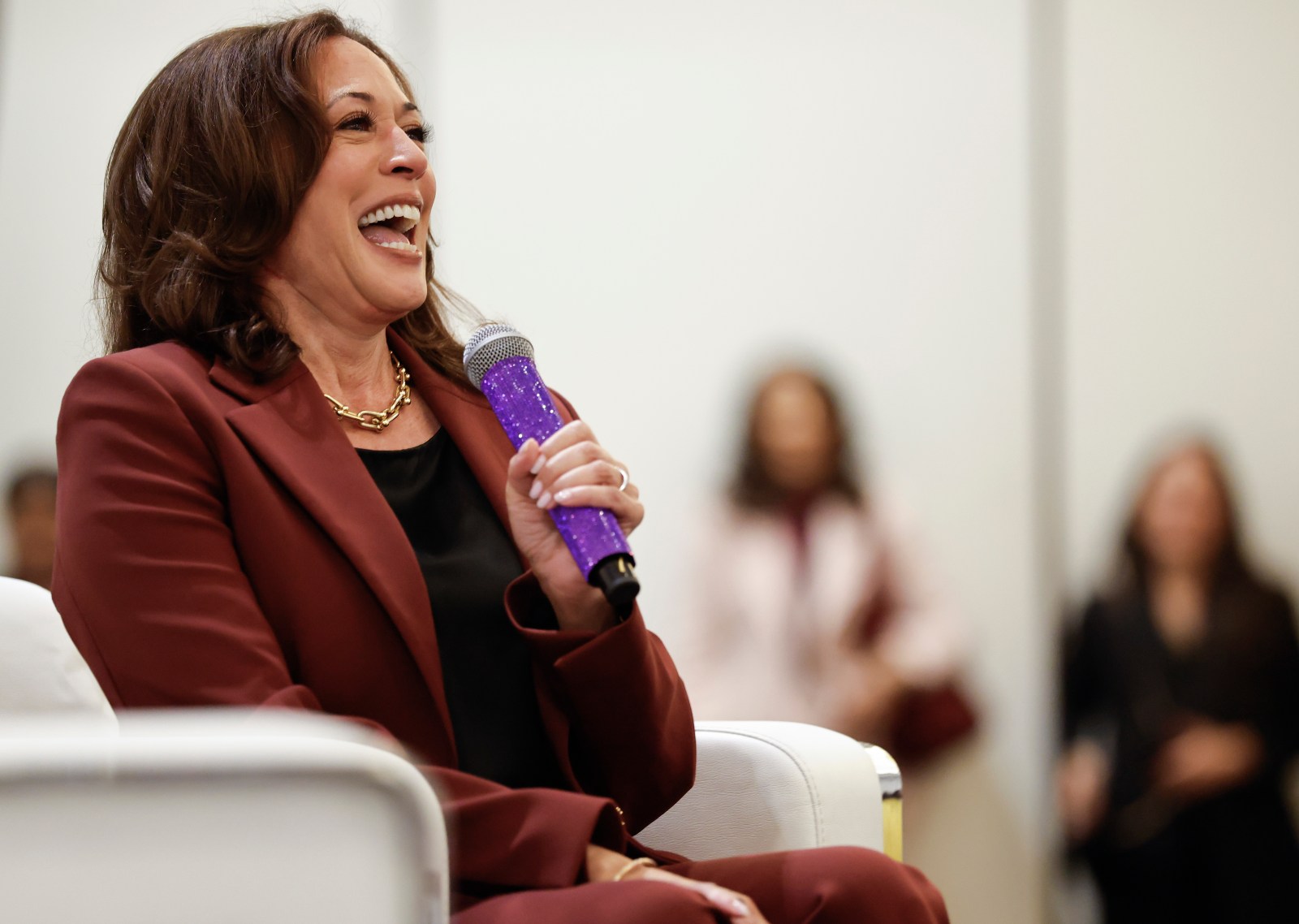
The 2028 presidential race is drawing interest even before the midterm elections are over. Well-known figures like Vice President JD Vance and former Vice President Kamala Harris are being discussed as potential candidates.
Early Speculation and Potential Contenders
As the midterms conclude, the picture of who might run for president often becomes clearer. Both Harris and Vance have faced questions about their intentions. Notably, Democratic Congresswoman Alexandria Ocasio-Cortez and California Governor Gavin Newsom are also mentioned. Former President Donald Trump has been asked to identify successors to the MAGA movement. Harris lost her 2024 bid to return to the White House to Trump.
Newsweek asked the White House for Vance’s comments and reached out to Harris’ office by email.
What the Polls Indicate
A YouGov/Economist poll shows Harris has a slight edge in favorability over Vance. Harris’ ratings are 43% favorable and 54% unfavorable, whereas Vance’s are at 41% favorable and 53% unfavorable.
The poll surveyed 1,440 U.S. registered voters between October 23-26, 2026, with a 3% margin of error. Craig Agranoff, a political professor at Florida Atlantic University, commented on how the midterm results can change early perceptions. Polls at this stage influence mostly due to name recognition.
According to Agranoff, Vance currently leads Republican polls, while Harris tops a less unified Democratic group. However, almost half of Democrats have no favorite yet. The next elections will clarify these numbers as potential candidates declare their intentions.
A Harvard CAPS / Harris Poll echoed these findings, showing Harris with a 43% favorability and a 46% unfavorable rating. Vance is viewed favorably by 41% and unfavorably by 44%.
This survey questioned 2,200 registered voters from September 26-28, 2026, with a 2.1% error margin.
A Marquette Law School Poll placed Harris’ favorability at 37% against a 58% unfavorable score. Vance’s ratings were slightly better, with 39% favorable and 54% unfavorable.
Grant Davis Reeher, a political science professor at Syracuse University, indicated it is premature to draw conclusions from these early polls. The post-midterm period might eliminate initial speculations but won’t fully predict the candidates’ success.
Popularity Ratings
On YouGov’s website, Harris shows a 49% popularity rate, with 32% unfavorable and 16% neutral. Vance stands at 38% popularity, 45% unfavorable, and 12% neutral.
YouGov assesses popularity by looking at overall positive perceptions, also tracking neutral and negative views. Their data are nationally representative, mirroring U.S. demographics.
A recent New York Times/Siena Research Institute poll positioned Harris and Vance as leaders in their parties for the 2028 primaries. Vance had 33% over Marco Rubio’s 23%, while Trump gained 8%. Among Democrats, Harris led with 12%, followed by Newsom and Buttigieg.
The poll covered 850 GOP primary voters and 1,170 Democratic voters from October 12-19, 2026, with a 1.9% error margin.
Statements from Harris and Vance
Vance hasn’t committed to a 2028 run yet, stating he is focused on his current role. Speaking to Megyn Kelly in June, he said he would decide post-midterms. During a CBS interview, he expressed appreciation for presidential support, although future plans remain undecided.
In May, Vance downplayed a potential Vance-Rubio ticket as premature speculation. He spoke dismissively about early campaign discussions.
For Harris, 2028 remains a possibility. She expressed her considerations to Rev. Al Sharpton, focusing on the job’s impact on Americans. During a CNN interview, she highlighted the importance of actions versus self-image for leaders.