
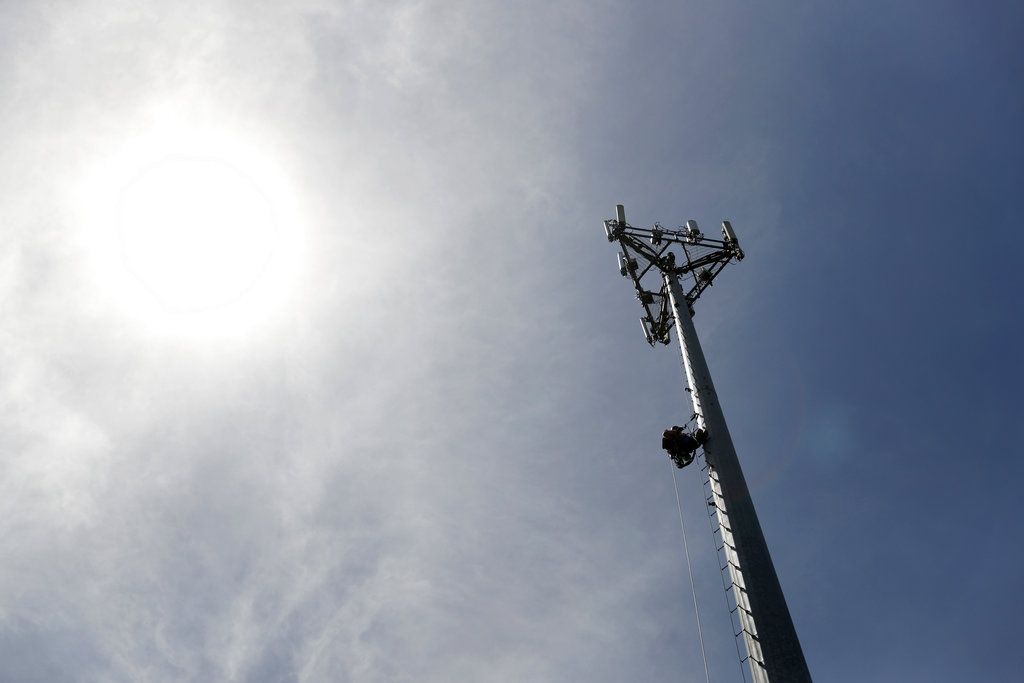
Nick Blase, from True North Management Services, worked on a cell tower in High Ridge, Missouri, on May 22, 2017. A recent report by the Federal Communications Commission (FCC) exposed a paradox in U.S. cellular networks: they largely reach people, but not places. While 95% of Americans have 5G service from at least one provider, only 69% of roadways and 39% of the land area are covered. In rural areas, coverage falls to 60% of roads and 38% of land. This is the rural-mobile divide.
This divide affects mobile service loss during activities like driving, farming, and emergencies. Although building more cell towers is a common solution, economically it isn’t sensible to cover every remote location this way. The FCC plans to invest up to $9 billion to bridge these gaps, suggesting a shift towards placing cell towers in orbit instead of on the ground.
Technological advancements offer direct-to-device satellite services, enabling ordinary cellphones to connect to satellites when terrestrial towers are out of reach. This development means that users don’t require specialized equipment like satellite phones. All major carriers are incorporating satellites into their networks. T-Mobile offers this service through Starlink, available in some plans or for $10 monthly for eligible users. AT&T and Verizon have similar satellite ventures and all three are collaborating to expand this type of coverage.
While satellite services can’t replace terrestrial 5G due to capacity limits and current focus on basic services, they transform dead zones into areas where basic communication is possible. The challenge lies in deploying this capability effectively and at a reasonable cost. The FCC’s 5G Fund for Rural America is central to this strategy. Originating in the 2010 National Broadband Plan, this fund allocates $9 billion over 10 years to support mobile services in costly areas.
Existing rules set high-speed requirements that satellite services can’t yet meet. However, before committing to ground-based construction, the FCC should develop a direct-to-device tier for buying basic coverage where towers aren’t feasible, allowing terrestrial-satellite partnerships to bid.
The FCC could solicit bids from carriers to supply satellite coverage in underserved areas, with subsidies contingent on meeting specific criteria for coverage, reliability, and device compatibility.
This approach aligns with the Communications Act’s goal of providing rural areas with services at rates comparable to urban areas. While “reasonably comparable” doesn’t imply identical services, it balances affordability with sensible fund management. Enormous spending to extend terrestrial networks to difficult landscapes diverts funds from areas where towers can thrive economically. Conversely, leaving these areas uncovered maintains the rural divide.
The FCC mandates that 5G Fund support recipients must offer services at rates similar to urban rates. Applying this requirement to subsidized satellite coverage evolves universal service policy by adapting to technological and economic changes. The last necessary cell tower may not be land-based but deployed in space, using federal funds intended to extend mobile services to unreachable markets.
Blair Levin and Larry Downes, well-versed in communications and innovation, assert that these changes can bridge the rural-mobile divide without imposing additional costs on underserved consumers. Direct-to-device satellite services represent a logical progression in the FCC’s universal service framework.