
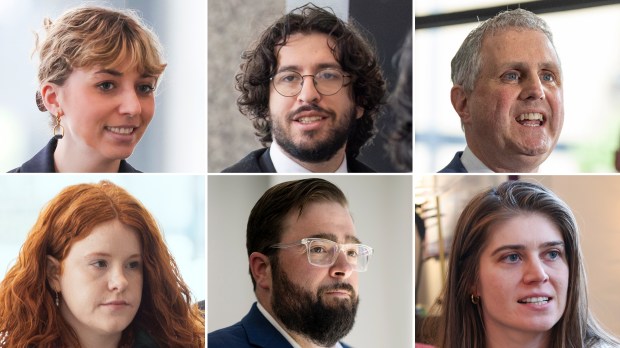
On October 23, 2025, Operation Midway Blitz was a fresh wound in Chicago. A federal grand jury convened for the third time to deliberate a possible indictment of six individuals accused of obstructing an immigration agent at the ICE facility in Broadview. From the outset, tensions ran high. Some grand jurors resisted felony charges for a protest where no harm occurred, as shown in transcripts of the proceedings.
Earlier in the month, the panel had issued a rare “no bill,” refusing to indict. During a subsequent session, one grand juror called the case “a crock of s—,” leading to their excusal. Other members followed. Ultimately, top officials in the U.S. attorney’s office had to table the vote.
Returning to the jury for the third time, disputes persisted despite a surprising appearance from U.S. Attorney Andrew Boutros. He urged jurors to set aside personal biases and adhere to the law. Prosecutors faced skepticism. Could protesters be part of a conspiracy without concerted action? Could a felony charge hold if some individuals didn’t even touch the agent’s car?
“I know. It’s a — it’s a hard one. I agree.” Assistant U.S. Attorney Sheri Mecklenburg acknowledged the challenge before deliberations, according to transcripts. “I’ve been in this for a long time, and it makes me think a lot too. Your questions are insightful.”
By the end of October 23, 2025, prosecutors secured what they sought. The indictment became known as the “Broadview Six,” heralded by then-Deputy U.S. Attorney General Todd Blanche as a defense of the “rule of law.” A year later, the focus shifted to those enforcing that rule.
Allegations of grand jury misconduct arose, leading to the dismissal of charges in May. The case reverberated at the Dirksen U.S. Courthouse, where U.S. District Judge April Perry considered possible obstruction of justice by office members, potentially prompting sanctions or the appointment of a special counsel.
Perry set an October 30 deadline for prosecutors to provide internal communications revealing if U.S. Justice Department officials influenced the case, a claim Boutros’ office denied. Records of an expedited transcript emailed to Boutros were sought—and he expressed doubt he’d reviewed it. Perry hinted at calling Boutros or his office members as witnesses, requiring testimony “under penalty of perjury.”
The defendants included Katherine Abughazaleh, Andre Martin, Michael Rabbitt, Joselyn Walsh, Brian Straw, and Catherine Sharp.
A Challenging Year
For Rabbitt, Straw, and their co-defendants, the year brought ups and downs. Initially facing years in prison and demonization by the Trump administration, they later saw charges dropped and received praise for resisting the president’s immigration policies.
On the protest’s anniversary last month, four of the six gathered outside the Broadview site. Michael Rabbitt, a 45th Ward Democratic Committeeman, emphasized the failure of governmental efforts to silence critics. He reflected on the array of anniversaries from that turbulent period.
“We marked the protest’s anniversary. Then, ‘no bill’ day’s anniversary on October 9. Last week was ‘crock of s—’ day’s anniversary. Enter ‘Boutros shows up and there’s an indictment’ day. It’s been a year,” Rabbitt recounted.
During last month’s commemoration, former co-defendant Brian Straw, Oak Park Trustee, pondered whether he’d act differently had he known the outcome.
“Overall, the answer is no,” Straw acknowledged, seeing the spotlight on Justice Department activities as worthwhile. Nonetheless, he agreed it’s felt like a long year. “It’s hard to believe it’s not been ten.”
The Indictment Process
Though the indictment occurred on October 23, 2025, it remained under wraps until the U.S. attorney’s office announcement on October 29. By then, the FBI informed the defendants of the charges, requesting they make surrender arrangements.
Rabbitt, amid a vacation in Spain and Portugal with his wife, discovered his predicament after the FBI alert. Initially dismissing the news as a joke, reality sank in upon contacting his attorney brother. Referred to criminal defense attorney Nancy DePodesta, Rabbitt made plans to return to Chicago and face due process.
Straw, having no awareness of federal scrutiny on his protest activities either, initially disregarded the FBI call as a hoax. Swiftly, he mobilized obtaining legal representation and apprised his family of their new circumstances. Within 36 hours, his situation became a national news story.
The indictment marked the most significant protest-related case since Midway Blitz started in September 2025. The defendants, largely tied to Democratic politics, faced diverse political reactions. Katherine “Kat” Abughazaleh, a Congressional candidate, was among those charged.
A Politically Charged Case
The U.S. attorney’s office release on October 29 detailed defendants allegedly obstructing an ICE agent’s vehicle, blocking the path, banging the car, and causing damage. Boutros reaffirmed warnings that protesters overstepping boundaries would face repercussions. Further comments noted the broader implications for the “rule of law.”
Defendants’ attorneys condemned the indictment as politically motivated, pressured by the Trump administration to set an example. Approaching a trial, the defense requested documents on communications with Justice Department or White House officials. They pointed to interest from Blanche and top deputies.
Boutros, appointed in March 2025 by U.S. Attorney General Pam Bondi, denied political motives. Prosecutors decried the discovery request as “reckless” and “paranoid.” Still, they acknowledged discussing the Broadview incident with DOJ officials shortly after it occurred.
Social media posts on the protest day, from a Blanche ally, questioned the absence of arrests, further heightening scrutiny.
Judicial Examination
Judge Perry has yet to determine intentional misconduct in Broadview, though noted flaws in the prosecution. Perry reassured inquiry focus on alleged misrepresentations to the court, not grand jury misconduct.
“My sole focus is on the lack of candor, concealment of material facts, or other misconduct before me,” Perry declared.
Beyond Broadview, controversy affected other legal proceedings, with charges dropped or settlements in unrelated cases. The U.S. attorney’s office admitted mistakes and implemented grand jury process reforms.
Still, the case lingers over Boutros’ tenure. Judge Sharon Johnson Coleman criticized him for opening a “Pandora’s box” with long-lasting effects.
After the indictment, Straw faced threats, forcing his family’s temporary relocation. Coping with the aftermath, Straw noted, takes time. Personal reflections with his children emphasized shared journeys through their saga, fostering resilience.
For Rabbitt, DOJ indictment echoes family history. His father’s own federal corruption trial years ago brings renewed challenges for his siblings and mother.
Both Straw and Rabbitt recognize the larger context of Broadview beyond personal experiences, affirming First Amendment rights. Despite costs, Perry’s actions provide encouragement.
“This is for protesters’ rights nationwide,” Rabbitt said. “The attempted crackdowns have backfired, inviting more participation in movements.”
The Broadview Six vigil continues. Rabbitt and Straw look toward eventual resolution, mindful of impending anniversaries.
Rabbitt plans an upcoming trip to Spain, noting, “Oh, October 16th, that’s ‘crock of s—’ day,” evoking laughter with his wife.