
Maine, known for its straightforward and neighborly people, offers a unique backdrop for a significant political contest. Recently, while sitting by the Pleasant River in Brownville Junction, I reflected on the intense U.S. Senate race unravelling across the state. Both candidates face a challenging campaign, and the outcome remains uncertain. What follows is an in-depth look at this pivotal race.
The Candidates
Sen. Susan Collins
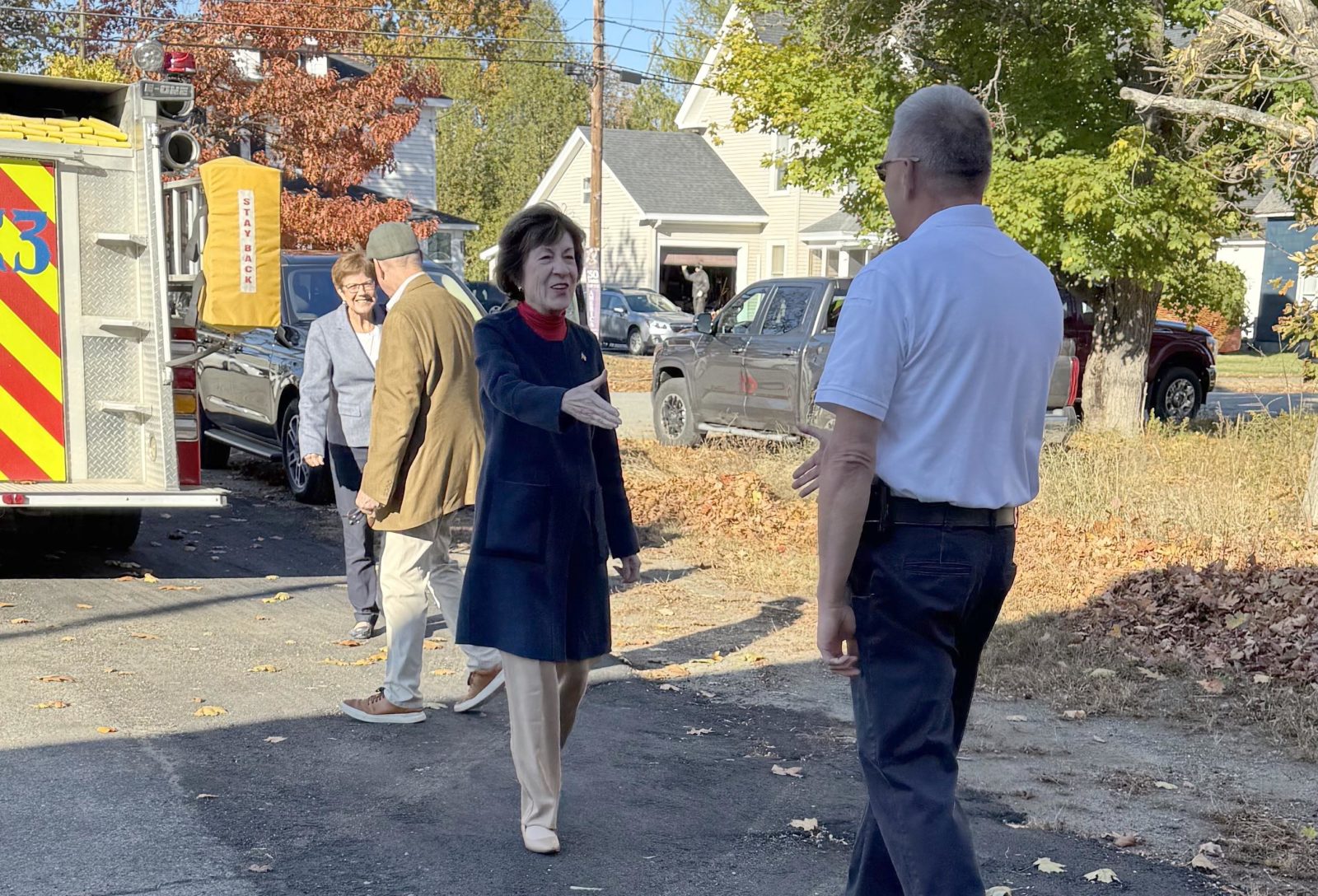
Republican Sen. Susan Collins greeted Brownville Fire Chief Shawn Mitchell at a local event, an interaction observed during a visit. Despite the high-stakes campaign, Collins appeared relaxed at the Brownville Fire Department’s annual dinner, where she mingled quietly among attendees. Notably, this gathering was not an official campaign event. The fire chief acknowledged Collins for her role in securing $2.8 million in federal funding for community projects, including upgrades to the fire station.
Observing firefighters at the event, some seemed indifferent indoors but expressed warmth towards Collins outside. Residents of the area, which leans heavily in favor of Trump, continue to support Collins despite her decision not to vote for him. Her influence remains strong among veterans, mothers, and local men seeking photos and conversations with the senator.
Troy Jackson
Democratic candidate Troy Jackson participated in a rally in Portland, a significant distance from Brownville, alongside Massachusetts Sen. Elizabeth Warren. Jackson, transitioning from a logger to a state senator, has been lauded for his growing oratorical skills. At the rally, attendees perceived him as more confident and effective.
Despite initial criticisms of his posture during debates, Jackson resonated with the crowd through relatable messaging on economic issues and a human touch. Following the rally, Jackson briefly connected with a child who gifted him a drawing, showcasing his personal side. With about 300 attendees at a subsequent town hall meeting with Warren, Jackson received an enthusiastic response, even as some supporters admitted he was not their first choice. A professional camera team recorded the rally, contrasting with Collins’ more subdued approach.
Voter Sentiments
Maine voters are divided, energized by the election yet overwhelmed by political ads. Some supporters of Jackson remain nostalgic for Graham Platner, Jackson’s predecessor, and question Jackson’s detailed plans to bring financial benefits to the state. While he positions himself as a progressive, clarity on his approach to healthcare reform remains elusive. His supporters share a common opposition to Collins.
In various Southern Maine towns, homemade signs opposing Collins are visible. Opponents have altered her campaign signs, reflecting broader sentiment. Collins’ supporters, however, appreciate her past efforts, like those of Linda Post, who credits Collins with restoring her father’s heating assistance funds. Meanwhile, voters like Nick Papin, once supportive of Collins, now back Jackson, citing Collins’ perceived leniency towards Trump as a concern.
Undecided voters like Bill Amabile wrestle with their decision, torn between Collins’ accomplishments and her stance on Trump. Amabile questions whether his vote should prioritize state interests or the broader national context. The decision remains difficult, reflecting the complexity of the current political climate.
The press continues to play an essential role in maintaining a vibrant democracy, providing reliable journalism and fostering informed discussion.