
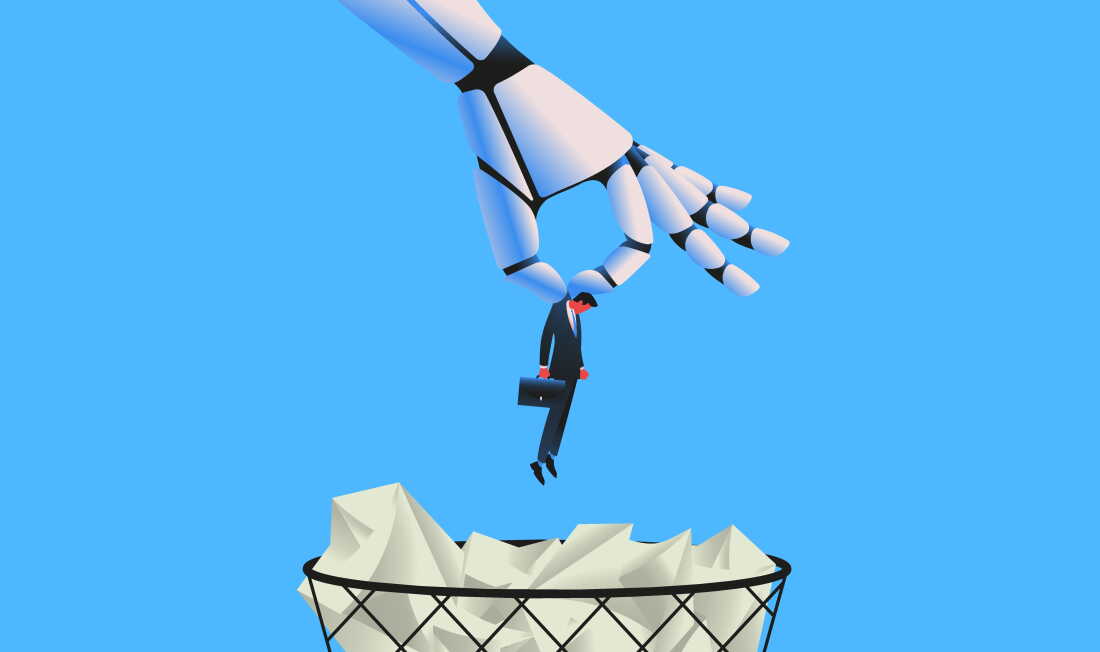
The concept of an AI bubble leading to a recession—and subsequently accelerating the replacement of human workers with technology—is becoming a topic of concern. This article explores the potential impacts of this scenario, based on historical economic patterns and recent industry developments.
Factors Contributing to Economic Bubbles
The emergence of a revolutionary technology often coincides with economic bubbles. Economist Charles Kindleberger, in his book Manias, Panics, and Crashes: A History of Financial Crises, detailed how such bubbles tend to originate from expectations of significant economic changes. Investors, inspired by technological advancements, may overestimate the potential returns, leading to excessive investments fueled by debt. However, when reality sets in and asset prices drop, the existing debt can trigger financial distress and potentially a recession.
Past instances, such as the railroad bubble of the late 19th century, illustrate these concepts. This bubble’s collapse contributed to widespread economic instability, highlighting the delicate balance between innovation and financial risk.
AI’s Role in the Current Economic Climate
AI is currently influencing the stock market significantly. As reported by J.P. Morgan, a substantial portion of the S&P 500’s recent gains are attributed to AI-focused companies. These entities are investing substantial resources in infrastructure, generating notable debt. While it remains uncertain whether this is indeed a bubble capable of disrupting the financial system, the situation draws parallels to previous technological booms, such as the dot-com bubble.
The Automation Impact During Recessions
Economic research indicates that recessions often accelerate automation. Studies by economists Nir Jaimovich and Henry Siu found that jobs vulnerable to automation witnessed significant declines during recession periods from 1990 to 2017. This suggests that economic downturns can prompt businesses to operationalize new technologies in place of human labor to mitigate costs.
This pattern raises concerns about AI’s future role. Competitive pressures and lower technological costs may drive businesses to substitute AI for human roles, potentially resulting in significant job losses.
Policies to Mitigate Potential Economic Impacts
Despite uncertainties surrounding AI’s economic outcomes, policies could help manage potential job losses. Proposals such as taxing AI and robots aim to make human employment financially viable while funding safety nets to protect displaced workers. These measures might mitigate the repercussions of a technological transition.
While AI may or may not lead to severe economic disruptions, proactive policy measures could limit potential negative effects on employment. Continuous evaluation of AI’s economic impact and strategic policy development remain essential to address the evolving landscape.
For those interested in further exploring AI’s implications on employment, a virtual event with economic experts from NPR+ is available for discussion.