
The world’s largest wildlife crossing is set to open soon over the 101 Freeway in Agoura Hills, aiming for a December 2 completion. However, a severe winter storm could disrupt progress. Currently, a concrete bridge spans 10 lanes of traffic, topped with a flourishing landscape of 6,000 native plants. Recently, construction crews finished an additional overpass over Agoura Road. A key task remaining is to fill the area between the freeway and the northern land with millions of cubic feet of soil, creating an uninterrupted path for wildlife.
The Wallis Annenberg Wildlife Crossing’s primary goal is to offer a crucial route for mountain lions confined in the Santa Monica Mountains. These lions face threats from traffic and inbreeding effects. Beth Pratt, president of the Wildlife Crossing Fund, expressed hope that El Niño would not interfere, stating, “Mother Nature, we’re trying to help you.” Southern California could potentially face significant rainfall, which could halt work for safety reasons.
Robert Rock, the lead landscape architect, highlighted that the area’s soil, rich in clay and silt, becomes dangerously slick when wet. Heavy rains complicate the soil compaction process, crucial for construction. During past rains, water flooded trenches, delaying the project from its original late 2025 completion date.
The project’s $114 million cost and delays have faced criticism from right-wing commentators. Some have labeled it a “bridge to nowhere,” comparing it to other costly infrastructure projects. Despite facing personal attacks, Pratt remains committed to the project’s completion for the mountain lions’ survival. The species’ inbreeding limits genetic diversity, threatening its future.
Seth Riley, from the Santa Monica Mountains National Recreation Area, highlighted the population’s challenges. A significant percentage of matings involve close relatives, which has resulted in inbreeding deformities. Without intervention, there’s near certainty of extinction within 50 years. However, Riley believes it is not too late. The completed crossing will enable mountain lions to find mates beyond their current range.
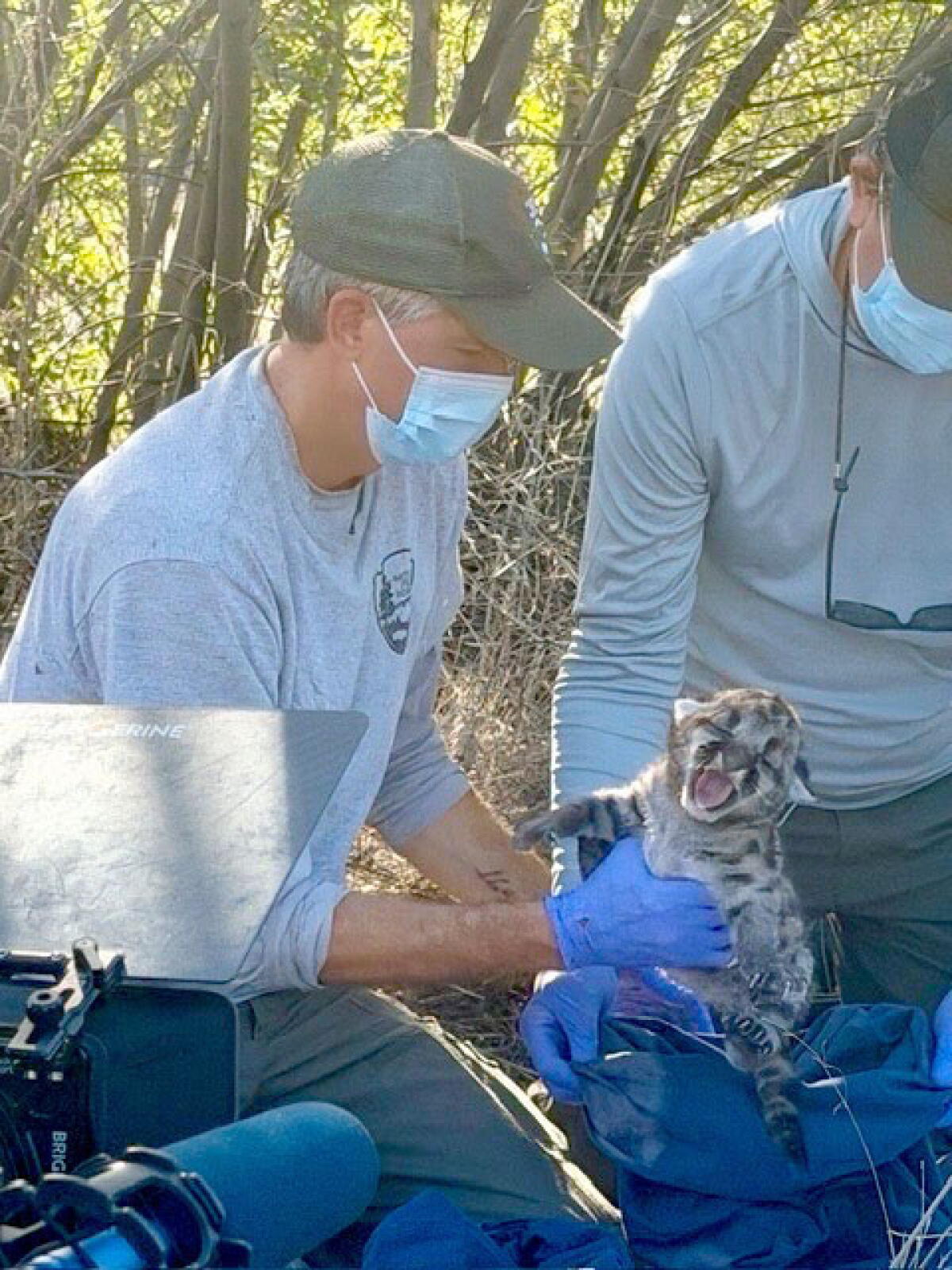
Recent monitoring shows diverse wildlife near the crossing, including coyotes, deer, and a female lion with cubs. Jeff Sikich, a local wildlife biologist, mentioned that new lion kittens might be among the first to use the crossing once they mature. Genetic diversity improvements will follow, ensuring the mountain lions’ continued survival.