
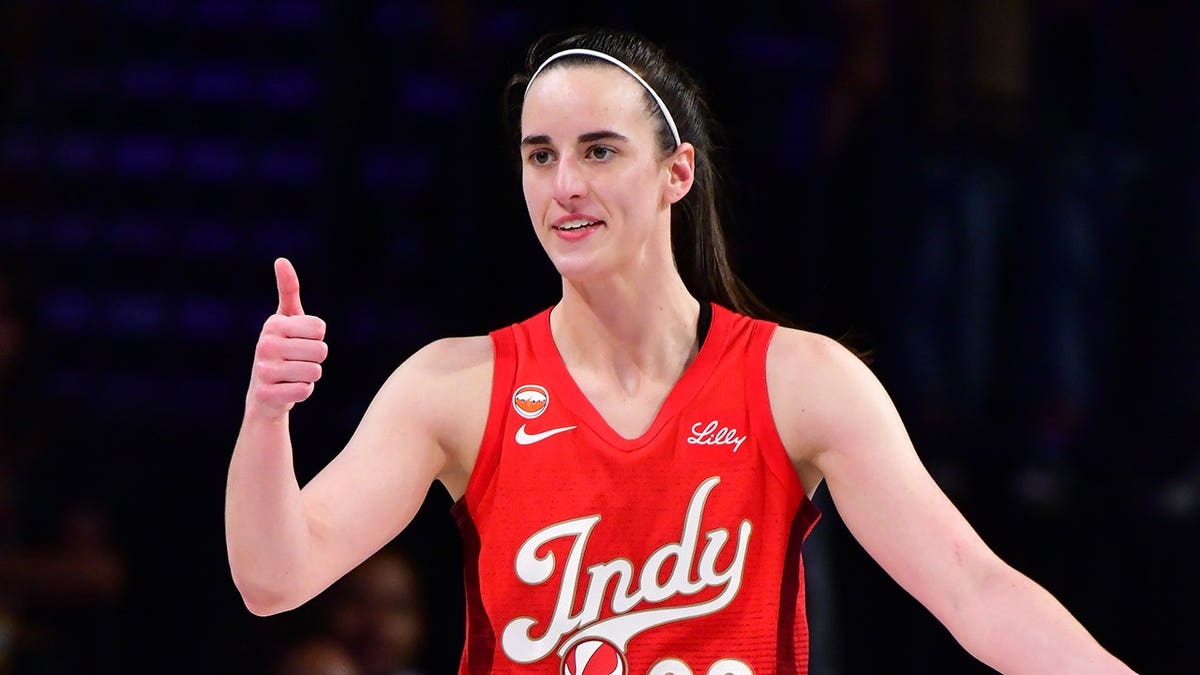
Riley Gaines and Louis Barker returned to the WNBA with courtside experiences at an Indiana Fever game. The atmosphere at this game, highlighted by Caitlin Clark and Kelsey Mitchell’s performances, differed significantly from a previous WNBA event in Minneapolis. The Indiana Fever’s regular-season games have consistently drawn large audiences, with more than double the viewership of the WNBA semifinal games on October 4. The playoff games, televised on networks like ABC and NBC, attracted fewer viewers.
An OutKick review of Indiana’s 10 regular-season games on major networks such as ABC, CBS, and NBC, found they averaged about 2.32 million viewers. In contrast, the semifinals averaged approximately 1.16 million viewers. This disparity underscores Caitlin Clark’s significant influence on television ratings for the WNBA.
For example, during a regular season game against Las Vegas on September 27, Indiana drew 2.11 million viewers, despite competing against an NFL game. This represented a 76% higher viewership compared to New York–Atlanta’s semifinal opener on the same channel a week later.
The stakes in these games rose, yet the audience figures fell, illustrating Caitlin Clark’s substantial impact on the WNBA’s television audience.
The regular season saw Indiana’s games on networks like ABC, CBS, and NBC consistently outdrawing the semifinal games. Seven out of ten Fever games surpassed two million viewers each. Even the least-watched Indiana game during this period still attracted a larger audience than either semifinal opener.
Notably, a May 30 game against Portland, where Clark had an off day, still garnered more views than the WNBA semifinal openers in October. At the other end of the spectrum, a game against Chicago on August 23 attracted 3.31 million viewers.
New York Liberty’s regular-season games against Indiana attracted over 2.5 million viewers each, compared to the Liberty–Dream semifinal, which only drew 1.2 million viewers. These figures highlight Angel Reese’s limited draw, as Atlanta Dream playoff games were generally in line or worse compared to other games without Clark.
The WNBA has not seen a game average one million viewers since 2008 before Clark’s arrival. The semifinal games have shown improvement, with audiences increasing by roughly 10% from last year. While the Fever’s success in viewership is evident, the WNBA overall continues to grow as it consistently surpasses previous benchmarks.
The Fever’s presence without Clark has also proven to draw significant numbers. On June 27, a game against Los Angeles attracted 1.57 million viewers. Additionally, the Fever’s least-watched game on Prime Video still outdrew every non-Fever first-round game, even when exclusively streamed.
As the season progresses, other teams have the opportunity to build on this audience. The Fever’s consistent ability to attract viewers demonstrates the potential for the WNBA to capitalize on more team-driven fan interest.