
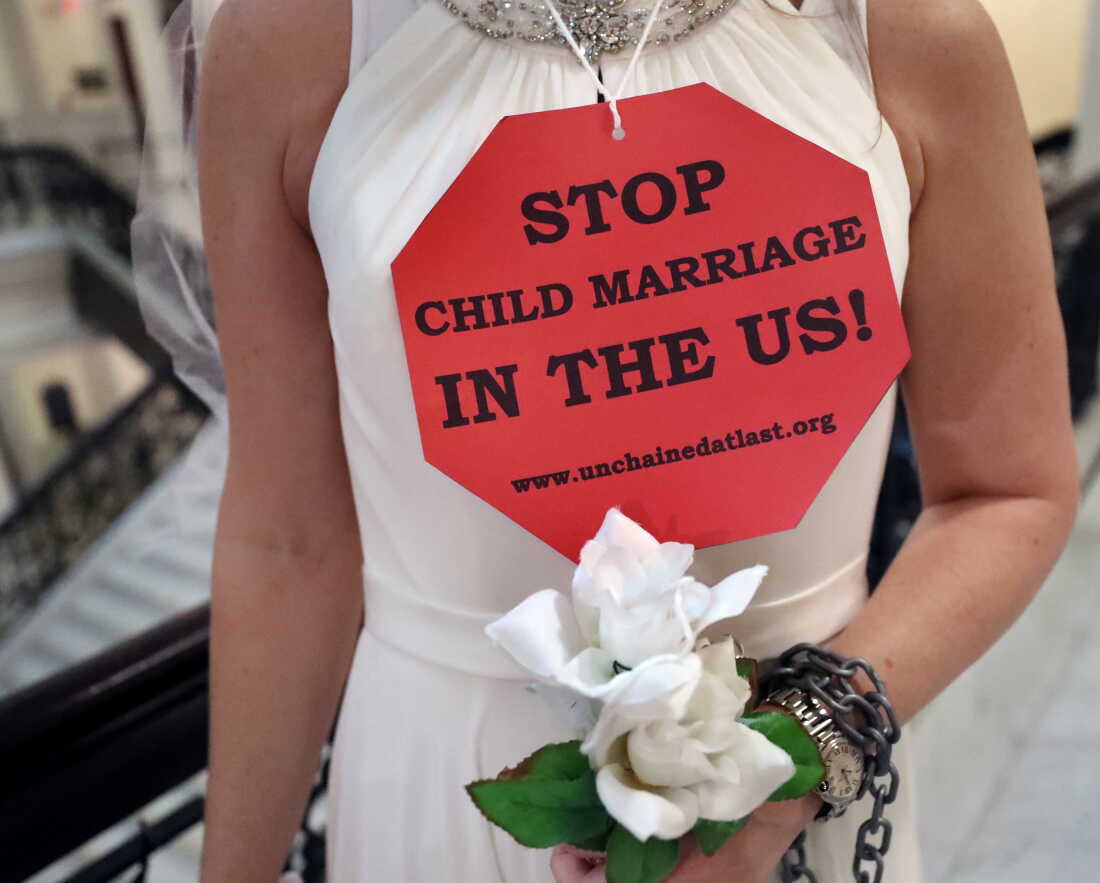
A Major Step Against Child Marriage
A demonstrator in Massachusetts dressed in a bridal gown participates in a protest demanding an end to child marriage. It’s been a significant year for activists aiming to eliminate child marriage in the United States. On September 30, California Governor Gavin Newsom signed Bill AB 1267, establishing 18 as the minimum age for marriage in the state without exceptions. This legislative effort, sponsored by Unchained at Last and the California Commission on the Status of Women and Girls, was authored by Assemblymember Gail Pellerin. The new law eliminates previous provisions allowing minors to marry with parental consent or judicial approval and removes the exception for minors entering domestic partnerships.
This achievement is the result of a campaign spanning nearly a decade by survivors and advocacy groups aiming to ban marriage before age 18 in California. The state becomes the 18th in the U.S. to prohibit child marriage without exceptions, while 32 other states continue to allow such marriages under varying conditions.
Survivors’ Voices and Global Perspectives
The signing ceremony featured advocate Courtney Stodden, who married an adult at age 16, and is now campaigning against child marriage. Assemblymember Pellerin emphasized the stories shared by survivors, highlighting the struggles faced by minors in marriages they did not choose, including seeking legal help or escaping oppressive circumstances. The United Nations views child marriage — where one partner is under 18 years — as a global human rights violation, citing issues like early pregnancy, social isolation, and interrupted education. Despite this, approximately 12 million girls become child brides annually. Globally, countries such as Sierra Leone, England, and the Philippines are introducing laws setting 18 as the marriage age without exceptions.
Efforts in the United States
The United States is actively discussing a nationwide ban on child marriage. In July, U.S. legislators introduced the Child Marriage Prevention Act, aiming to push states towards a minimum marriage age of 18. Data shows over 314,000 minors have legally married in the U.S. since 2000, often to adult men. Unchained At Last estimates a significant portion of these marriages involve underage girls, with legal exemptions protecting the adult spouses from prosecution. Advocacy groups like the Tahirih Justice Center contribute to advancing this legislation.
Concerns surround some provisions of the proposed federal bill, including financial incentives for states to study rather than ban child marriage. Section 10, potentially allowing minors to qualify for spousal visas, raises additional controversy. Conversely, some states resist change; Missouri Republican lawmakers, for example, argue restrictions infringe on parental rights.
Comparisons with Global Efforts
Internationally, laws against child marriage vary in effectiveness. In Sierra Leone, strong legislation prohibits child marriage outright, but regions like India, despite existing laws, struggle with enforcement due to deeply rooted cultural practices. Research from the Young Lives project in India highlights complex social factors influencing early marriages, involving concerns for unmarried daughters’ safety and financial motivations linked to dowries.
Attitudes towards female sexuality, patriarchy, and entrenched gender roles also contribute to the persistence of child marriage in the U.S., underscoring the need for societal change alongside legislation. Campaigns aim to elevate the issue on the global political stage, with figures like Bhuwan Ribhu advocating for reframing child marriage as a serious legal violation.
Kamala Thiagarajan, a journalist from South India, reports on global health and development. Find her on social media for more insights.