
Launch Details
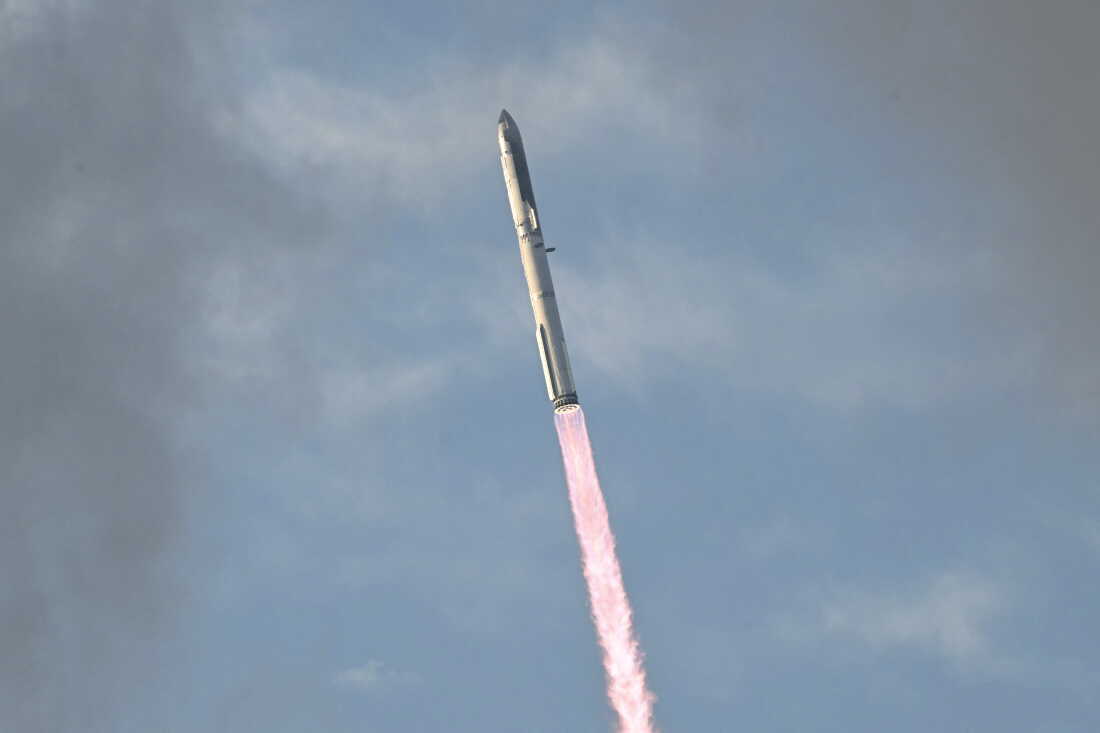
SpaceX launched its Starship spacecraft from the Starbase facility at Boca Chica Beach, Texas. This critical test flight marked the first orbital journey for the 171-foot-tall vehicle. At 7:48 am CT, the Super Heavy booster ignited its 33 engines, propelling Starship on its 14th flight.
Two-and-a-half minutes post-launch, Starship separated from the booster, continuing its ascent. Despite one engine failing, the team deemed it safe to proceed into orbit after 22 minutes.
Super Heavy Booster
Designed to be reusable, the Super Heavy booster is intended to return to its launch site at Starbase. For this flight, it simulated a landing offshore in the Gulf of Mexico. SpaceX tested software and hardware upgrades on the booster during this mission.
Flight Plan
Starship’s flight plan encompasses approximately six Earth orbits at an altitude of 170 miles. Previous flights remained suborbital, but this mission aims for orbital speeds of about 17,500 mph. Starship is equipped with systems to facilitate safe return in case of an orbit abort.
Starlink Deployment
During the flight, 26 Starlink V3 satellites will be deployed into SpaceX’s constellation. These satellites provide global broadband access. SpaceX traditionally uses Falcon 9 rockets for Starlink launches, but plans to transition to Starship for future missions from Florida’s Space Coast.
Mission Goal
Starship’s mission includes a planned splashdown in the Pacific Ocean off Chile’s coast. SpaceX aims to recover and reuse the spacecraft. Testing of key systems such as the heat shield is integral to reusability efforts. Cameras on three Starlink satellites will collect data on the heat shield during re-entry.
Strategic Implications
Starship is crucial to SpaceX’s growth strategy, as highlighted in filings to the FEC before its IPO. The spacecraft’s development and launch cadence are key to achieving these plans.
NASA’s Lunar Ambitions
NASA selected Starship as the human landing system for Artemis missions. It will transport astronauts to the lunar surface. Testing will include docking with the Orion space capsule and another commercial lander from Blue Origin, scheduled for Artemis III launch next year.
Future Developments
SpaceX plans to construct a facility in Louisiana with a $100 billion investment. This facility will support multiple launch pads, aiming for Starship launches from Starbase, Louisiana, starting in 2029.