
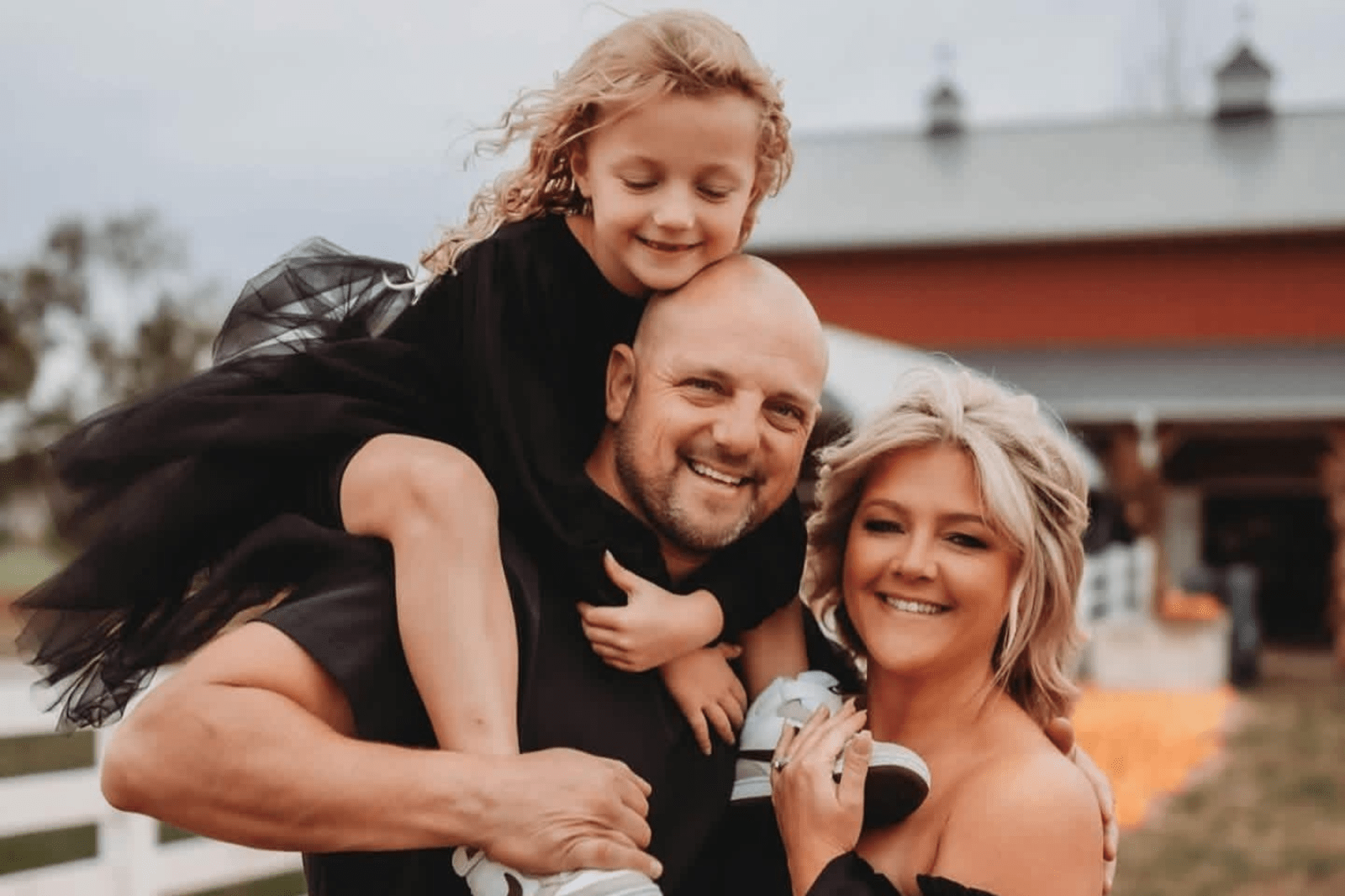
One year ago, Brittany M. Bohacik received a phone call that would alter her family’s life forever. While tending to her flowers, Brittany answered a call from her husband, Rob, who was 43 years old at the time, in the emergency room. Rob simply said, “I think you need to come up here.” This moment marked the beginning of a journey they could never have anticipated.
Unexpected Symptoms
During the Independence Day weekend in 2025, Rob started experiencing a stomachache. Both he and Brittany initially attributed it to possible food poisoning, a virus, or fatigue. “There was nothing about it that made either of us think our lives were about to change,” Brittany recalled to Newsweek. Rob continued his daily routines as a husband and father to their eight-year-old daughter, Ava. Yet, his symptoms worsened, prompting him to visit the hospital himself. Brittany described, “That detail stays with me because of how ordinary it was.” Eighteen days after the onset of these stomach symptoms, Rob’s world had turned upside down.
Life-changing Diagnosis
On July 22, 2025, Rob was diagnosed with stage IV pancreatic adenocarcinoma, which had metastasized to his liver. The news was shattering. Days earlier, their lives were filled with work, family activities, and weekend plans. Suddenly, their conversations pivoted to chemotherapy and survival statistics. “People imagine there must have been some enormous warning sign that we ignored,” Brittany said. Their lives had unexpectedly become consumed by cancer.
The Fight for Time
Over the next eight months, Brittany became devoted to seeking every possible treatment option for Rob. She delved into extensive research, contacted experts, and explored clinical trials. She focused on understanding treatment protocols and genetic mutations, swiftly becoming versed in complex medical language. “There were times I felt like I was living two completely different lives,” Brittany shared. She balanced her role as a wife and mother with the overwhelming task of battling a relentless disease.
Genetic testing revealed Rob’s tumor carried a BRCA2 mutation, yet it was KRAS wild-type, meaning it lacked the common KRAS mutation linked to pancreatic cancers. This unusual genetic makeup prompted further molecular testing for targeted treatment options. The couple traveled to Germany for dendritic-cell immunotherapy, holding onto hope despite no guarantees. “By then, I wasn’t asking anyone to promise me 20 more years,” Brittany reflected, seeking even small moments they once took for granted.
Embracing Every Moment
As Rob’s illness progressed, Brittany juggled multiple roles, from advocate to caregiver. “Put the computer down sometimes,” she advises. “Sit next to him. Take the picture even if nobody looks good. Record his voice.” Cherishing ordinary moments became crucial in light of an uncertain future.
Rob passed away at 44 years old in March 2026. Brittany’s purpose, once centered on sustaining him, abruptly disappeared. “For months, my entire purpose had been keeping him alive,” she expressed. With no more appointments or treatments, a void emerged.
Sharing Their Story
Since losing Rob, Brittany has chosen to share his journey online. Her account, @brittanybohacik, serves as a platform for others facing similar ordeals. Brittany notes, “Those messages are part of why I continue sharing.” The interactions often extend beyond medical concerns to personal questions about coping with grief and moving forward.
“I couldn’t save Rob,” Brittany candidly states, yet she hopes his story encourages others to seek timely medical attention or support. She emphasizes that Rob was more than a patient; he was a beloved husband and father. “Cancer became a huge part of the final chapter of his life, but I never want cancer to become the definition of his life.” His legacy persists through their shared memories, underscoring the importance of presence, love, and connection.