
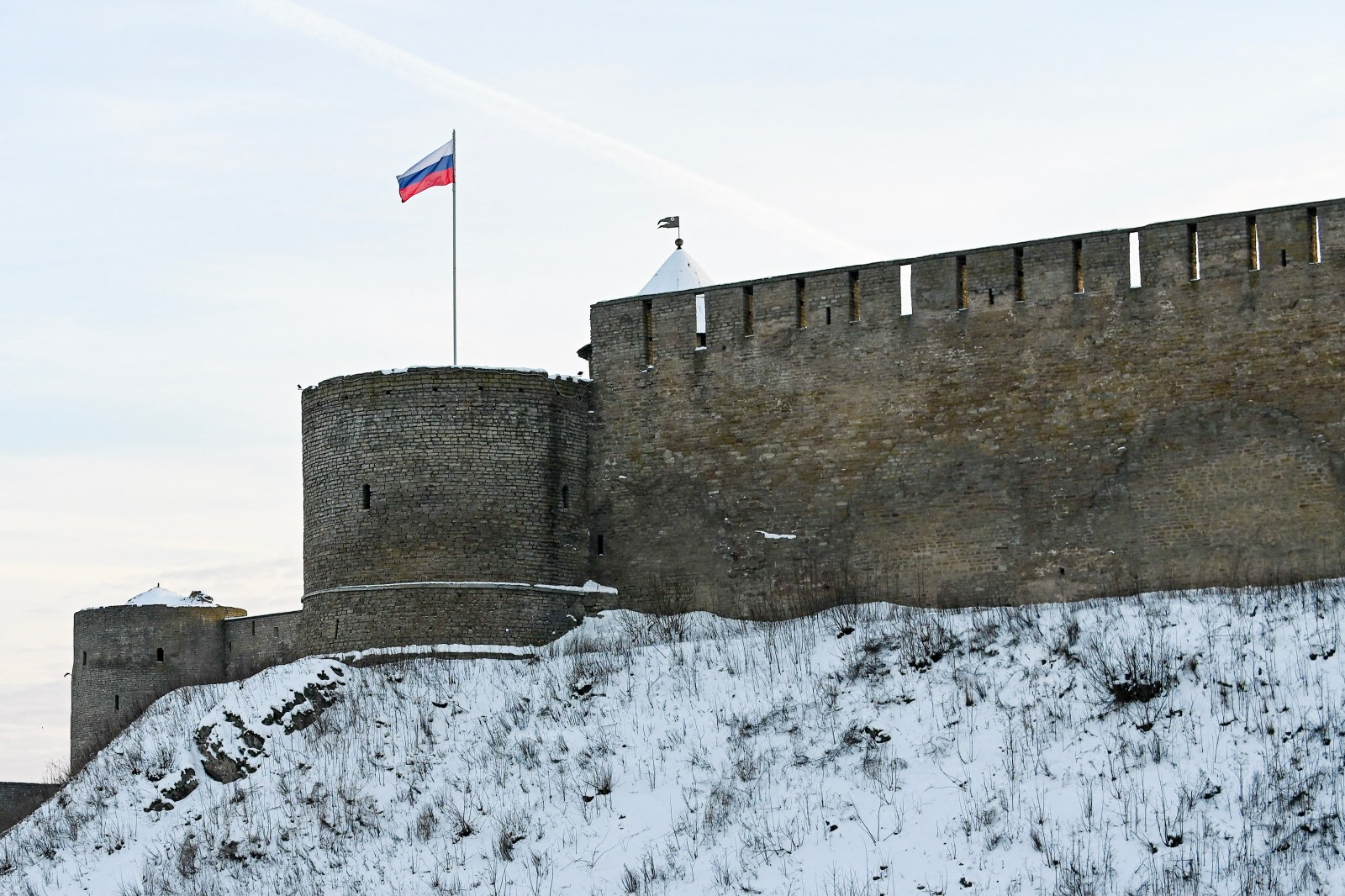
The Institute for the Study of War (ISW) has proposed a scenario where Russia might initiate a limited incursion into Estonia to test NATO’s strength, especially amid heightened tensions between Moscow and Tallinn. Recently, Russia’s FSB imposed restrictions on movement in two districts of the Leningrad oblast near Estonia, affecting Kingisepp and Slantsy. This decision limits night activity and access to parts of the shared Narva River. These developments follow Estonia’s indication that it would close its border with Russia if President Vladimir Putin called for mass mobilization to replenish losses in Ukraine. Such action might trigger significant migration.
In the Baltic region, concerns are rising about Russian drone incursions, airspace violations, sabotage, and other hybrid threats. The ISW suggests that Narva, a border town with a predominantly Russian-speaking population, could be the focal point of Moscow’s challenge to NATO. This would put NATO’s Article 5 mutual defense clause to the test by viewing an attack on one as an attack on all.
The Washington, D.C.-based think tank emphasizes that there’s currently no Russian military buildup by the Baltic states, and a Russian invasion of NATO appears unlikely while Putin focuses on Ukraine. However, this scenario presents complex challenges and decisions for NATO’s military structures.
Newsweek has reached out to both the Kremlin and the Estonian foreign ministry for comments.
Propaganda Campaign as Preparation
The ISW speculates that the border dispute with Estonia gives crucial context to Moscow’s perception of the Baltic republic as a potential stepping stone to a conflict with NATO. Moscow might initiate propaganda accusing Estonia of oppressing its Russian-speaking citizens or equate Estonian support for Ukraine with aiding Kyiv’s actions against Russia.
Russia’s military could deploy FPV drones from units within proximity to Narva and the Johvi military base. They might use long-range and shorter-range fiber-optic and radio-controlled drones within 40 miles of their border, or employ long-range attack drones against NATO positions.
Russian agents in Narva might seize important buildings, declare a “Narva People’s Republic” and call on Moscow for support. Russia could then engage, using pre-positioned drone and air defense units, without claiming Estonian territory unless Tallinn escalates the situation.
Russian drones attacking Estonian forces could be reinforced by Moscow’s agents using tactical drones. Estonian personnel might struggle to defend against the large volumes of FPV strike drones. The Kremlin might urge de-escalation if Tallinn acknowledges NPR control over Narva; otherwise, Russia could expand its strike campaign.
The Kremlin could assert protection of Russian citizens, denying any attack on NATO, posing a strategic challenge to the alliance.
NATO’s Dilemma
Estonia might seek NATO’s Article 5 activation or request help from member states, but there might be hesitance among allies due to fears of escalating into a full-scale war with Russia. The ISW indicates that failure to activate Article 5 could diminish its significance, which Putin might exploit.
Tensions between the U.S. and Europe over protecting NATO’s territory and airspace could delay or sidestep U.S. involvement while Russian cognitive warfare deepens divisions between the U.S. and Europe. However, this scenario would mean Putin risking NATO’s escalation, forcing a choice between confronting the alliance and continuing the conflict in Ukraine.
Historical Context
The ISW’s hypothesis about Narva is not a prediction but a proposition on how Moscow could potentially initiate a minor military operation against NATO, prompting the alliance to decide on its response. It resembles elements from Carlo Masala’s book “If Russia Wins: A Scenario,” which discusses potential Kremlin disinformation campaigns about persecuted Russian speakers preceding a move on Narva, as well as the Estonian island of Hiiumaa, mirroring tactics from the 2014 invasion of Ukraine’s Donbas region.
Masala posits division among NATO members on invoking Article 5, weakened by reduced American commitment. However, unlike the ISW scenario, Masala’s book places such events in 2028 following Ukraine’s hypothetical war loss to Russia, which includes concessions like surrendering 20% of its territory and restricted NATO access.
Masala stated in October 2025, “There are circles in Moscow who doubt Article Five and seek to test it. Russia is becoming increasingly reckless in testing NATO’s deterrence,” reflecting a growing attempt to divide Europeans and NATO.