
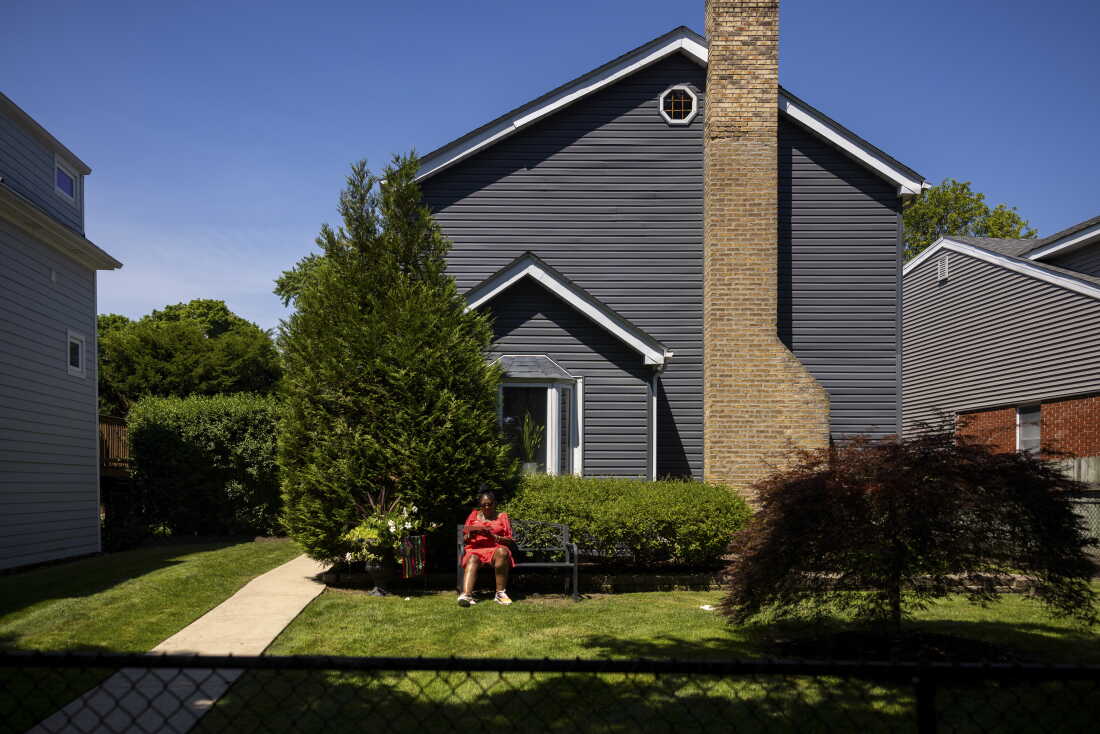
Kimberly Holmes-Ross broke family tradition by living outside Evanston, Illinois’ 5th Ward, the only part of the city historically open to Black residents. She grew up there but later bought a house in the 2nd Ward. Her family is using reparations money to convert their basement into an apartment for her son.
In the 1960s, Allie Zemtseff witnessed her Black mother being refused housing in white neighborhoods. When the Trump administration accused Evanston of racial bias in its reparations program, Zemtseff was shocked. She received $25,000 and an apology from the city, which she used for kitchen renovations. Zemtseff emphasized, “Of course, it’s only for Black people because we were affected by the discrimination.”
Since 2021, Evanston has awarded $25,000 grants to over 300 residents as part of efforts to address historical racial segregation. Alvin Tillery, a professor at Northwestern University, described the city’s initiative as a key civil rights story, highlighting the administration’s attempt to reshape governmental roles in addressing racial disparities.
The reparations program was conceived by Robin Rue Simmons, a former council member, after she discovered a 1921 zoning law that confined Black residents to specific neighborhoods, limiting their wealth-building opportunities. Rue Simmons noted, “We needed targeted redress as specific as the segregation policies.” She now leads FirstRepair, a group that advises reparations efforts nationwide.
The City Council acknowledged past harms and pledged $20 million from cannabis sales and real estate taxes for reparations. Applicants must prove that they or their ancestors lived in Evanston during a specific period of housing segregation.
Critics argue the program is unconstitutional as it does not require proof of personal discrimination, focusing solely on race and residency. Michael Bekesha, Judicial Watch’s lawyer, argues that claiming racial discrimination based on historical residency is problematic.
Despite legal challenges, Evanston’s Mayor Daniel Biss insists the program addresses wealth disparities caused by racial discrimination. Reparations experts, such as Justin Hansford, warn that the success of this initiative could impact the future of similar projects aiming to rectify the enduring consequences of slavery and discrimination.
Kimberly Holmes-Ross’s family leveraged the program to renovate their home, with her son staying put due to these improvements. Holmes-Ross stated, “It’s more about acknowledgment than the money.” As legal proceedings continue, Evanston plans to uphold its commitments to qualified residents. Rue Simmons encourages other cities to proceed cautiously and remain committed to reparations initiatives, citing increased determination and awareness in the face of opposition.